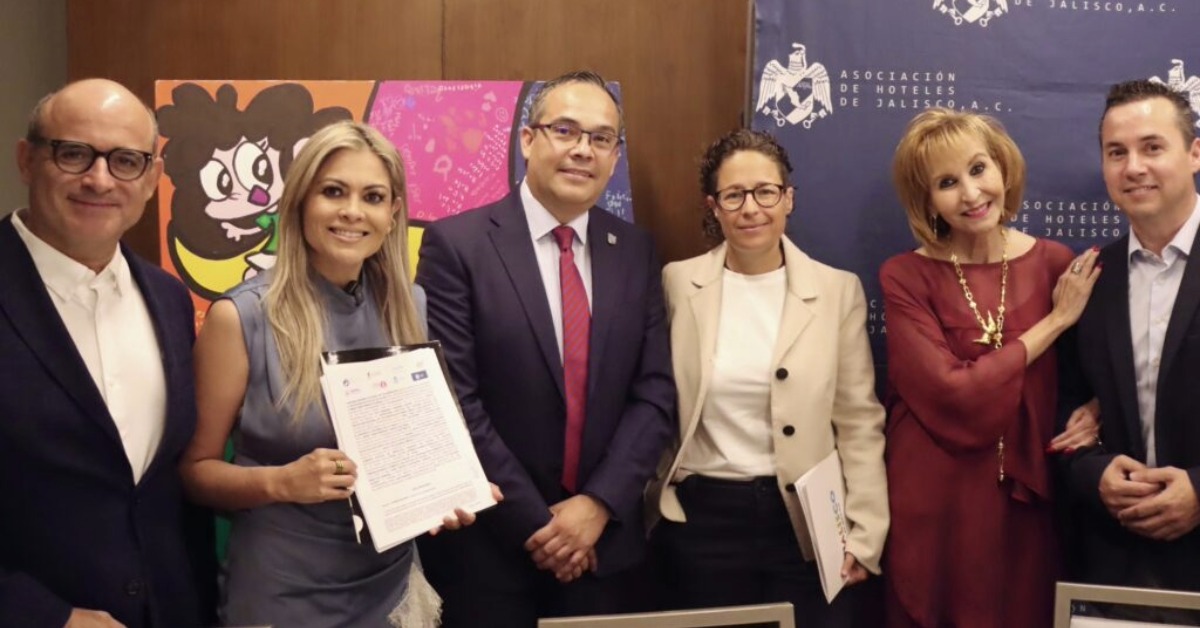
Jalisco is rolling out a responsible tourism certification as the state prepares for World Cup visitors and a broader test of its tourism model. The program reaches beyond hotel service standards, adding environmental practices, local identity, and human rights protections. It also connects with UNICEF-backed safeguards meant to help hotels and tourism workers spot risks to children before problems escalate. For travelers, the new seal could become one way to judge which businesses are preparing for tourism growth with clearer rules.
Jalisco Responsible Tourism Certification
Jalisco has introduced a new responsible tourism certification for tourism businesses across the state, tying quality standards to environmental practices, local identity, and human rights protections.
The program, called Distintivo Jalisco, is aimed at hotels, restaurants, and other tourism-related establishments. State tourism officials say the certification is designed to help the sector grow without weakening the communities, culture, and natural resources that visitors come to experience.
The launch comes as Jalisco prepares for a larger international audience during the 2026 FIFA World Cup. Guadalajara is one of Mexico’s host cities and will receive four matches at Estadio Guadalajara, also known outside FIFA branding as Estadio Akron.
The state is also coordinating child-protection measures with UNICEF and hotel-sector groups. Those efforts are linked to the Tarjeta Azul campaign, which focuses on preventing, detecting, and reporting exploitation, abuse, and trafficking risks involving children and adolescents.
A tourism seal with a wider purpose
Tourism certifications are often tied to service quality, staff training, or hotel operations. Distintivo Jalisco goes further by adding responsible tourism criteria to the evaluation.
That means participating businesses will be expected to show standards connected to the environment, local culture, and human rights. The program is also expected to include technical training, protocols, and direct channels for reporting serious risks to the proper authorities.
For tourists, the seal could eventually serve as a signal that a business has gone through state-backed preparation. For residents, the larger question is whether the program helps tourism growth become more orderly and less damaging to local life.
Jalisco is not starting from zero. The state already promotes tourism around beaches, gastronomy, tequila, culture, nature, and urban experiences. What changes with this certification is the attempt to place responsibility within the formal tourism offer, rather than treating it as a side issue.
Why Jalisco is moving now
The timing is closely tied to the World Cup. Guadalajara will host four matches in 2026, including Mexico’s group-stage match against South Korea. The city also plans a 39-day FIFA Fan Festival in its historic center.
That will bring more pressure on hotels, restaurants, transport services, nightlife areas, and tourist corridors. The impact will not be limited to the stadium. Visitors often move across nearby municipalities and other destinations before and after matches.
Puerto Vallarta and Bahía de Banderas are also part of the broader discussion. Their hotel associations are involved in the UNICEF-backed child-protection initiative, even though Puerto Vallarta is not a match host city. That reflects how World Cup tourism can reach beyond official venues.
For expats and long-stay residents, the program could affect familiar parts of daily life. Hotels, restaurants, transportation providers, and public spaces may face more scrutiny as Jalisco seeks to manage tourism growth ahead of a global event.
The UNICEF connection
The child-protection side of the program is one of its most important elements. UNICEF México, the Government of Jalisco, and hotel associations have joined efforts under the Tarjeta Azul campaign.
The campaign is meant to create safer tourism environments for children and adolescents before, during, and after the World Cup. Its focus includes training hotel, transport, and service workers to identify warning signs and activate reporting channels.
The risks being addressed include exploitation, abuse, violence, and human trafficking. These are not issues limited to major events, but large crowds and increased travel can make them harder to detect.
Jalisco and UNICEF had already worked on a state protocol for protecting children during the World Cup. That protocol includes prevention, detection, and referral procedures for cases involving disappearance, medical emergencies, child labor, exploitation, and other forms of harm.
The responsible tourism certification appears to connect that broader protection strategy with the businesses that interact most directly with visitors.
What travelers may notice
In the short term, visitors may not see major changes. A certification program takes time to develop, apply, and enforce.
Over time, travelers may begin seeing the Distintivo Jalisco seal displayed by participating businesses. Hotels and tourism providers may also adopt clearer policies on staff training, environmental practices, and reporting procedures.
The most useful version of the program would be transparent. Travelers and residents should be able to know which businesses are certified, what standards they meet, and whether certification must be renewed.
That matters because a seal without public accountability can become little more than marketing. A seal with clear rules can help visitors make better choices and encourage businesses to compete on responsible practices.
This is especially relevant in destinations where tourism growth has created tension. Jalisco includes major tourism zones where residents have raised concerns about rising costs, overcrowding, environmental pressure, and the loss of local character.
A test for tourism beyond the beach
Jalisco has been trying to present itself as more than a beach destination. The state’s tourism identity includes Guadalajara, Tequila, Puerto Vallarta, Costalegre, gastronomy, mariachi, charros, nature, and Pueblos Mágicos.
The new certification fits that broader shift. It suggests the state wants tourism businesses to reflect local identity while also meeting clearer social and environmental expectations.
That goal will depend on follow-through. Training is important, but inspections, complaint channels, and public reporting will determine whether the program has weight.
The hotel sector will be central because it is often the first point of contact for visitors. Restaurants, transport providers, and tour operators also matter because risks and environmental impacts rarely stay within a single business type.
If the program works, it could give Jalisco a stronger tourism message before the World Cup. The state would be saying that major events should bring more than hotel occupancy and spending. They should also leave stronger systems behind.
The bigger challenge
Responsible tourism is easy to support in principle. It is harder to measure in practice.
Environmental standards can include waste management, water use, energy efficiency, and respect for protected areas. Local identity can involve hiring, purchasing, cultural presentation, and avoiding tourism products that turn communities into props. Human rights protections require training, reporting systems, and cooperation with authorities.
Those areas need clear rules. Businesses need to know what is expected. Travelers need to know what the seal means. Residents need to know whether the program protects their communities or primarily promotes the destination.
Jalisco’s World Cup preparations give the certification urgency. They also give the state a deadline. The months leading up to the tournament will show whether Distintivo Jalisco becomes a serious tourism tool or a short-term branding effort.