Residents and local businesses in La Playa are writing their own design rules so tourism grows without wiping out the fishing village they call home.
San José del Cabo’s La Playa community lives with two horizons. One looks toward the pangas, the estuary and long days at sea. The other looks toward cranes, gated resorts and a master-planned marina that has turned this corner of Los Cabos into prime real estate.
For many families in La Playa, the answer is not to pick one horizon over the other. They want both. They want a future where tourism brings jobs and services, but where children still grow up in a place that feels like a fishing village, not a hotel district with a historic name.
That tension runs through recent organizing in this small community east of downtown San José del Cabo. Residents, business owners and a new civil association are now working out shared rules for growth, hoping to protect La Playa’s character before outside plans harden into concrete.
La Playa community
La Playa is one of the few areas in Los Cabos where most families still trace their roots to the same streets and shoreline. The neighborhood sits at the heart of Puerto Los Cabos, the marina and resort complex built beside the estuary. Weekends still draw local families to the beach, even as upscale hotels, restaurants and a shipyard have risen around old markets and corner shops.
That mix has sharpened concern among locals. Martín Castro, president of the Asociación de Vecinos Unidos de La Playa, says neighbors created the group around two themes: sustainability and urban planning. Residents welcome new projects and investors, he explains, but they want “that touch of a fishing town” to remain visible as the area grows.
Waste is one of the first tests. La Playa is not a large community, but residents say the amount of trash has grown with new visitors and businesses. In response, neighbors launched a recycling program where people bring in materials and receive plants in exchange. The idea is simple: reduce what ends up in landfills while reforesting streets and yards at the same time.
Identity is another front. Residents are asking for clear signage that names La Playa and nearby communities and welcomes visitors as they arrive. They want the main streets to follow a similar sense of order as the historic center of San José del Cabo, rather than becoming a strip of faceless storefronts and parking lots. For them, signs and building fronts are not cosmetic details. They are daily reminders that this is a lived-in place, not just a staging area for tours.
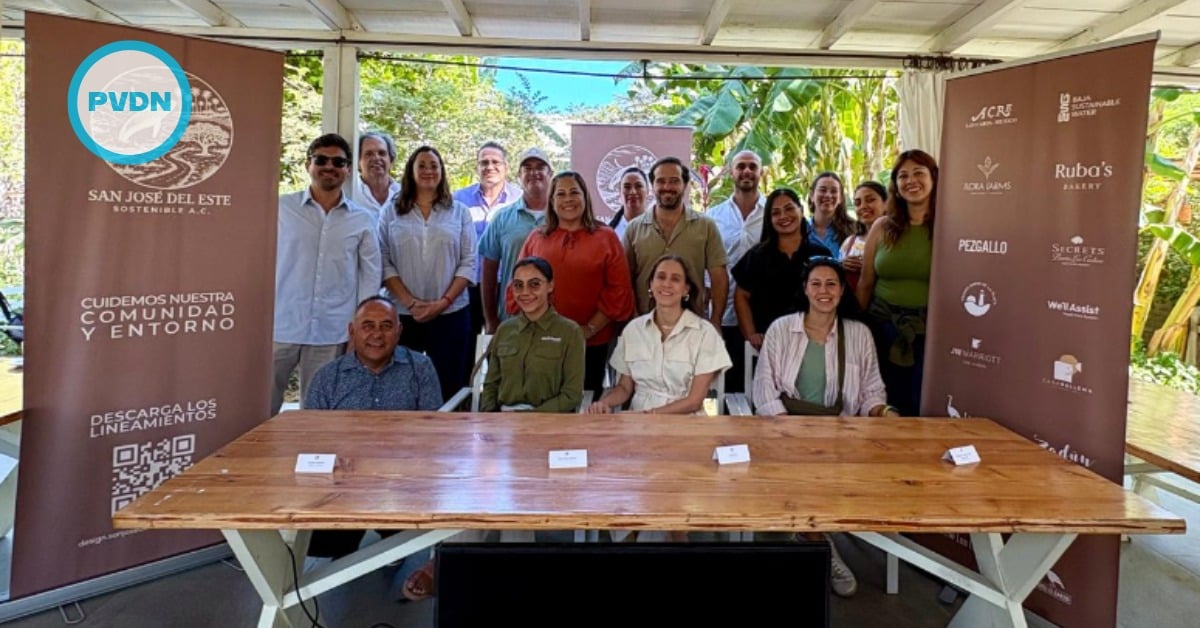
To strengthen their position, neighbors teamed up with a broader group, San José del Este Sostenible. The civil association brings together local businesses and projects from La Playa, La Choya, San Vicente and Las Ánimas, including hotels, farms, restaurants and the La Playa community center. Its president, Ruth Díaz, describes the goal as building prosperity that does not erase culture or damage fragile ecosystems.
One of the group’s first concrete actions was a voluntary design guide for new and remodeled buildings. The guide encourages the use of local materials, architectural lines that match existing streetscapes, and building orientations that reduce energy use in the desert heat. It is not law. No one can force a developer to follow it. But the association frames it as a donation of knowledge to the region, a tool that makes it harder to claim that “there was no other way” to build.
Behind these efforts sits a long history of coastal transformation in Baja California Sur. Research on the state’s beaches describes how tourism and real-estate projects have shifted once-marginal shorelines into the center of economic life, often at the expense of long-standing fishing and ranching communities. In the Los Cabos area, federal tourism plans, ejido land regularization and large private investments turned places like La Playa into strategic pieces on a national tourism map.
In practice, that shift has brought both opportunity and strain. The wider Los Cabos corridor between San José del Cabo and Cabo San Lucas is now lined with resorts and golf courses that draw visitors from around the world. Jobs in construction, hospitality and services have multiplied. At the same time, coastal land values have soared, and access to the sea has narrowed in some areas, adding pressure on older communities that once sat at the literal and social center of local life.
Keeping identity in the long term
La Playa’s current organizing reflects lessons from that wider coastal story. Residents and business owners appear determined to avoid a scenario where decisions are made far away and presented as a done deal. By forming a neighbors’ association, joining San José del Este Sostenible and drafting design guidelines, they are trying to move from reacting to proposals to shaping them early.
Environmental concerns are woven through this work. The La Playa community center has played host to marine conservation events and art programs that link young people to the sea beyond tourism and sport fishing. Local initiatives have focused on issues such as marine litter and wetland health, recognizing that the estuary and nearby beaches are more than scenery. They are part of a living system that supports both fishers and visitors.
Yet everyone involved knows that voluntary guides and recycling days have limits. The association wants to see its ideas reflected in official planning documents and in the day-to-day choices of builders, architects and public works crews. That includes basics like storm-water management, safe pedestrian routes and public spaces where residents can gather that are not tied to commercial consumption.
For now, the shared agenda includes water, education, waste and land-use planning. Participants describe it as a step-by-step process rather than a single campaign. Start with missions that feel achievable, they say, prove that collaboration can work, and then move into more complex debates over zoning, density and infrastructure.
What is clear is that La Playa’s identity is no longer treated as an afterthought. Residents and supportive businesses are framing it as a core asset. A fishing village that keeps its sense of place, they argue, offers something no resort can build from scratch. It offers a story, relationships and a way of life that people travel to experience.
Whether that argument carries weight as tourism continues to grow will depend on decisions made in municipal offices, planning meetings and corporate boardrooms. But on the streets of La Playa, the message is already written. Development is welcome. Erasing the village is not.