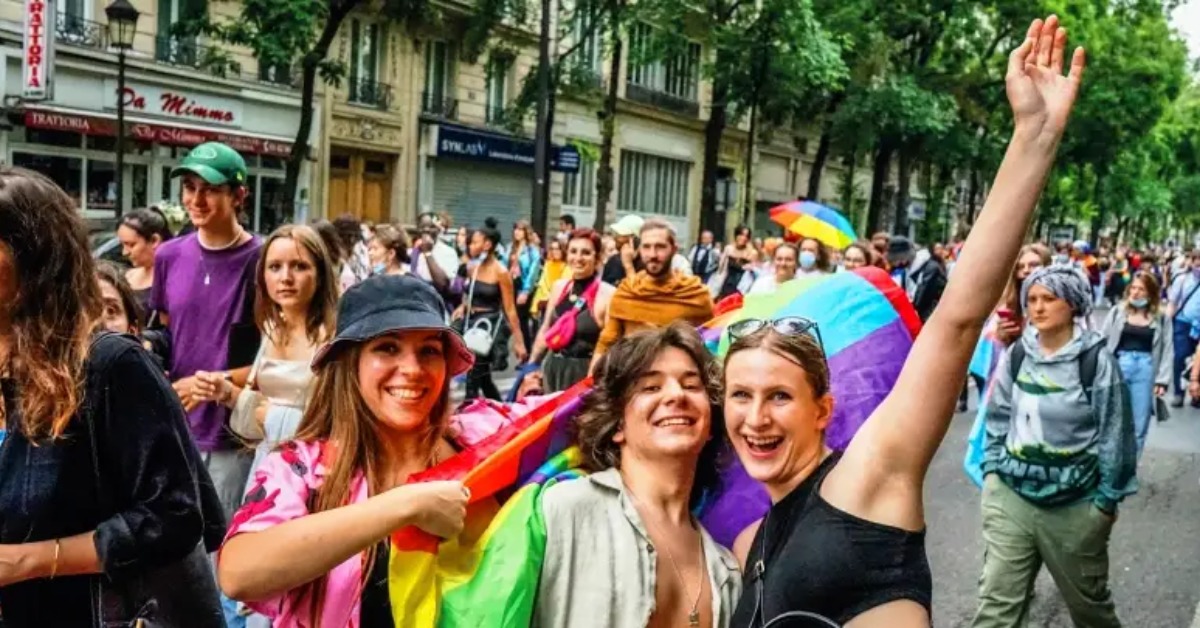
Lesbian Visibility Day is observed on April 26 in many countries to recognize lesbian women, their rights, and their place in public life. In Mexico, the date arrives with a mixed picture.
The country has made visible legal progress for LGBTQ+ people. Same-sex marriage is now recognized in every state. Court decisions have helped expand protections for same-sex couples, diverse families, and people facing discrimination based on sexual orientation or gender identity.
But the gap between legal recognition and daily treatment remains clear. Discrimination still shows up in workplaces, schools, health care, family settings, and public spaces. For lesbian women, that discrimination often sits at the intersection of gender, sexual orientation, and long-standing social expectations about family and relationships.
That is why the date matters beyond slogans. It draws public attention to a group that can be overlooked, even within broader LGBTQ+ conversations.
Why April 26 is observed
The observance began in Spain, where LGBTQ+ groups promoted a day focused on lesbian visibility and rights. The date later spread to other countries and has been adopted by activists, institutions, and community groups as a way to make lesbian women more visible in public debate.
Its purpose is simple but important. Visibility means being able to exist openly without being pushed into silence, treated as a private matter, or reduced to a stereotype. It also means being included in laws, public services, family policy, health care, and official data.
In Argentina, the date is different. Lesbian Visibility Day is observed on March 7 in memory of Natalia “Pepa” Gaitán, who was killed in Córdoba in 2010 in a case widely described as lesbophobic violence. That difference shows how each country has shaped the observance around its own history.
In Mexico, April 26 has become a day to discuss both progress and pending work.
What the numbers show in Mexico
Mexico’s official data shows why the issue remains a public policy issue, not just a personal identity one.
The national statistics agency estimated in 2021 that about five million people age 15 and older identified as LGBTI+. That equals 5.1 percent of the population in that age group, or about one in every 20 people.
A later national discrimination survey found that 37.3 percent of adults in the sexual and gender diversity population said they had experienced discrimination in the previous 12 months. Among women in that population, the share was higher, at 44.6 percent.
Those numbers do not measure only discomfort or social disagreement. Discrimination can affect access to jobs, housing, medical care, education, public programs, and justice. It can also affect whether people feel safe being open with relatives, neighbors, employers, or service providers.
In Mexico City, local anti-discrimination data placed discrimination linked to sexual preference among the top reported causes of discrimination. Local data also identified lesbians among groups facing discrimination, underscoring that visibility does not erase unequal treatment.
Legal progress has not ended social barriers
Mexico’s legal landscape has changed significantly over the last two decades. Mexico City was the first jurisdiction in the country to approve same-sex marriage. By 2022, all 32 states had authorized it.
The Supreme Court has also played a central role. Its jurisprudence has supported equal treatment for same-sex couples and broader recognition of sexual diversity under constitutional principles of equality and non-discrimination.
These advances matter. They affect real life. They allow couples to marry, form families, seek legal protection, and challenge exclusion.
But rights on paper do not always translate into rights in practice. Lesbian couples can still face barriers when dealing with family recognition, medical institutions, schools, employers, landlords and local officials. In some cases, the issue is not the absence of a law. It is the failure to apply the law without prejudice.
This is especially relevant for lesbian mothers, families with two women as parents, and women who need institutions to recognize their family structure without extra hurdles.
Why lesbian visibility can be different from general LGBTQ+ visibility
LGBTQ+ visibility is often discussed as one broad issue. But lesbian women can face a specific kind of invisibility.
Public conversations about LGBTQ+ rights often focus on gay men, trans women, or Pride events. Those are important areas of coverage. But lesbian women may be less visible in politics, business, media, tourism, sports, and public leadership.
There is also a gender issue. Women in Mexico already face inequality and violence in many areas of daily life. Lesbian women can face those same problems while also facing prejudice about who they love, how they form families, or whether they fit social expectations.
That can make discrimination less visible. It may appear as workplace exclusion, family pressure, harassment, jokes, housing bias, or assumptions that a woman’s relationship is not “real” unless it resembles a heterosexual household.
This is why visibility is not only about public celebration. It is about being counted, protected, and treated as an equal in ordinary settings.
What this means for foreigners living in Mexico
Many foreigners know Mexico through places with visible LGBTQ+ life, such as Puerto Vallarta, Mexico City, Guadalajara, Playa del Carmen, and other tourist or urban centers. These places can feel more open than smaller or more conservative communities.
That image is part of Mexico’s reality, but not the whole picture.
Acceptance can vary by city, neighborhood, family, workplace, and institution. A lesbian couple may feel comfortable in one setting and face suspicion or discrimination in another. Foreign residents may also misunderstand Mexico’s legal progress as proof that social barriers have disappeared.
For expats, the takeaway is practical. Mexico has strong LGBTQ+ communities and important legal protections. But lesbian residents, travelers, and couples may still need to understand local conditions, especially when dealing with housing, medical care, family paperwork, or public complaints.
Knowing where to report discrimination also matters. National and local anti-discrimination agencies can provide guidance, although access and response may vary by location.
Visibility is also about data and enforcement
One of the biggest gaps is information. Without detailed data, discrimination can be easy to minimize.
Lesbian women are often grouped into broad LGBTQ+ categories. That can hide specific patterns, such as discrimination against lesbian mothers, harassment in public spaces, exclusion in health care, or barriers inside schools and workplaces.
Better data can help public agencies design better policy. It can also help journalists, civil society groups, and local governments understand where protection is failing.
Enforcement is just as important. Laws against discrimination matter only when people know their rights and institutions take complaints seriously. For many people, filing a complaint can feel difficult, especially when the discrimination involves family, employers, landlords, or public officials.
That is why Lesbian Visibility Day continues to carry weight in Mexico. It marks progress, but it also points to the unfinished work of making rights usable in everyday life.
A day of recognition, but also a test
Lesbian Visibility Day is not only about being seen. It is about whether Mexican institutions, businesses, schools, families, and communities treat lesbian women as full participants in public life.
Mexico’s legal gains are real. They should not be dismissed. But the evidence still points to a country where discrimination based on sexual orientation remains a documented problem.
The challenge now is not only to recognize lesbian women once a year. It is to make sure equality is reflected in public services, legal processes, family recognition, workplaces, and daily treatment.
That is the real test behind Lesbian Visibility Day in Mexico.