A protest outside Mexico City’s housing institute has opened a new dispute over who gets access to public housing support, and how the city treats people already living on the edge. A collective of women and LGBT+ people who are homeless or at risk says members were attacked while demanding housing programs. A local lawmaker named by the group has denied involvement, leaving the case in a tense space between accusation, video evidence, and public accountability.
A protest outside Mexico City’s housing institute turns tense
A collective representing women and LGBT+ people who are homeless or at risk of homelessness denounced an attack outside Mexico City’s housing institute while demanding access to public housing programs.
The protest took place outside the Instituto de Vivienda de la Ciudad de México (INVI), the public agency that manages several housing support programs in the capital. The group said it went there to press for access to housing for people who face barriers in the private rental market and are often left outside formal social programs.
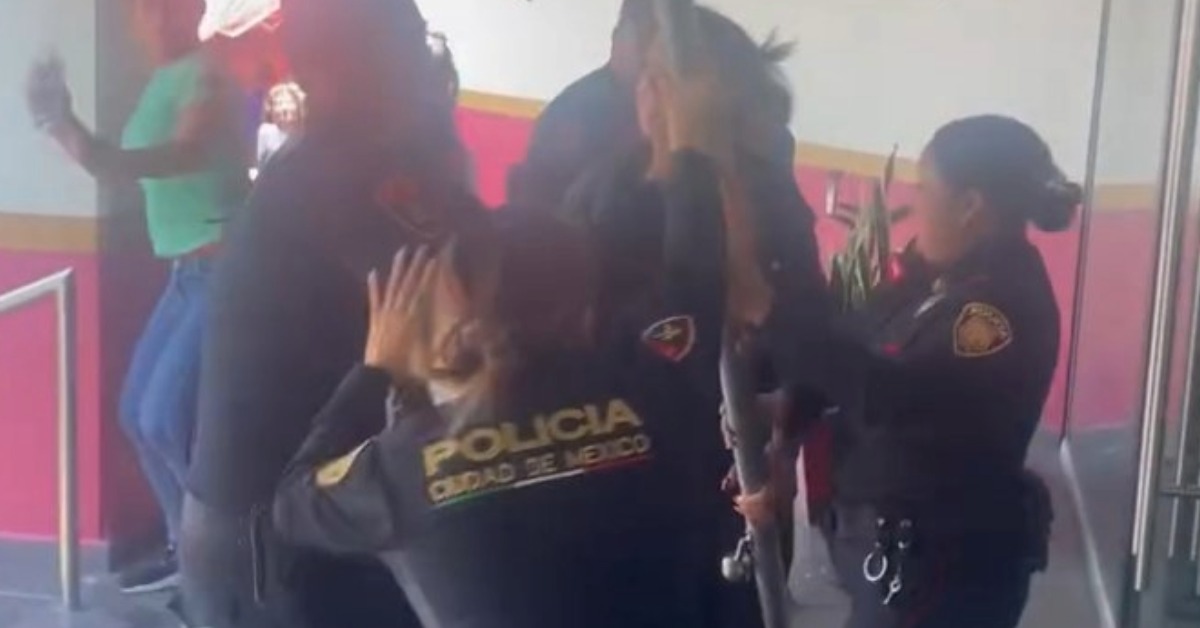
The collective accused people linked to local lawmaker Diana Sánchez Barrios of taking part in the confrontation. It also released a video from the scene. The footage shows a tense moment outside INVI, with police trying to contain demonstrators amid shouting and pushing.
The video helps show the confrontation, but it does not by itself establish full responsibility for how the incident began or who directed it.
Sánchez Barrios later denied involvement. In a public statement circulated after the confrontation, she said she rejected any act of violence and said the people seen in the videos were not part of her team. She also said she did not know what caused the confrontation and called for the dispute to be handled through dialogue and institutional channels.
What INVI does in Mexico City
For readers outside Mexico, INVI is the housing institute of the Mexico City government. It is not a private developer or a federal agency. Its role is tied to social housing, housing improvement, and financial support for residents who need help accessing secure homes.
One of its main programs, Programa de Vivienda en Conjunto, offers zero-interest financing and social-benefit support for housing projects. The program prioritizes residents with low income, people in vulnerable conditions, older adults, single mothers, women heads of household, people with disabilities, and people living in high-risk areas.
That mandate is important to this case. The protesters are not only asking for shelter beds. Their demand is framed around housing as a right, not just emergency aid.
For many people in Mexico City, the housing crisis is already difficult. Rents have risen in many central areas, formal rental requirements can be hard to meet, and people without a stable income often cannot pass basic screening. For trans women, LGBT+ people, and people who have lived on the street, those barriers can become almost impossible.
Housing is the center of the dispute
The collective’s demand reflects a wider concern among activists in Mexico City: shelters may offer short-term protection, but they do not solve long-term housing exclusion.
People living on the street or moving between temporary spaces often face a cycle that is hard to break. Without a fixed address, it becomes harder to find work. Without formal work, it becomes harder to rent. Without rental history, proof of income, or a guarantor, many landlords reject applicants before a lease is even discussed.
For LGBT+ people, and especially trans women, discrimination adds another layer. Some face rejection from family, harassment in public spaces, barriers in employment, and violence tied to gender identity or expression. Those risks can push people into street homelessness, informal housing, or unsafe living arrangements.
National data gives some context. Mexico’s official diversity survey estimated that about five million people in the country identify as LGBTI+. Separate discrimination data found that more than one-third of people from sexual and gender diversity groups reported discrimination in the previous year.
In Mexico City, the local anti-discrimination agency has also warned that trans people remain among the groups most affected by prejudice and exclusion. That exclusion can appear in public services, health care, schools, jobs, housing, and on the street.
The role of Diana Sánchez Barrios
The accusation drew attention because Diana Sánchez Barrios is not just a local lawmaker. She is also a known trans activist and a political figure tied to Mexico City’s street commerce networks.
Sánchez Barrios serves in the Mexico City Congress by proportional representation. Her official congressional profile lists her as a member of the parliamentary association Mujeres por El Comercio Feminista e Incluyente.
Her public career has included work on LGBT+ rights, informal workers, and street vendors. She has also been a controversial figure in Mexico City politics, including past legal accusations that she has denied and a 2024 armed attack in the Historic Center that she survived.
That background helps explain why the accusation spread quickly. The dispute touches several sensitive issues at once: LGBT+ rights, street politics, housing programs, public protest, and the influence of local political groups in the capital.
At this stage, the central facts remain limited. The collective says its members were attacked and has pointed to people it says are linked to Sánchez Barrios. Sánchez Barrios denies any connection to the confrontation. No public authority has issued a final determination assigning responsibility.
A broader fight over rights and access
The confrontation comes after years of pressure from LGBT+ and trans-led groups seeking stronger housing protections.
In 2024, Mexico’s National Human Rights Commission issued a recommendation addressing violations of rights affecting the trans population. The recommendation included the rights to health, education, work, gender identity, equality and non-discrimination, housing, culture, and access to justice.
The housing piece is central. Legal recognition of gender identity matters, but it does not automatically give someone a safe place to sleep. Anti-discrimination laws matter, but they do not always stop landlords, employers, neighbors, or officials from blocking access in daily life.
That is the gap activists are pointing to. Mexico has made visible legal progress on LGBT+ rights, especially in major cities. But the people most exposed to violence and poverty often remain dependent on slow public processes, temporary support, or small community shelters.
The INVI protest is therefore more than a confrontation outside a government office. It is part of a larger argument over how Mexico City should respond when people who face discrimination are also locked out of the housing market.
For foreign residents in Mexico, the case also shows how local housing debates often go beyond rent prices and construction. They involve access, identity documents, income requirements, public programs, political networks, and who is treated as eligible for help.
The next step is whether city authorities clarify what happened outside INVI and whether the housing demands receive a formal response. For now, the case remains a public accusation, a denial from the named lawmaker, and another sign that Mexico City’s housing pressure is falling hardest on people with the fewest options.