Los Cabos just linked arms with Oaxaca de Juárez in a new sister-city agreement that goes beyond ceremonial smiles. Officials are discussing shared tourism promotion, cultural exchanges, and even the possibility of Oaxaca riding along on Los Cabos’ international marketing push at FITUR in Madrid later this month. For residents and long-term visitors, the interesting part is what happens next: practical government know-how, visitor-service ideas, and the kind of food-and-culture collaborations you’ll actually notice on the street.
From handshake to homework
Los Cabos and Oaxaca de Juárez have formally signed a sister-city agreement designed to turn two very different destinations into practical partners. On one side is a global beach brand built around resorts, sportfishing, and high-end hospitality. On the other hand, there is a city that sells itself through heritage, cuisine, craft traditions, and a calendar that never really stops. The deal is meant to create a working relationship between city halls, not just a symbolic connection for commemorative plaques.
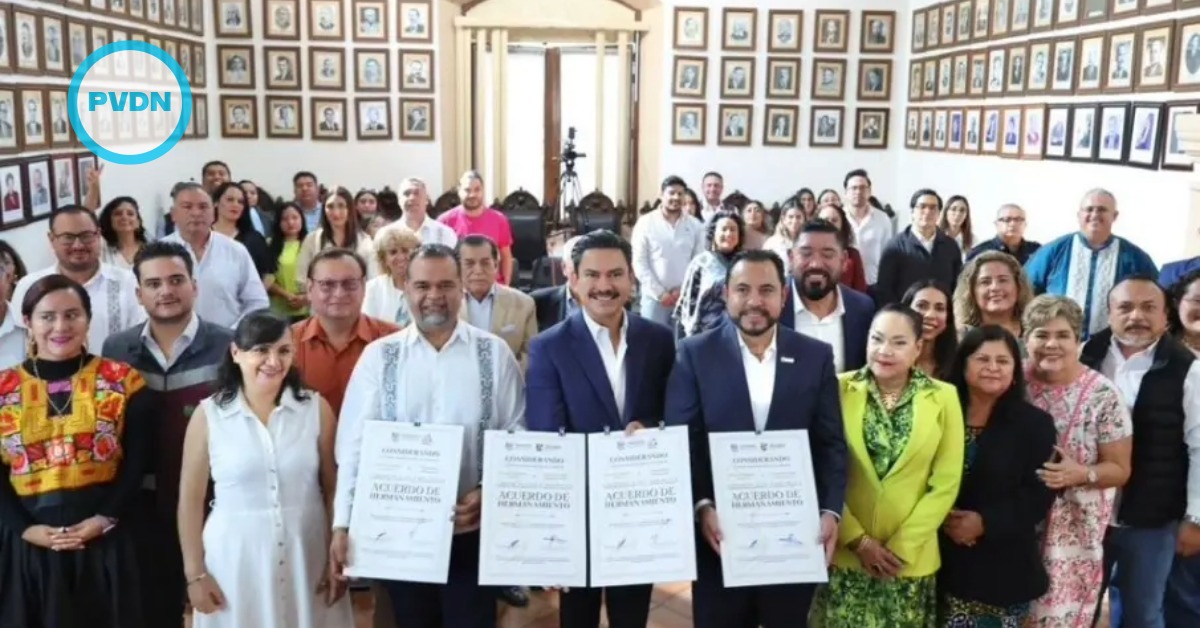
The signing brought together the two municipal presidents, Christian Agúndez Gómez for Los Cabos and Raymundo Chagoya Villanueva for Oaxaca de Juárez. The message from both municipalities was that the relationship should translate into concrete collaboration: sharing what works, borrowing ideas, and setting up joint initiatives that can be measured in visitors, events, and better local services.
Tourism and culture, with a practical edge
In the early discussions around the agreement, the emphasis is on tourism, culture, and gastronomy, but the more revealing details concern how that cooperation might operate. Los Cabos officials have pointed to Oaxaca’s visitor-service model as something worth studying, including tourist attention modules that can be adapted to a destination where first impressions matter and visitor expectations are high.
There’s also a straightforward marketing component already on the table. One of the first actions discussed is a promotional campaign for Los Cabos in Oaxaca de Juárez, using public-facing advertising spaces such as bus shelters. It’s a simple move, but it signals intent: this is not just cultural diplomacy, it’s also an effort to push real travel demand in both directions.
And then there’s the international stage. Officials have discussed using FITUR in Madrid, held January 21–25, 2026, as a platform for the new partnership to showcase to the global travel industry. If Los Cabos is already in the mix with international tourism marketing, the sister-city relationship could give Oaxaca de Juárez a fresh route to visibility in a setting that typically rewards destinations with sharp narratives and strong partnerships.
Why this matters for residents and expats
Sister-city agreements can be easy to dismiss because many never move past the handshake phase. What makes this one more interesting is the social reality connecting both places. Los Cabos has a significant population with roots in Oaxaca, and that human link is repeatedly cited as one reason the partnership feels natural. For expats living in Mexico, that detail matters because it’s often local demographics, not official announcements, that determine whether a policy relationship becomes something you actually experience.
If the municipalities follow through, the most visible changes won’t necessarily be in official documents. You’d notice them in the texture of day-to-day life: more coordinated cultural programming, more ambitious food collaborations, and a stronger presence of Oaxacan identity in Los Cabos events that already cater to visitors. On the government side, practical cooperation could manifest in the unglamorous but valuable work of improving how visitors are assisted, how services are delivered, and how local institutions learn from each other.
There’s also a longer arc here. The two municipalities didn’t arrive at this signing out of nowhere. A prior step was taken in 2025 at Tianguis Turístico in Rosarito, Baja California, where the mayors signed a letter of intent and spoke about sharing administrative practices and improving access to basic services for residents with ties across both cities. Seen in that light, this week’s signature looks less like a sudden announcement and more like a deal that’s been building quietly toward a formal commitment.
What to watch next
The success of this agreement will be determined over the next few months, not by the photo from the signing. The tell will be whether both municipalities assign staff, calendars, and budgets to the partnership, and whether the early ideas become scheduled events, visible promotions, and tangible service upgrades. If the relationship is treated as a working project, it could become one of those rare sister-city deals that produce real cultural exchange and real tourism movement, rather than a line on a municipal website.
For Los Cabos, the opportunity is to deepen its story beyond luxury beaches by leaning into one of Mexico’s most powerful cultural brands. For Oaxaca de Juárez, it’s a chance to plug its heritage and food appeal into a destination with global reach and international tourism muscle. For everyone living in Mexico and paying attention, it’s one more example of how local governments are starting to market, govern, and collaborate as if the stakes are national.