Recent road blockades in Los Cabos have reopened a hard question for local authorities: how to respond before public frustration shuts down the roads everyone depends on. State legislator Gabriela Montoya Terrazas is calling for stronger dialogue, early mediation, and clearer coordination among the three levels of government. The proposal comes after closures affected workers, families, students, emergency services, airport travelers, and people trying to reach medical appointments. Now the pressure is on authorities to act before the next shutdown begins.
Lawmaker calls for earlier intervention
A Baja California Sur lawmaker is urging authorities to act sooner when local conflicts begin to build in Los Cabos.
Gabriela Montoya Terrazas presented an exhortation in the state Congress calling for stronger dialogue, mediation, and early attention to public complaints. Her request was directed at federal, state, and municipal authorities.
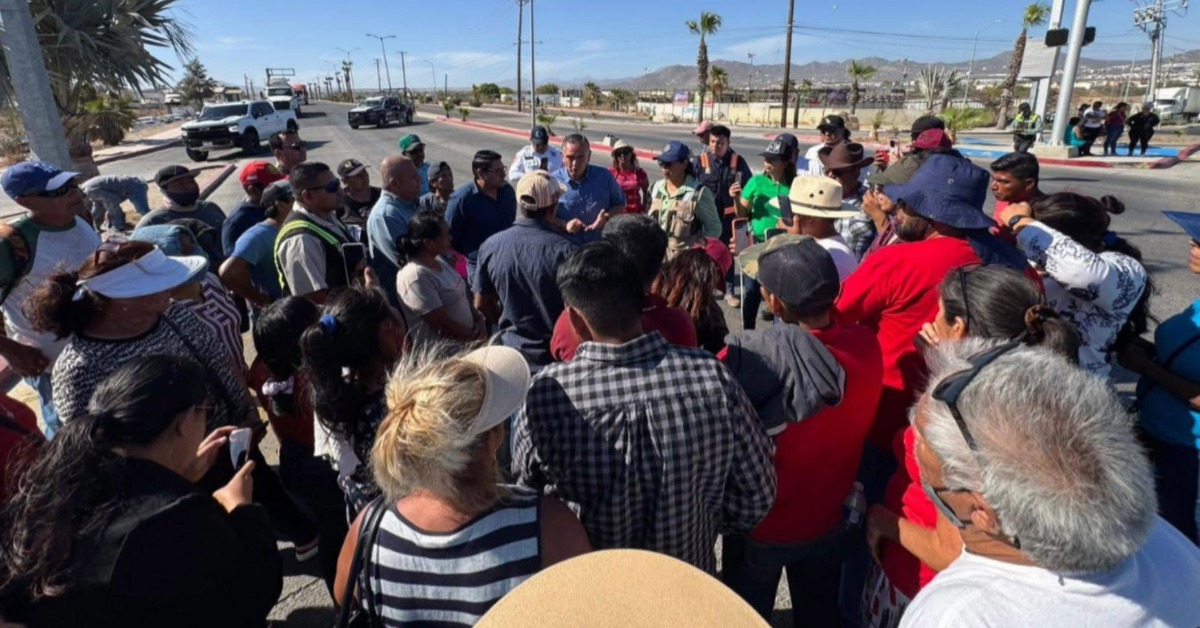
The appeal follows recent road blockades on the Transpeninsular Highway and other strategic routes in Los Cabos. These closures have affected workers, families, students, and emergency services. They have also delayed people trying to reach flights, medical appointments, and jobs.
Montoya recognized residents’ right to protest and raise public complaints. She also warned that road closures can create wider damage. That happens when thousands of people outside the dispute are blocked from moving.
Her central message was that Los Cabos cannot treat repeated road closures as normal.
A mobility problem with wider effects
Los Cabos depends heavily on a small number of major road links. When one of those routes is blocked, the effects can spread quickly across daily life.
That includes the Transpeninsular Highway, which connects Cabo San Lucas, San José del Cabo, the airport corridor and key work zones. For many residents, there are few practical alternatives when traffic stops.
Recent blockades have shown how quickly a local conflict can become a broader mobility issue. Workers can miss shifts. Students can be delayed. Ambulances and emergency units can face longer response times. Travelers can lose flights.
The same disruption also touches tourism, which supports many households in Los Cabos. Hotels, restaurants, transport providers, small businesses, and service workers all depend on reliable movement through the municipality.
Business and tourism groups have also voiced concern over recurring blockades. Their concern is not only about visitors. It is also about workers who depend on tourism income and need predictable transportation.
Protests often begin with unresolved complaints
The call for faster mediation comes after several public disputes led to road disruptions in recent months.
In March, families and supporters blocked the road near Los Cabos International Airport. They were demanding answers in a missing persons case. The road reopened after the young people were located.
In April, transport workers blocked part of the Transpeninsular Highway in San José del Cabo. The dispute involved an unpaid debt related to work near the Fonatur overpass.
Another April blockade involved residents from the Fundadores neighborhood in Cabo San Lucas. They protested over basic services, including water and electricity. They also pointed to problems with land regularization.
Those examples show why early response matters. Many blockades do not begin as traffic issues. They often begin as service, payment, safety, or housing complaints that residents say have gone unanswered.
Balancing protest rights and public access
The issue is not whether people have the right to protest. The larger question is how authorities respond before frustration reaches the point of a road closure.
Montoya’s proposal asks for permanent attention mechanisms before conflicts escalate. It also calls for clearer coordination among institutions when protests affect essential routes.
That balance is difficult but necessary. Residents need ways to be heard. At the same time, families, workers, and travelers need access to roads, schools, hospitals, airports, and workplaces.
For foreigners living in Los Cabos, the issue is practical. Road closures can affect airport transfers, medical visits, employee commutes, school schedules, and daily errands. It is a local government issue that can become personal very quickly.
The debate now moves to whether authorities can respond before people feel a blockade is their only option.