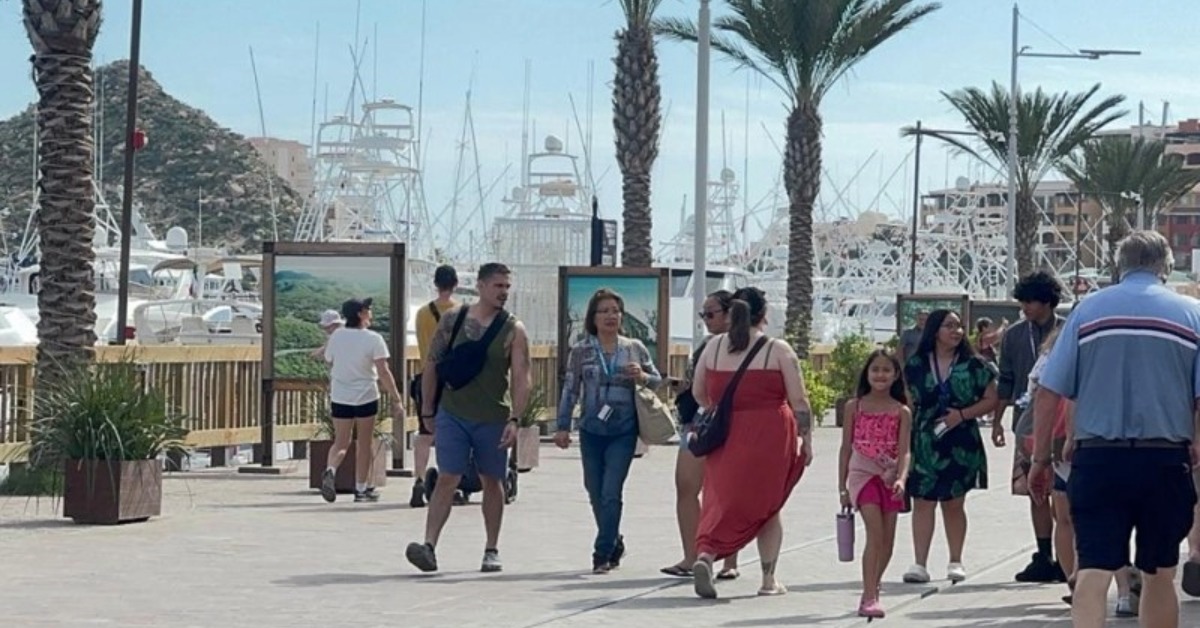
The fight over Los Cabos infrastructure is not really about paint and palm trees. It is about who now maintains the marina, boulevards, and public spaces that help sell the destination. Hotel leaders say the old system has left visible gaps after FONATUR stepped back. Local agencies are already responding, but the deeper question is whether Los Cabos can build a stable upkeep model for a tourism economy that still depends on first impressions today.
The complaint is about more than appearance
Hotel leaders in Los Cabos say the destination’s most visible parts are slipping. They point to tourism infrastructure once maintained under the old FONATUR model. The concern is strongest around the Cabo San Lucas marina and nearby boulevards. Those areas sit at the center of visitor movement and local commerce. In recent days, the hotel association and the timeshare sector met with API BCS and ASIPONA. They want stronger upkeep and clearer responsibility.
A representative of the hotel association said the problem is not limited to landscaping. The group is also seeking better cleaning, trash collection, and day-to-day conservation in the marina area. It has singled out the walkway around the marina, along with Boulevard Lázaro Cárdenas and Boulevard Paseo de la Marina. Those are some of the spaces that shape visitors’ first impressions and the daily conditions for workers and businesses.
Why the old FONATUR model matters
For many international readers, FONATUR needs some explanation. It was the federal tourism development agency tied to Mexico’s planned resort destinations, including Los Cabos. That role went beyond promotion and land planning. Over time, it also covered visible public works and maintenance in tourism zones. That included roads, medians, lighting, drainage, landscaping, and shared public spaces.
That structure has been changing. In a 2025 activity report, FONATUR said federal policy was transferring the infrastructure and operation of planned tourism centers to state governments. The same report said routine maintenance contracts that year were formalized only for CIP Nayarit and Acapulco-Coyuca. That helps explain the concern now surfacing in Los Cabos. The private sector is describing a gap between the old federal model and the current system on the ground.
Local agencies are already stepping in
The response is not starting from zero. On March 18, API BCS said it held a first work table with ASIPONA Cabo San Lucas and the hotel association. The stated goal was to improve urban and tourism infrastructure and related services around the marina. Earlier in February, the Los Cabos municipal government said it was already working with API BCS on cleaning, painting, green areas, and waste collection in downtown Cabo San Lucas and the marina zone.
Municipal officials have also framed urban infrastructure as central to Los Cabos competitiveness. Mayor Christian Agúndez said the municipality plans 120 million pesos in improvements for central Cabo San Lucas, central San José del Cabo, and the Costa Azul viewpoint. That does not settle the day-to-day question raised by hoteliers. It does show the issue has moved beyond private complaints and into public planning.
Why it matters now
This debate matters because Los Cabos remains one of Mexico’s busiest tourism markets. FITURCA’s tourism observatory reported 3.77 million arriving passengers at Los Cabos International Airport in 2025. At that scale, small maintenance failures can become highly visible. They affect walkability, traffic corridors, public order, and the destination’s image. They also affect workers, merchants, and residents who use the same spaces every day.
Los Cabos sells a polished image, and its tourism economy depends on that. The marina, medians, and central boulevards are not secondary spaces. They are part of the experience that visitors carry home. When maintenance slips there, the problem becomes both economic and cosmetic. That is why hotel leaders are treating the issue as a business risk, not just a public works complaint.
The dispute also shows how tourism development changes after a federal handoff. Hotels can maintain private property, but they cannot replace public agencies in shared spaces. Ports can help. Municipal crews can help. State entities can help. But the business sector is now pressing for a durable system, not a temporary patch. That is the real issue behind the latest warnings from the hotel sector.