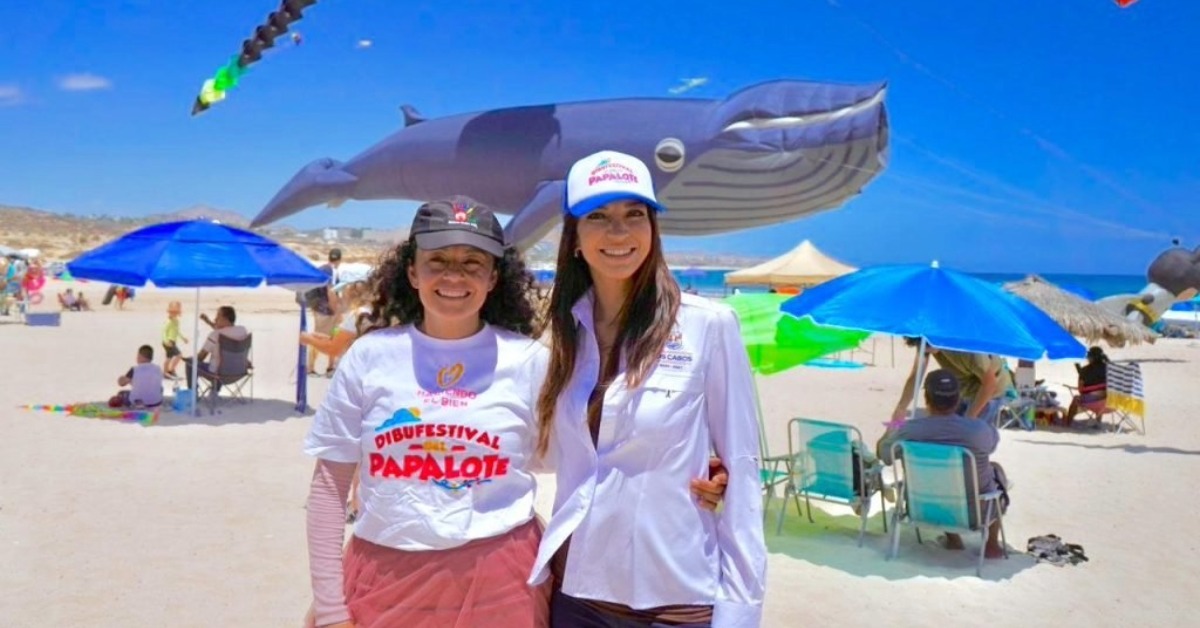
The Los Cabos DIF used the ninth Dibufestival del Papalote to send a message about what public family events can do beyond filling a calendar. During the gathering at Playa El Tule, DIF president Sol Delgado Moreno described the festival as a space for learning and family convivencia, placing the focus on children rather than on spectacle alone.
That framing matters because the event was not presented as a stand-alone beach activity. It was tied to the season around Children’s Day in Mexico and the Day of Good Deeds, two dates with civic and social meaning. In that setting, a kite festival becomes a way to talk about creativity, participation, and shared public life.
Why the event carries extra meaning
In Mexico, April 30 has long been observed as Children’s Day, a date on which schools, public agencies, and civic groups center children in public life. Around that date, local governments often organize activities that mix fun with messages about rights, inclusion, education, and community wellbeing.
The reference to the Day of Good Deeds adds another layer. That initiative is part of a wider volunteer movement that says it operates in 14 Mexican states, including Baja California Sur. By linking the festival to that theme, organizers placed the event inside a broader idea that public gatherings can encourage social responsibility and local participation.
For international readers, this helps explain why a story about kites is being treated as public-interest news. In many Mexican cities, especially in fast-growing places shaped by tourism, family festivals are often used to strengthen local identity and keep public space centered on residents, not only visitors.
What families found at Playa El Tule
According to local officials and organizers, the festival featured kite-making workshops, exhibitions, and a mix of cultural and entertainment activities. The program also included children’s programming and live performances, turning the beach into a temporary learning space as much as a recreation site.
Organizers said the goal was to bring children and relatives together through activities that encouraged participation. That idea of convivencia is important in Mexico. It usually means more than simply being present in the same place. It points to spending time together, interacting, and building community through shared experience.
DIF officials also stressed the festival’s sustainable side. That point fits the setting. Playa El Tule sits in a tourism corridor where public access, environmental care, and community use of coastal space are ongoing concerns. When local authorities highlight a family event there, they are also making a statement about how those spaces should be used.
More than entertainment in a tourism-heavy region
Los Cabos is widely recognized for resorts, beaches, and international tourism. That can make local community events easy to overlook. Yet stories like this show another side of the municipality. They show a government and civil groups trying to carve out room for residents, especially children, inside a destination economy.
The official language around the festival reflects that effort. Municipal departments tied to environmental education, culture, water awareness, beach management, and local enterprise support also took part. That suggests the event was seen as a cross-agency community activity, not just a one-day attraction.
There is also a practical point behind that approach. When families see public spaces used for workshops, art, culture, and children’s programming, those spaces can feel more local and more accessible. For a place like Los Cabos, where tourism can dominate the public image, that is a meaningful distinction.
What this says about local priorities
The immediate news is simple. DIF Los Cabos publicly embraced the Dibufestival del Papalote as a positive family event. The larger takeaway is that local officials are trying to define these gatherings as tools for social connection, child-centered programming, and civic participation.
That may sound modest, but it is part of a broader pattern in municipal Mexico. Public festivals are often expected to do more than entertain. They are asked to support education, reinforce community ties, and give meaning to public space. In Los Cabos, officials used a sky full of kites to make that case.
With information from the Government of Los Cabos