Long before infinity pools and celebrity yachts, Cabo San Lucas was a work town built around a tuna cannery. Then a beer commercial—shot for a national audience—helped beam the cape’s rock arch and wild seascapes into living rooms across Mexico. That mix of industry and marketing didn’t just sell product; it sketched an early map of what Los Cabos could become. Here’s how a factory whistle and a thirty-second spot helped put a remote fishing village on the country’s travel radar.
Los Cabos origin story
Stand at Playa Empacadora today, and it’s hard to picture the noise. Once, this was the heartbeat of Cabo San Lucas, a tuna cannery that provided steady paychecks and defined daily life. Archival histories place the plant’s beginnings in the late 1920s, with its operations spanning into the 1970s–80s, a period long enough to shape a town’s identity and earn a beach its nickname. The cannery came first—and with it, the people, the boats, and the practical reasons anyone lived at Land’s End.
The cannery also drew figures who later steered Cabo’s next chapter. Spanish-born manager Luis Bulnes Molleda arrived in the 1950s and became a pivotal local builder, bridging the gap from an industrial outpost to the early development of hospitality. Accounts describe a town of only a few hundred people when he arrived, with the cannery as the principal employer. Bulnes’ later ventures—boats, then hotels—helped convert Cabo’s sport-fishing reputation into year-round tourism.
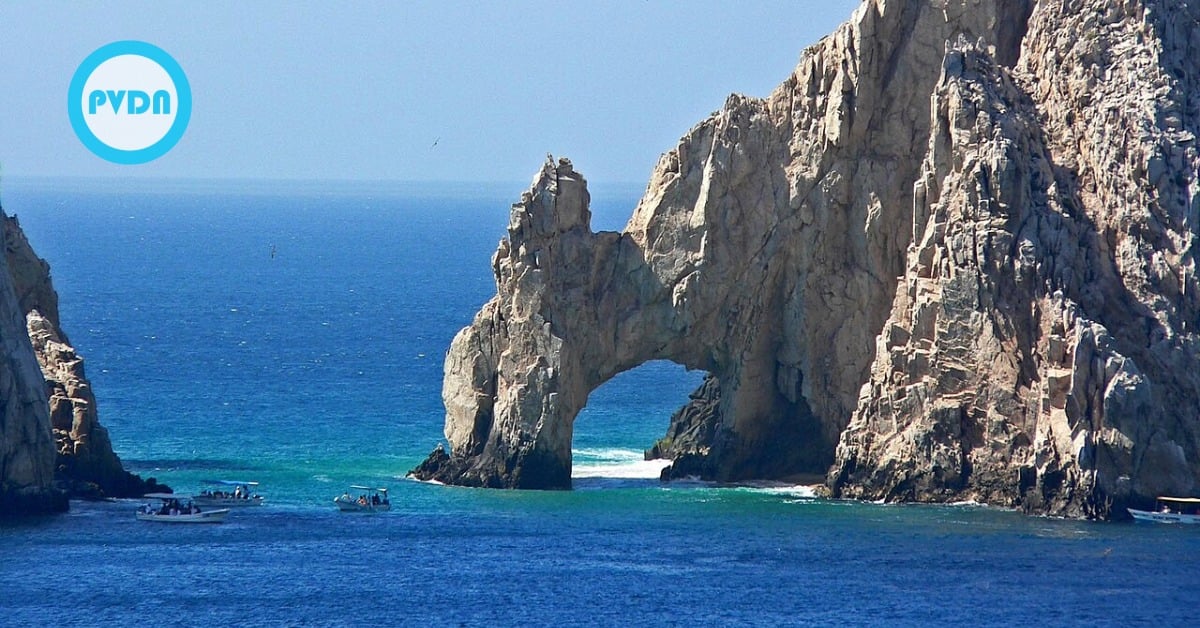
Then came the image shift. The El Sudcaliforniano feature recalls a national beer commercial that utilized Los Cabos’ dramatic scenery—particularly that unmistakable rock arch—to sell a lifestyle as much as a lager. There’s a reason it resonated: one well-produced spot could move more minds than a thousand brochures, especially in an era when few Mexicans had seen the cape in motion. The claim is plausible and straightforward—advertising didn’t invent Cabo, but it amplified it.
The power of that image rested on real geography. El Arco, where the Pacific meets the Gulf of California, already functioned as a natural logo. By the 1970s and 1980s, hotel marketing and travel media leaned hard on that silhouette. Even reference materials today treat the arch as a ready-made billboard for the destination, proof that the scenery has become shorthand for “Cabo.” A beer ad didn’t create the arch; it cast it.
From cannery town to planned resort
While pop culture and commercials were widening awareness, the federal government was sketching a more formal future. In the mid-1970s, Mexico’s tourism planners launched the Centro Integralmente Planeado Los Cabos, part of a national push to develop coastal destinations. That policy shift—expropriations, infrastructure, and long-term master plans—stacked hotels and airports atop the foundation that the cannery and sport-fishing had laid. The timeline is clear: FONATUR was created in 1974, and Los Cabos’ CIP followed soon after, becoming a strategic priority by 1976.
By the time the cannery finally fell silent, Los Cabos had already found a louder voice. The arch and the desert-meets-sea backdrop were starring in travel brochures; anglers were telling fish stories back home; hotel pioneers were building at Land’s End; and that beer spot had shown a broad audience what the end of the peninsula looked like. The town’s workaday past didn’t vanish—it lingered in place names like Playa Empacadora and in the shell of the old plant—but the economy’s center of gravity had shifted for good.
Even now, the arc from tins to tourism is visible. You can trace it from the ruins of the cannery to the marina, past sport-fishing fleets that replaced processing lines with charter slips. You can hear it in older residents’ stories about clocking in at the plant and in hoteliers’ lore about those first seasons when only a few hundred people lived here. And you can feel it every time a visitor snaps a photo of the arch—an image made famous not just by geology, but by the marketing moments that carried Cabo beyond the cape.