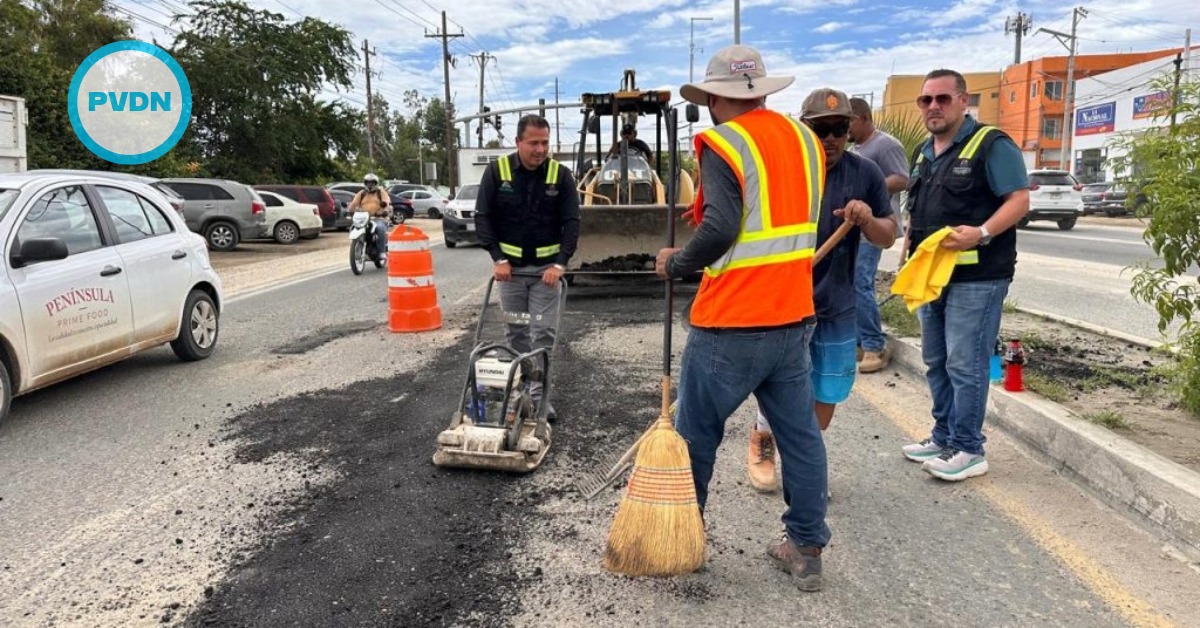
If you’ve been white-knuckling the drive between Cabo San Lucas, San José del Cabo and the airport lately, help may finally be on the way. Officials have put together a new funding package to tackle the potholes that exploded after December rains, including work on the Transpeninsular Highway and the worst-hit city streets. The headline number sounds big, but the real question is what kind of fixes are planned, where crews will start, and whether repairs will last through the next surge of traffic and weather.
Los Cabos officials say they are putting more than 50 million pesos into a new push to repair potholes and resurface battered stretches of roadway across the municipality, with the Transpeninsular Highway and the urban cores of San José del Cabo and Cabo San Lucas at the center of the plan. The goal, as it’s been framed, is to noticeably reduce the current backlog by mid-February 2026, after weeks of driver frustration and repeat damage in areas that had already been patched.
Where the money is going
The funding package is being presented as a coordinated effort, combining municipal participation with state involvement and resources tied to FOIS. This social infrastructure trust is funded through payroll tax revenues. The most significant slice is aimed at the Transpeninsular Highway, with 43 million pesos set aside for a mix of resurfacing and pothole repair along one of the municipality’s most heavily used corridors. On top of that, officials outlined two additional allocations of five million pesos each to address urban potholes, one for San José del Cabo and one for Cabo San Lucas.
For residents, this split matters because it signals two different kinds of work. The highway portion leans toward heavier intervention, the type of treatment that can actually reset a rough, cratered surface instead of chasing the same holes over and over. The city allocations, meanwhile, are meant to address the day-to-day pain points in neighborhoods and main arteries, where repeated patching has become routine.
Why the potholes came roaring back
The timing of this announcement is not accidental. Officials have tied the current spike in road damage to heavy rains in early December 2025, which chewed up asphalt and accelerated failures in already vulnerable areas. In plain terms, water got into weak sections, traffic did the rest, and familiar hazards multiplied overnight.
That’s also why locals have been seeing crews return to the same zones. Authorities have acknowledged that some stretches that were already repaired had to be rehabilitated again after the storms. Under the municipality’s existing “Cazabaches” push, progress had reportedly climbed high before the rains, only to slide back as new damage appeared and older patches failed under fresh stress.
What drivers should expect over the next few weeks
Officials say work will continue during lower-traffic hours to reduce disruption. However, drivers should still expect intermittent slowdowns and shifting work zones, especially along the Transpeninsular route that links Cabo San Lucas, San José del Cabo, and the airport. That corridor isn’t just a commuter spine; it’s the backbone for airport transfers, tourism transport, deliveries, and daily errands, which makes timing and traffic management almost as important as the repairs themselves.
Municipal crews have also been pointing to specific work areas already in motion, including sections running from San José del Cabo neighborhoods toward the airport, and targeted repairs in Cabo San Lucas around busy commercial zones. If you’re an expat who drives frequently, this is the stretch of the calendar where small adjustments pay off: leaving a bit earlier, avoiding peak bottlenecks when possible, and staying alert for sudden lane changes can save you more stress than the average “quick trip” usually requires.
There’s also a practical financial angle that tends to hit non-locals harder. Potholes don’t just slow you down; they chew tires, crack rims, and trigger alignment issues that show up days later. If you’re driving a rental, it’s worth being extra cautious, because damage policies can be unforgiving even when the road conditions are clearly to blame.
The bigger question of durability
The promise on paper is speed and scale, but the real measure will be staying power. Officials have suggested that the municipality wants to strengthen its capacity with specialized machinery so repairs can be more durable and maintenance can become a constant, not a seasonal scramble after storms. That’s an important signal in a place where traffic loads are intense, temperatures are punishing, and rainy periods can erase months of progress.
If the resurfacing work on the Transpeninsular is executed at a meaningful depth, and if urban repairs are paired with consistent follow-up, the mid-February target could translate into noticeably smoother driving through one of the busiest parts of the year. But residents will be watching for the familiar pattern: fresh patches that look good for a week, then unravel in the same old spots. This funding package is large enough to change that story, but only if the fixes match the scale of the problem.