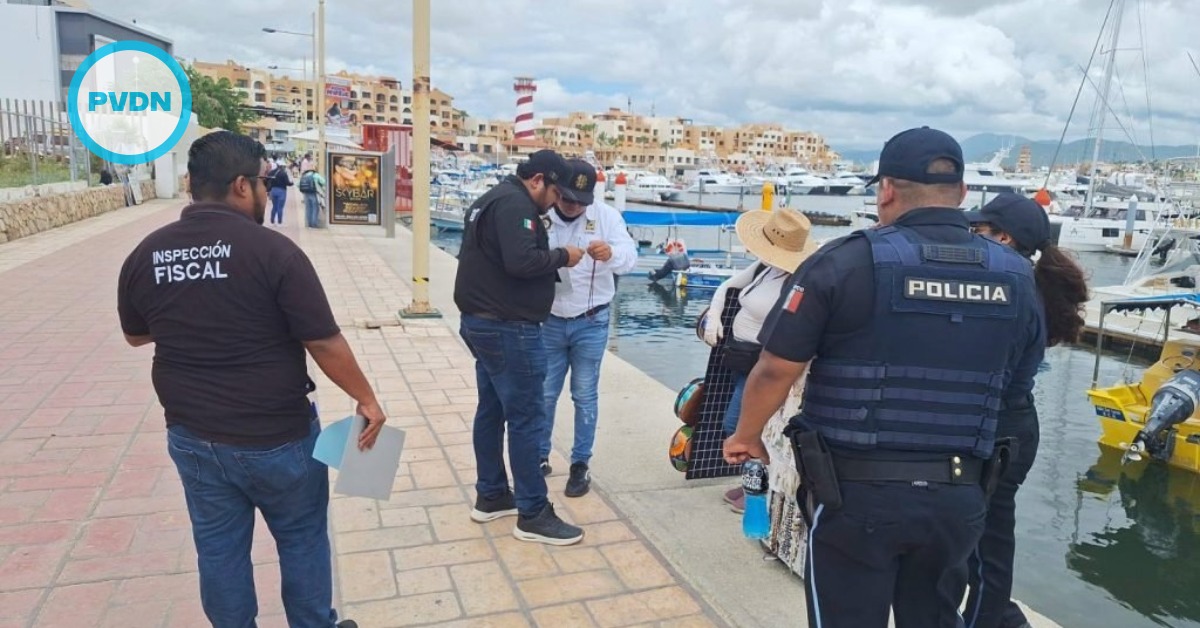
High season always brings a second tide to Cabo San Lucas: pop-up sellers chasing the crowds. This year, the city is pushing back in the Marina and on El Médano. Inspectors are checking permits around the clock and moving out vendors who can’t prove they’re registered. Officials say the goal is order, not punishment—but the message is clear. What counts as “authorized,” and how far will enforcement go as visitor numbers climb? For residents, the changes could mean fewer interruptions—and new friction on the sand.
Cabo San Lucas is in peak-season mode, and the city is treating informal vending as a pressure point it can’t ignore. Municipal officials say they have intensified enforcement in two of the area’s busiest tourist zones: the Marina and El Médano beach. The goal, they say, is to keep commercial activity within the rules, reduce crowding on walkways and beachfront corridors, and protect the visitor experience that drives the local economy.
Permit checks intensify at Cabo’s busiest spots
The enforcement push centers on permit verification and presence. Inspectors are patrolling throughout the day and night, checking whether sellers are authorized to operate in these areas. People offering goods without documentation are being told to stop selling there, and officials say the inspections will continue through the high-traffic weeks ahead.
For longtime residents, this story isn’t new. Cabo has always had informal sellers who appear when tourism surges, then fade when the season slows. What feels different now is the insistence on constant oversight—an approach the city describes as ongoing and continuous, rather than occasional “cleanups” that last a weekend and disappear.
The numbers behind the clampdown
Officials say the municipality has a fixed roster of authorized vendors, with a defined cap on the number of permits that can operate in these zones. That number matters because it shapes everything that follows: who can work, who gets moved along, and why enforcement can be strict even when the sellers themselves are not seen as the problem.
At the start of the season, municipal inspectors say they detected roughly 300 people selling without authorization in these same areas. They also say that the number has been dropping as enforcement stays in place. Local business voices have also raised alarms about what happens when vendor numbers spike beyond the permitted limit: tighter spaces, more aggressive selling, and a general sense that the beach and Marina stop feeling managed.
What changes for beachgoers and residents
If you live in Los Cabos, you’re not just a bystander in a tourist policy debate. These are the same public spaces many residents use daily—whether you’re walking the Marina for errands, meeting friends near the water, or spending a quiet afternoon at El Médano when the crowds thin out.
The city’s message is that legitimate sellers should be easier to spot and easier to regulate. In previous efforts to bring order, officials have pointed to identification measures—credentials and uniforms tied to the official vendor roster—as tools that help inspectors act quickly and help visitors understand who is authorized.
That framing is meant to reassure tourists, but it also creates a more predictable environment for residents. In the best version of this policy, it means fewer interruptions and less friction in public spaces. In the messy version, it can mean tense interactions when enforcement meets people who rely on informal sales to get by. Municipal officials say they are not trying to eliminate commerce, but they are drawing a hard line about where it can happen.
Child vending is a red line
Alongside permit enforcement, inspectors say they are also watching for child street vending, especially during school holidays, when more minors end up in public areas. Officials say minors should not be involved in selling, and they describe this as a non-negotiable part of the seasonal enforcement plan.
The city’s warning is aimed not only at unlicensed sellers, but also at people with permits. If an authorized vendor is found to be involved in vending involving minors, officials say the consequences can include administrative sanctions and even the loss of authorization. In other words, the municipality is trying to make child vending a risk nobody can afford to ignore.
For now, the practical takeaway is simple: enforcement in the Marina and on El Médano is not a one-off sweep. The city is signaling that it will continue to check, pressurize unauthorized sellers to leave these zones, and tighten the boundaries of what “informal” can look like during the busiest weeks of the year.