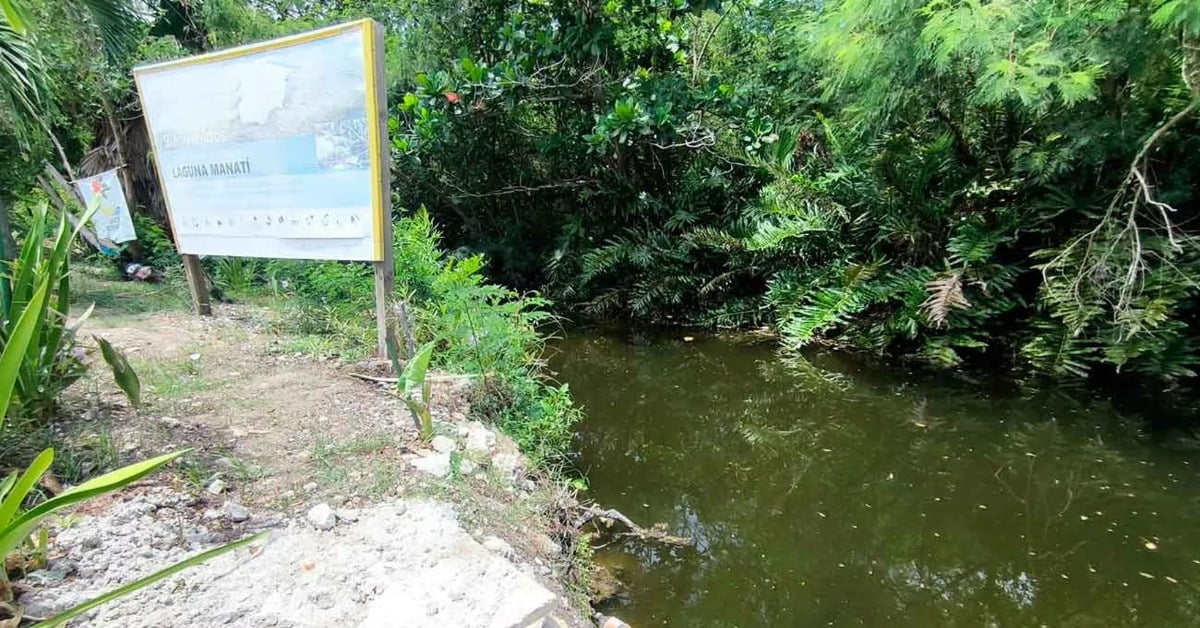
Cancún, QR – A recent cleanup in the protected natural area of Manatí Lagoon laid bare a persistent environmental threat: clandestine dumping in an artificial canal that runs through one of the city’s most developed sectors. During the first sweep, volunteers and guardians removed 12 tons of trash, much of it concentrated in the canal that now functions as an unofficial garbage dump. Activists and conservation stewards are demanding immediate physical protection, including fencing the expansive 200-hectare lagoon, to stop further degradation.
Arturo Zamora Minutti, the long-standing guardian of the area, said the conservation effort has been ongoing for eight years with a permanent committee of ten people. He described the current appeal as urgent: the entire lagoon needs to be fenced to block access to those turning the artificial canal into a dumping ground. The site’s proximity to new hotels, vacation rentals, and other development tied to the growth of Puerto Juárez makes it especially vulnerable, yet its status as an urban refuge for wildlife gives it outsized ecological value.
Despite the encroachment of tourism and real estate, Manatí Lagoon remains a surviving oasis in Cancún’s urban matrix. It sustains a surprising diversity of flora and fauna, functioning as a rare patch of habitat amid concrete and construction. Zamora Minutti emphasized that preserving this water body matters not just for optics or local pride, but because it serves as one of the few remaining natural buffers and biodiversity pockets in a city whose expansion has steadily eroded similar spaces.
Environmental activists who monitor the lagoon have been raising alarms about contamination risks for months. Their pleas to formally secure and manage the area reflect wider concerns about how urban growth in Cancún often sidelines the ecosystems that sustain long-term resilience. The call to fence Manatí Lagoon aligns with those warnings: without controlled access, the artificial canal will continue to invite illegal dumping, undoing years of grassroots conservation work.
Local environmental advocates point out that the problem at the artificial canal is emblematic of a broader pattern in the region, where informal dumping sites proliferate when enforcement is weak and protective infrastructure is absent. Cancún has seen high-profile efforts in recent months to shut down clandestine dumps elsewhere in the city, including the closure of large illegal waste accumulations and planning for monitoring systems to curb trash and other environmental abuses. These parallel efforts underscore that waste mismanagement is a citywide challenge, but the situation at Manatí Lagoon is especially acute because of its protected designation and its role as an urban wildlife refuge.
The lagoon’s protected status gives conservationists a legal and rhetorical foundation to press for funding and structural intervention. Activists argue that simple, immediate steps—like installing a perimeter fence, signage explaining its ecological importance, and routine patrols—could sharply reduce the volume of illegal waste entering the canal. Longer-term proposals include formalizing community stewardship, integrating the lagoon into urban environmental education efforts, and coordinating with municipal authorities to enforce penalties for those caught dumping.
The cleanup itself, which yielded 12 tons of debris, was both a symptom and a proof point. It showed how quickly trash accumulates when access is uncontrolled and how much labor and organizational muscle local guardians are pouring into keeping the lagoon viable. The weight of the waste removed also serves as a visual and logistical signal to officials that conservation work cannot rely solely on volunteers and goodwill. A fenced boundary would serve as a deterrent and a statement that Manatí Lagoon is not an afterthought in Cancún’s development narrative.
Zamora Minutti and his committee are now lobbying municipal and state officials to fund and authorize the fencing project. They stress that protecting the lagoon is not a move against development, but a necessary condition for sustainable urban growth—one that balances tourism and real estate with the survival of the natural systems beneath and beside them. The plea is sharpened by the awareness that once a critical mass of contamination takes hold, reversing it becomes far more costly and difficult, both ecologically and financially.
The situation at Manatí Lagoon offers a test of Cancún’s ability to reconcile its image as a world-class destination with the quiet, complicated work of environmental care. The Manatí Lagoon cleanup has drawn needed attention; whether it will catalyze the protective infrastructure activists want remains to be seen. For now, the haul of 12 tons of trash stands as evidence of what’s at stake—and what could be saved if the fenced protection is approved and enforced.