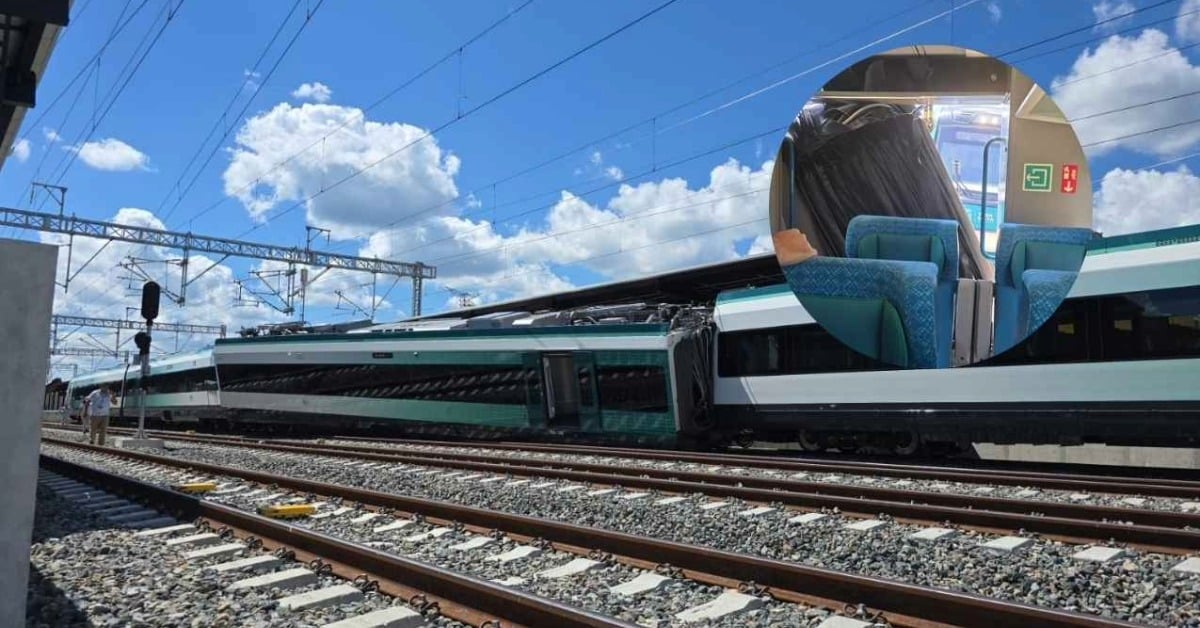
Mayan Train derailment in Izamal
What witnesses captured in short clips aligns across multiple newsrooms: a car resting beside the rails, passengers stepping down in a controlled way, and personnel directing people away from the train. Reporters placed the scene at or near the Izamal station on the trunk line that links Mérida with Cancún. As of publication, authorities had not issued a detailed explanation.
By late afternoon in Yucatán, several outlets still described the situation as developing, with officials yet to brief on the cause or corrective steps. One national desk noted the absence of an official position from federal authorities or the operator. That aligns with local coverage, stressing that information would be updated as verification came in.
What we know and what we don’t
We know the incident occurred on the Mérida–Cancún corridor, a high-traffic stretch for both residents and visitors. We also know that early reporting did not cite injuries. We don’t yet know what mechanical or operational factor led the car to leave the rails, or whether weather, track hardware, switching, or speed played any role. In the first hours after the derailment, state and national desks emphasized caution until investigators finished their initial review.
Some local coverage suggested a temporary disruption of service around the Izamal area while crews examined the consist and right-of-way. That detail remains attributed to preliminary reports rather than an official bulletin. Travelers on evening departures should check status updates before heading to the station.
A pattern worth watching
This is not the first time a Mayan Train car or work train has left the rails since the system began staged operations. In March 2024, a car derailed near Tixkokob; federal officials later pointed to a loose railway fitting on a manual switch. In January 2025, a ballast car tied to the project derailed near Bacalar. Neither case produced mass-casualty headlines, but both raised familiar questions about construction standards, maintenance, and procedures at switches.
The Izamal derailment arrives after an aggressive rollout designed to connect Campeche, Yucatán, Quintana Roo, and Chiapas hubs, with tourism and regional mobility as the project’s core promises. Advocates tout economic lift and new options for point-to-point travel. Critics warn that a complex rail build across karst terrain demands meticulous inspection regimens, especially on busy segments where a single disruption ripples through the day’s timetable. Backgrounders on the network’s scope and staged opening help frame both the opportunity and the operational stakes.
Why this matters to travelers and residents
Reliability is the actual test of any passenger rail. Even when injuries are avoided, a derailment shakes confidence and interrupts daily life. Residents who commute along the corridor weigh delays against the system’s convenience. Visitors measure headlines against their itineraries. Clear updates from the operator, transparent findings from investigators, and visible fixes are the fastest way to steady public trust after a scare like today’s. Early, verified details—plus practical guidance for ticketed passengers—will matter more than viral clips in the hours ahead.