A six-hour operation near Mérida’s Lucas de Gálvez market has cleared part of downtown that officials say had become difficult to walk through. The removal of 45 semi-fixed stalls is being framed as part of a larger public-space recovery plan, but it also touches a familiar issue across Mexican cities: how to balance pedestrian access, informal commerce, market tradition, and the daily needs of working vendors in historic centers.
Mérida removes semi-fixed stalls from downtown street
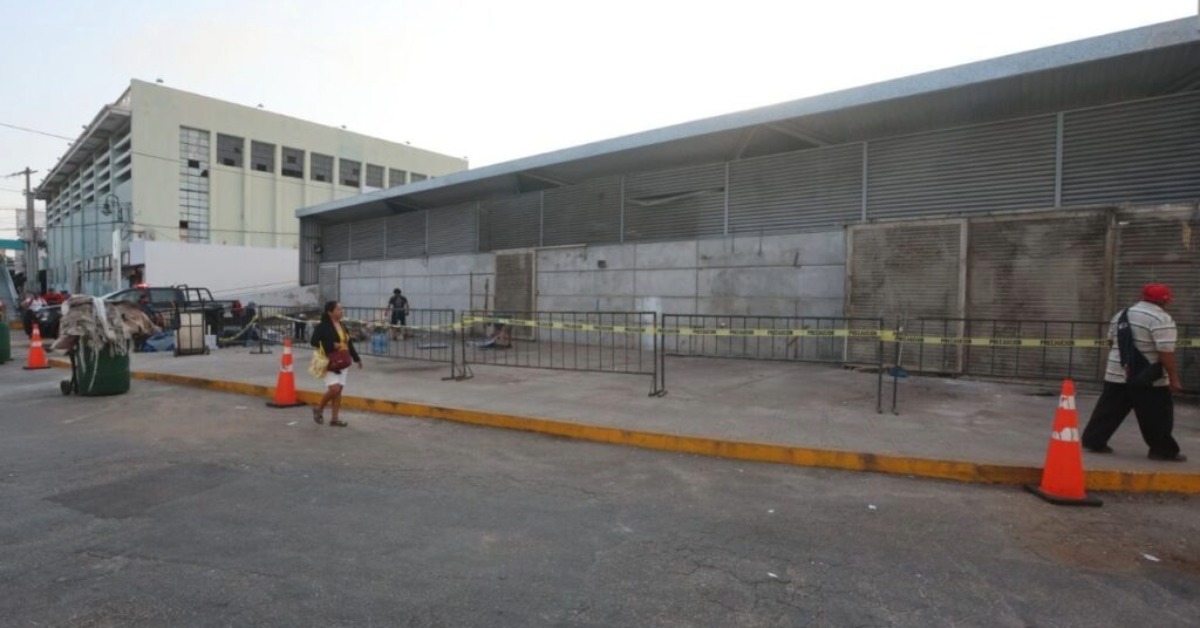
Mérida officials removed 45 semi-fixed stalls from a downtown street near the Lucas de Gálvez market, freeing sidewalk space in one of the city’s busiest commercial areas.
The operation took place on Calle 56-A, between Calle 67 and Calle 65-A, near the market complex. City officials said the area had been blocked by structures, trash, and irregular installations, affecting pedestrian movement.
The six-hour operation also removed a motorcycle parking area. Crews collected more than 10 tons of trash, eliminated irregular electrical connections, and dismantled a bathroom and storage area described as clandestine.
The city said the work recovered about 300 linear meters of sidewalk. Officials framed the action as part of a broader effort to improve access, cleanliness, safety, and movement around one of Mérida’s main public markets.
Playa del Carmen Street Vendor Permits Face Major Cut
El Médano chaos exposes Los Cabos beach control gap
Aguascalientes street vending surge alarms downtown shops
A crowded market area at the center of daily life
The Lucas de Gálvez market is not a minor retail corner. It is one of Mérida’s main traditional markets and a key stop for residents, local shoppers, food vendors, and visitors.
The market dates back to the late 19th century. It has been rebuilt and expanded over time, becoming part of the city’s commercial identity. Today, people go there for produce, meat, spices, prepared Yucatecan food, textiles, crafts, and everyday goods.
That mix is part of what makes the area important. It also makes it complicated. Markets like Lucas de Gálvez are not just shopping areas. They are transit corridors, work zones, food hubs, and social spaces.
For foreign residents who use Mérida’s Centro for errands, markets, transport, or visitors, the issue is easy to recognize. The same sidewalk can be used by pedestrians, vendors, delivery workers, motorcycles, elderly shoppers, and families. When that space narrows, walking becomes harder and less safe.
What the city says it is trying to fix
Municipal officials said the operation was part of a public-space recovery project tied to the renewal of the Lucas de Gálvez area.
The plan includes sidewalk repairs, pedestrian crossings, new benches, planters, trash containers, shade elements, and improvements to parts of the market’s exterior. Officials have also mentioned murals and upgrades to access points, including ramps and stairs.
The stated goal is to make the market area cleaner, easier to move through, and more functional without stripping away its identity as a traditional commercial zone.
That last part is important. Mérida is not trying to turn Lucas de Gálvez into a shopping mall. The challenge is to keep the market useful and recognizable while dealing with congestion, sanitation, and public access.
The city has said the intervention is being developed with outside urban design support, local academic input, and private investment. The broader message is that this is not only a cleanup operation, but part of a planned redesign of the market’s surroundings.
The tension behind semi-fixed stalls
The phrase semi-fixed stalls can be confusing for new arrivals. In Mexico, it usually refers to stalls that are not permanent buildings, but may stay in one location for regular selling activity. They can include carts, stands, tables, metal structures, or other setups.
These stalls are part of daily commerce in many Mexican cities. They often serve people who depend on small-scale trade for income. At the same time, they can become a flashpoint when they block sidewalks, use unauthorized electrical connections, occupy public land, or expand beyond permitted areas.
Mérida’s rules allow different types of market and street commerce under specific permits and payments. The issue is not simply whether a vendor is present. The issue is whether the stall is authorized, where it is located, and whether it blocks pedestrians, vehicles, emergency access, or public infrastructure.
That is why these operations often produce mixed reactions. Some residents welcome clearer sidewalks and cleaner streets. Some vendors fear loss of income or relocation to a less profitable spot. Formal businesses may support enforcement if they believe unregulated vendors have an unfair advantage.
Vendors and relocation
Local officials said the removed vendors were being considered for relocation into other spaces, including areas inside the Lucas de Gálvez and San Benito markets.
That detail matters because enforcement without relocation can turn a public-space issue into a livelihood crisis. Many people working in and around public markets depend on daily sales. A forced move can affect income immediately.
The city has said the operation followed dialogue with people involved. It also said the goal is to provide more orderly and dignified spaces for vendors while keeping sidewalks open.
The practical test will come after the cleanup. If the cleared space remains open, the city can claim a visible change. If vendors are moved into spaces where they can still sell, the operation may face less resistance. If either part fails, the same conflict could return.
A larger issue across Mexican cities
Mérida’s operation fits into a wider pattern across Mexico. Cities with historic centers and tourist traffic are under pressure to manage informal commerce, pedestrian safety, public image, and the needs of local workers.
That pressure is especially visible in downtown areas, on beaches, in plazas, and in market districts. These are places where commerce and public life overlap. They are also places where local governments face complaints about blocked sidewalks, disorder, trash, noise, and unfair competition.
For residents, the issue is rarely simple. Street vendors can be useful, affordable, and part of neighborhood life. But blocked sidewalks can make a city harder to use, especially for older adults, people with mobility limits, parents with strollers, and anyone walking in high heat or heavy rain.
Mérida’s challenge is to avoid treating public space as either fully commercial or fully decorative. A market district needs commerce. It also needs walkable sidewalks, clean surroundings, working infrastructure, and basic order.
What residents should watch next
The removal of 45 stalls is only the first visible step. The bigger question is what happens after the immediate cleanup.
Residents should watch whether the city completes the promised improvements around the market, including sidewalks, crossings, seating, shade, and trash infrastructure. They should also watch whether the cleared areas stay open over time.
The handling of vendor relocation will also shape public reaction. If vendors are moved into workable spaces, the city may reduce conflict. If relocation is unclear or poorly managed, the issue could become more contentious.