On a warm January night in Mérida, sequins and embroidery shared the same spotlight. What looked like a playful “Fashion Week” twist on Mérida Fest turned into something more: a public-space ball where drag performers reimagined Yucatán’s symbols, from the terno to local legends, through ballroom-style competition. For visitors and longtime residents alike, the show offered a fresh lens on a city refining its cultural brand. The question now is what happens when that spotlight returns.
When Fashion Week means something else
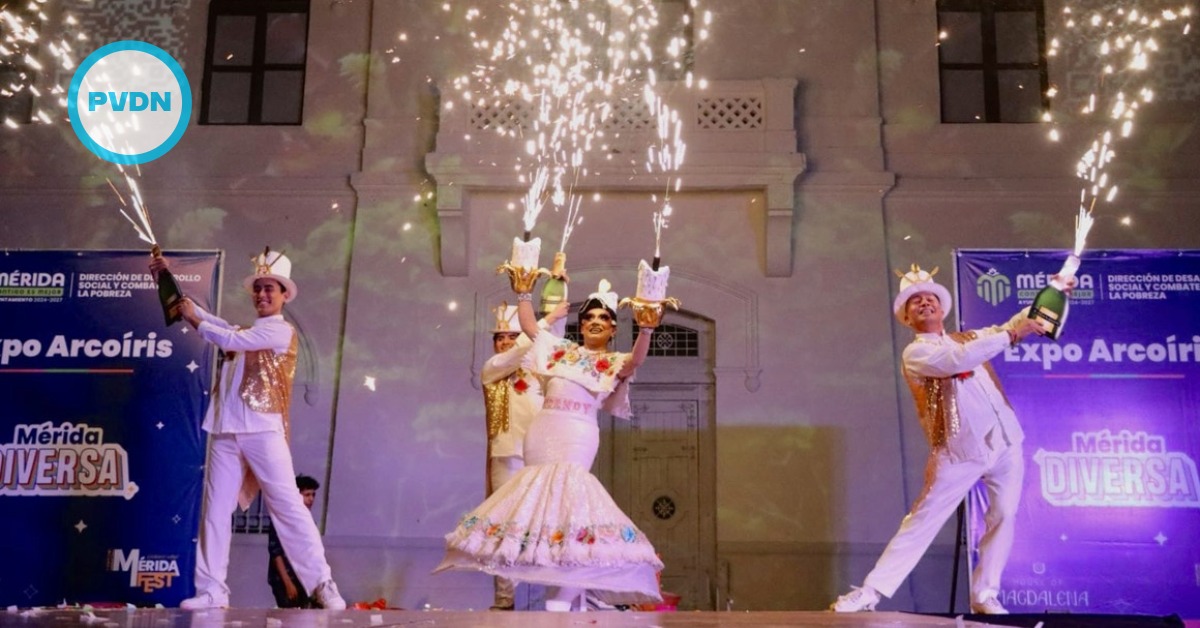
The name sounded like a wink, but the atmosphere made it clear this wasn’t a novelty act. In Parque de la Paz, the city’s January festival welcomed a drag-centered ball that leaned on ballroom culture’s competitive energy while keeping its feet planted in local ground. The result was part runway, part performance, part community gathering—held outdoors, free to attend, and designed to be legible to people who had never been to a ball before.
That public setting mattered. Mérida Fest is built around the city’s anniversary celebrations, and the programming tends to spill beyond formal venues into parks and plazas. This time, the spillover carried a message: the city wants its cultural calendar to feel expansive enough to hold difference in plain sight—families passing by, tourists pausing to watch, regulars showing up for the artists they already follow.
The ball was framed as an inclusive moment within the festival, and it arrived with a sense of intention. Not just “drag as entertainment,” but drag as a craft: design, character, choreography, and a working knowledge of what Yucatán’s visual language means to people who live here.
Ballroom energy, Yucatán iconography
At the heart of the night was the ball format—categories, walk-offs, performances, judging, and the sharp, supportive electricity that makes ballroom feel like its own grammar. But the theme pulled the competition toward “lo hecho en México,” giving participants a palette that included regional dress, popular dance, and references that read immediately in Mérida.
Several performances leaned into that cultural translation. One artist appeared as the Xtabay, drawing from a well-known local legend and turning it into stage presence rather than museum folklore. Another worked with the silhouette of the terno, stylized and theatrical, while still nodding to the garment’s weight in Yucatecan identity. A jarana sequence pushed the idea further—starting with recognizable elements and then flipping into something more contemporary, as if to say tradition can be a launchpad instead of a box.
This is where the event found its most interesting tension: it wasn’t trying to “modernize” culture by sanding down its edges. It was letting performers touch the symbols directly, then reshape them with humor, glamour, and precision. When it worked, it felt less like a costume party and more like a conversation—between generations, between insiders and newcomers, between the Mérida people imagine and the Mérida people are building.
A city selling art, not just sunshine
Mérida has spent years positioning itself as more than a gateway to nearby beaches or archaeological sites. The tourism pitch increasingly leans on “city of culture,” and Mérida Fest is one of the clearest expressions of that brand. In that sense, the ball fit the strategy: a distinctive, photogenic event with a clear identity, rooted in Mexican aesthetics, and easy to slot into a weekend itinerary.
But the more meaningful signal was who the city seemed to be speaking to. Events like this don’t just attract visitors; they tell residents—especially LGBTQ+ residents—that their forms of art belong in the civic story, not only in nightlife or private venues. They also tell newcomers and expats something practical: if you live here, you’re not just consuming a destination. You’re sharing space with a community that’s actively negotiating what visibility looks like in daylight.
That negotiation shows up in small details: the decision to place the event in a park, the emphasis on respectability without stripping away edge, the way the evening balanced spectacle with explanation so first-timers could understand what they were watching. It’s a kind of cultural hospitality—welcoming, but not diluted.
What lingers after the lights
The ball ran like a good public event should: energetic, paced, and long enough to feel substantial without overstaying its welcome. It also left behind a useful question for Mérida’s cultural planners and audiences. If this is the first step, what comes next—another one-off highlight, or the start of a recurring space where drag, fashion, and performance can keep evolving in conversation with local tradition?
For the performers, the night was proof of concept: that you can honor Yucatán’s roots while remixing them, that you can stage ballroom culture in a public park and make it feel both accessible and specific, that “inclusive” can mean more than a label if the city is willing to host the work where everyone can see it.
And for anyone watching—whether you flew in for Mérida Fest or you’ve been here long enough to have favorite corners of the Centro—there was a quiet takeaway under all the glitter. Mérida isn’t only preserving a past. It’s testing how a tradition-rich city can stay alive, with new voices holding the microphone.
With information from Diario de Yucatán, Yucatán Today, Diario de Yucatán, Quadratín Yucatán, 24 Horas Yucatán, Heraldo de México Yucatán