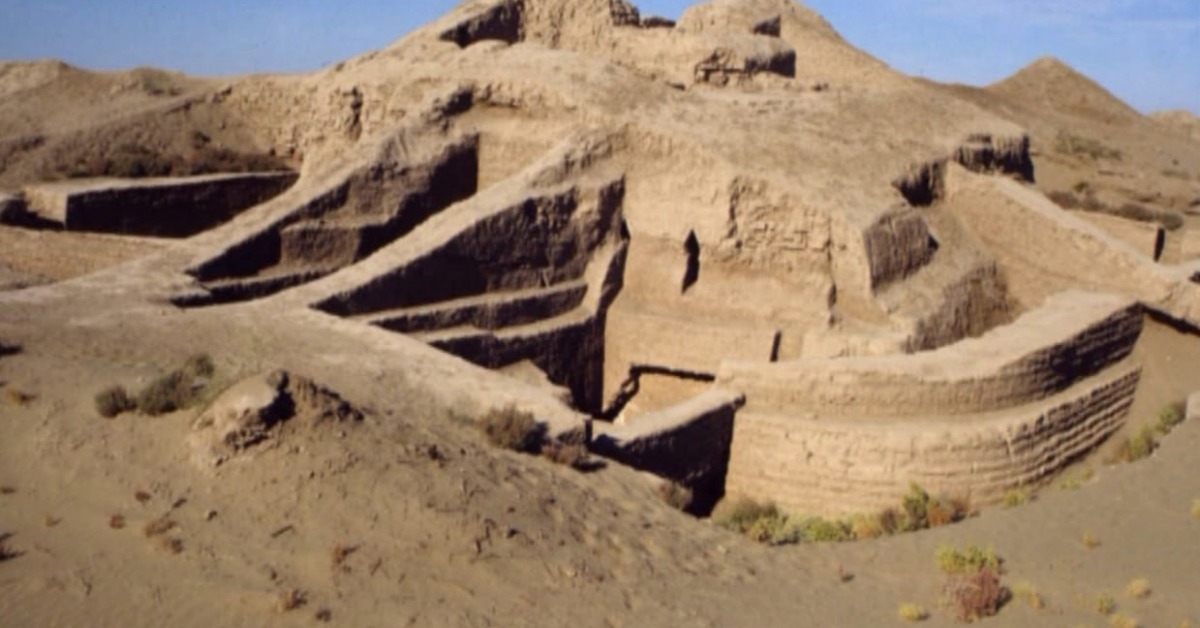
A guided visit to the Kalax Archaeological Reserve in Mérida has drawn fresh attention to a part of the city many residents pass without realizing its historical depth. The event centered on a walk through the reserve in Ciudad Caucel, where participants were introduced to visible remains and to the broader story of how archaeology still shapes urban life in Yucatán’s capital.
The visit was not framed as a tourist outing. It was presented as a local preservation effort tied to the idea that people who live near these spaces are often the first to notice threats and the first who can help protect them. That point matters in Mérida, where archaeological remains are not limited to famous regional destinations. They are also embedded inside neighborhoods, housing zones, and public spaces that continue to grow and change.
The guided route highlighted features that help explain why Kalax matters beyond its name on a map. Participants were shown a noria, hydraulic channels, areas linked to cultivation, an apiary, and spaces believed to have had religious or residential use. Taken together, those elements suggest a lived landscape rather than an isolated ruin. They show how older systems of water management, food production, and community life still leave traces in the modern city.
That is part of what gives the site its local weight. Kalax is not important only because it is old. It is important because it sits inside a present-day urban setting where questions of memory, land use, and neighborhood identity are very much alive. Residents have reportedly begun organizing to care for the site after concerns about improper use in the area. That turns preservation into something more practical than a slogan.
Mérida’s archaeology does not stop at major ruins
For many international readers, Yucatán archaeology usually means large and well-known sites outside the city. Mérida tells a different story. The modern city was built over the Maya city of T’Hó, also known as Ichcanzihó, and traces of that older world still appear in scattered and uneven ways across the urban landscape. Some survive in dedicated parks. Others remain partially buried, folded into later development, or protected through planning rules.
This is why local specialists have spent years arguing that Mérida should be understood not only as a colonial city, but also as an urban space with a deep pre-Hispanic layer. That layer is easy to miss if attention stays fixed on the cathedral, mansions, or central plazas. Yet it becomes harder to ignore once you look at the city through its archaeological parks and reserves, especially in the west and east of the municipality.
Published research on Mérida’s heritage landscape describes a municipality with more than 200 registered archaeological sites and a network of more than 20 archaeological parks and related protected spaces. The significance of that work is not only numerical. It argues that these places can function as public spaces, memory sites, ecological buffers, and neighborhood anchors. In other words, preservation is not just about fencing off the past. It is also about deciding what kind of city Mérida wants to be as it continues to expand.
That helps explain why a relatively modest guided tour can carry wider meaning. Kalax is part of a larger conversation about whether archaeological remains can remain visible and useful inside a fast-growing city. The answer depends on policy, but also on whether nearby residents view those spaces as abandoned land or as part of their own community history.
Preservation in Mérida is also an urban planning issue
The debate around sites like Kalax is not happening in a vacuum. Mérida has grown quickly for years, drawing new residents, new housing projects, and fresh real estate pressure. In that context, heritage protection can collide with the logic of rapid urban expansion. When land values rise, open areas and lightly protected spaces often face new risks, whether from dumping, encroachment, incompatible uses, or plain neglect.
That is why preservation efforts in Mérida increasingly sound less like museum language and more like city planning. Archaeological reserves inside urban areas affect how land is used, how green space is maintained, and how neighborhoods define themselves. The issue is not only whether a structure survives. It is whether the city creates a framework that lets these sites remain part of public life without being swallowed by growth around them.
There is also a social dimension that matters. Preservation tends to be stronger when local people feel a site belongs to them in a real way. That does not mean closing it off from outsiders. It means recognizing that the residents who live nearby are often the people who will notice damage first, defend the space most consistently, and carry its story forward. A reserve tied to neighborhood identity is harder to erase than one treated as empty land.
Why this story matters beyond Mérida
For foreigners living in Mexico, this story offers a useful reminder about how heritage works here. Cultural preservation is not always centered on postcard landmarks or major tourism campaigns. Sometimes it happens in residential areas, around smaller sites that do not make international travel guides but still matter deeply to local history. Those places often reveal more about how Mexican cities actually evolved than the most photographed monuments do.
In Mérida, that means understanding the city as layered rather than fixed. The colonial image remains strong, but it sits over a much older Maya past that is still visible if people know where to look. The significance of Kalax is that it pushes that hidden layer back into public view. It also shows that preservation is no longer only the work of archaeologists and officials. It is becoming a shared civic question, one that touches identity, growth, and the future shape of the city itself.
With information from Mérida Government