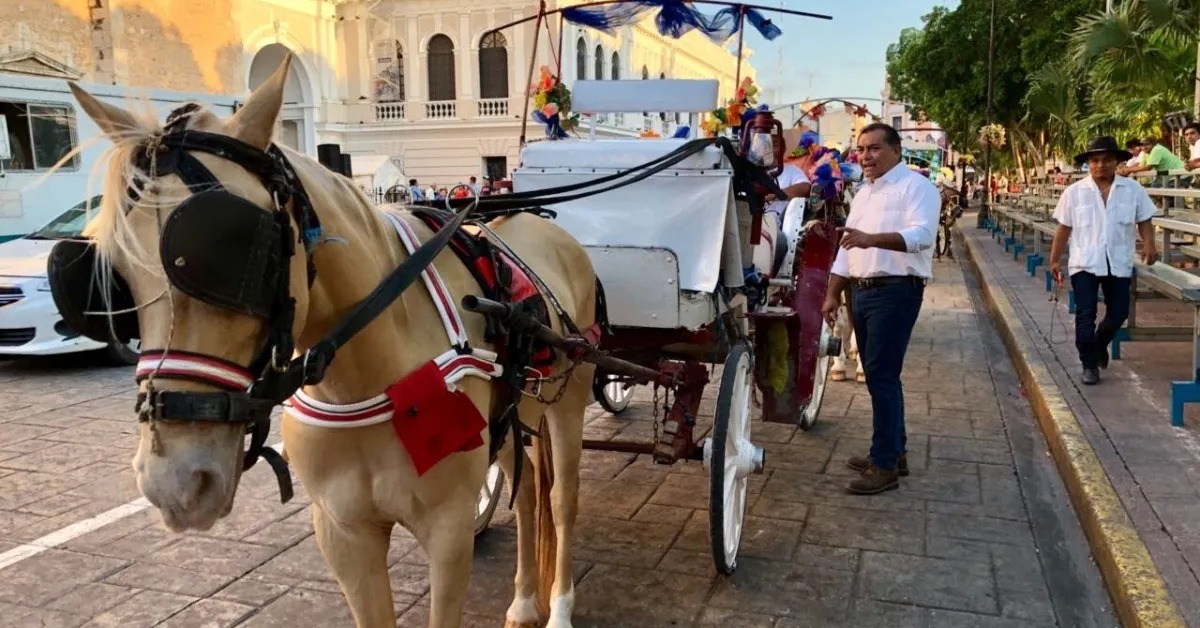
PETA Latino is renewing its call for Mérida authorities to ban horse-drawn tourist carriages, arguing that the practice puts both animals and passengers at risk.
The campaign targets the city’s traditional calesas, the carriage rides often seen around the Centro Histórico, Plaza Grande, and Paseo de Montejo. For many visitors, the carriages are part of Mérida’s tourism image. For animal-welfare groups, they have become a symbol of an old tourism model that no longer fits the city’s climate or public expectations.
PETA Latino says horses used for the rides can face long workdays, hard pavement, traffic exhaust, and high heat. The group is urging the city to replace animal-drawn carriages with alternatives that do not use horses, such as electric vehicles.
The renewed campaign comes as Mérida has already taken steps toward electric calesas, but not at the pace animal-welfare advocates want. That makes the issue less about whether alternatives exist and more about how quickly the city is willing to shift away from animal-powered tourism.
Why the issue matters in Mérida
Mérida’s calesas are tied to the city’s tourism economy and its historic-center identity. Rides are commonly marketed as a relaxed way to see central landmarks, especially for visitors who want a slower view of the city.
But the debate has grown sharper as Mérida’s heat and traffic have become harder to ignore. Animal-welfare advocates argue that a horse pulling passengers through paved streets is exposed to conditions that are difficult to control. These include direct sun, hot pavement, noise, vehicle exhaust, and sudden movement in traffic.
PETA Latino also points to past incidents involving carriage horses in Mérida. Those episodes have included horses collapsing or becoming distressed in public streets, fueling public concern about whether regulation is sufficient.
Supporters of the carriage trade often frame the service as a local tradition and a source of income for drivers and families. Opponents argue that tradition should not be used to preserve a practice that may harm animals.
That tension is central to the Mérida debate. The city is not only weighing animal welfare. It is also weighing jobs, tourism branding, and public pressure from residents and visitors.
Electric calesas are already part of the discussion
Mérida has not ignored the issue. The city has already promoted electric calesas as an alternative to horse-drawn rides.
The idea is simple. The electric units retain the look and feel of the traditional carriage experience while removing horses from the work. That model could allow tourists to keep a familiar Mérida experience without relying on animal traction.
Earlier efforts included electric units introduced as a more sustainable option for visitors. The city later faced problems with keeping some units in service, including maintenance and battery issues. More recently, municipal officials have discussed returning more electric carriages to operation and using them as part of a gradual transition.
That gradual approach is where animal-welfare advocates and city officials may differ. PETA Latino is calling for a ban. Mérida’s current direction appears more measured, with officials favoring replacement over time and continuing to monitor horses still in service.
For readers living in Mérida or visiting often, this matters because tourism choices can shape how quickly the market changes. If visitors choose electric units when available, the city and operators may have more incentive to expand them.
Heat is a central concern
The heat issue is not a small detail in Mérida. The city regularly faces high temperatures, especially in spring and summer. Even short outdoor activity can feel intense for people not used to Yucatán’s climate.
For horses, animal-welfare advocates say the risks can be more serious. Working animals can face dehydration, fatigue, and heat stress when pulling weight on paved roads. Hard street surfaces can also contribute to leg and hoof problems over time.
Local discussions have included changes to work schedules during hotter periods. The goal is to reduce exposure during the most intense hours of the day. Veterinary monitoring has also been cited as part of the city’s response.
Those measures may reduce risk, but they do not end the debate. PETA Latino’s position is that the problem is not only poor enforcement or individual operators. The group argues the model itself is outdated because it depends on animals working in urban tourism conditions.
That is why the campaign focuses on prohibition rather than better oversight.
What this means for foreign residents and visitors
For international residents, the issue may arise in practice. Visitors may ask whether carriage rides are ethical. Residents may see the calesas as part of local life, but also feel uneasy about the horses working in the heat.
The cleanest choice for those concerned about animal welfare is to avoid horse-drawn rides and choose electric calesas when available. Walking tours, private guides, taxis, and other local transport can also support the tourism economy without using animals.
At the same time, the issue is not only about tourists. Any full transition would affect caleseros, the operators who depend on the work. A successful shift would likely require financing, training, maintenance support, and a clear plan to replace animal-drawn units without suddenly cutting off livelihoods.
That is often the hardest part of these debates. Many residents may agree with better animal protection, but still want a transition that is fair to workers.
The larger question for Mérida tourism
Mérida is not alone in facing pressure over animal-based tourism. Around the world, cities that once promoted carriage rides as charming or historic are now being asked to rethink them.
The question is whether a tradition can be updated without losing its value. In Mérida, electric calesas offer one possible answer. They preserve the ride’s visual style while removing the animal-welfare concerns associated with horses.
But replacing the service will take more than public statements. It will require working vehicles, reliable maintenance, operator participation, and sufficient rider demand. It will also require a clear city policy on whether horse-drawn carriages will be phased out or allowed to continue under tighter rules.
For now, PETA Latino’s renewed campaign has put the issue back in the spotlight for authorities and the public. The next question is whether Mérida treats electric calesas as a limited alternative or as the future of the service.