Mérida’s water network is now tied to a larger funding decision in Yucatán. Japay says leaks, old pipes, pumping equipment, and wastewater plants need years of work. A proposal is expected to move through the state Congress, where approval would shape the next phase. The plan follows recent repairs and new technical agreements. The agency says the deeper problem is the system’s age and the pressure created by growth. What lawmakers do next will determine how quickly work can start.
Mérida water system needs major upgrades, Japay says
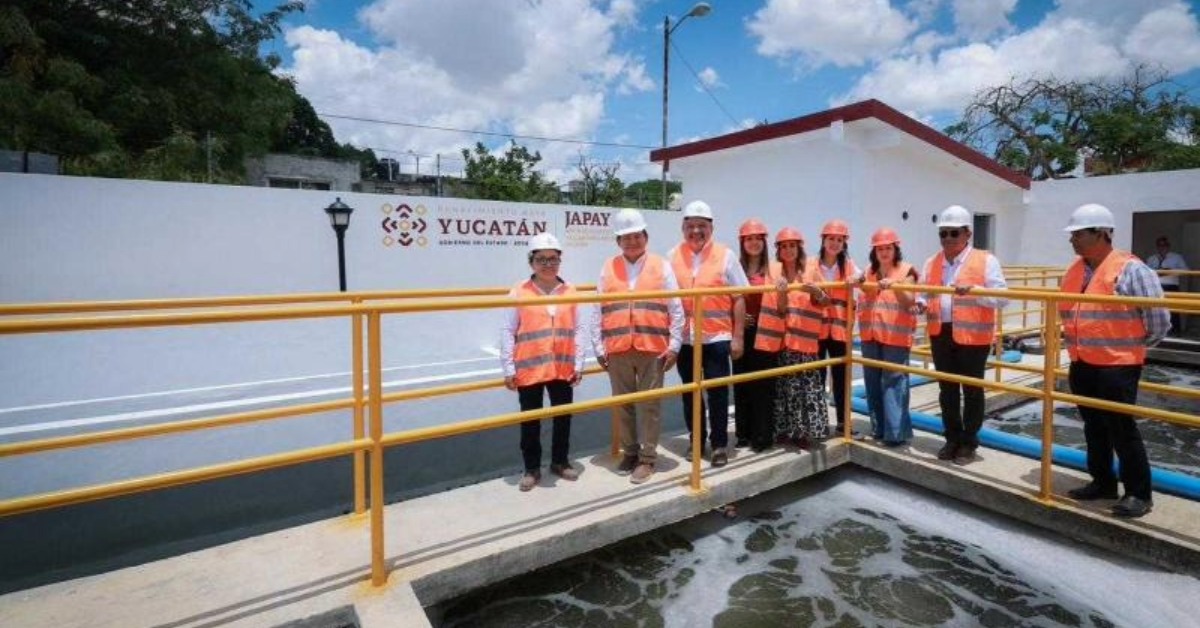
Mérida’s water and sewer network needs a broad upgrade because of leaks, aging pipes, and equipment problems, according to Japay director Francisco Torres Rivas.
The state government is expected to send a financing proposal to the Yucatán Congress for work on the system. Torres Rivas said the project should not be treated as a political issue, arguing that water service affects more than 1.5 million people.
The plan comes as Mérida continues to deal with service pressure tied to old infrastructure and higher demand. Japay has identified problems in the water distribution network, pumping equipment, cárcamos, and wastewater plants.
Work would run through 2030
The proposed work is part of a plan projected through 2030, according to Japay. The agency has pointed to the city’s growth as one reason the system needs deeper investment.
One issue is the shift in some areas from single-family homes to buildings of three or more levels. That kind of growth increases demand on a network that was not built for the same density.
Among the proposed actions are the replacement of pumping and rebombeo equipment, renewal of electromechanical systems, rehabilitation of cárcamos, and modernization of wastewater treatment plants.
Japay has said seven plants have already been rehabilitated. Thirty more still need work with more efficient technology.
Mérida I is among the main weak points
Japay identified the flow line at Mérida I as one of the most critical points. The plant is the oldest in the system and has a high number of leaks, according to the agency.
Torres Rivas also showed the monitoring system used to supervise the distribution network, supply wells, and the Mérida I, II, and III plants.
The agency recently signed an agreement with the Instituto Tecnológico de Mérida. The agreement is intended to bring together students, laboratory capacity, and technical support for water and sanitation projects.
State officials have also reported recent work on specific water projects. These include the rehabilitation of the Fidel Velázquez wastewater treatment plant and a capture zone with a conduction network in San Antonio Xluch III.
The larger question is whether lawmakers approve the financing needed for the next phase. Until then, the broader upgrade remains tied to the state Congress.