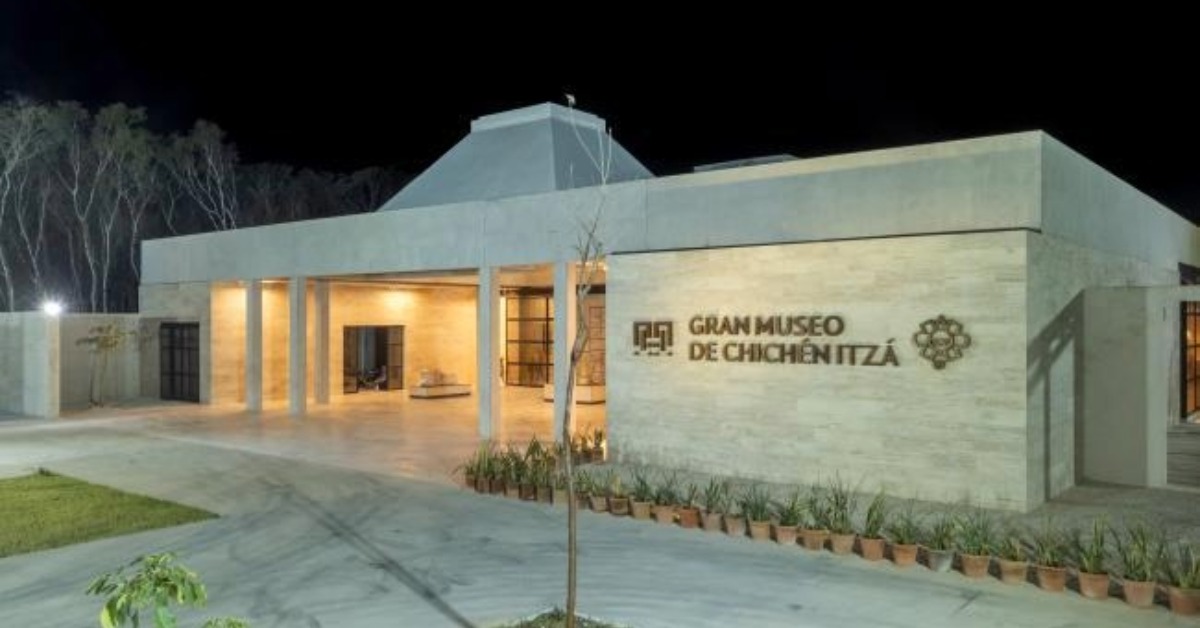
Chichén Itzá’s latest conflict began with gates, ticketing, and a new visitor center, but the fight reaches deeper into the local economy around Pisté. Artisans, guides, and community leaders say the CATVI shift could redirect the flow of tourists, cash, and authority away from the old parador. State and federal officials call it a cleaner, safer model for one of Mexico’s busiest archaeological sites. The amparo now asks a court to look at who was consulted before the switch.
Who Controls Chichén Itzá? The CATVI Dispute Explained
Chichén Itzá’s latest dispute is about a gate. That sounds small until the gate decides who meets the buses, who sells first, and who controls the first minutes of a visit to one of Mexico’s most valuable archaeological sites.
The Maya community of Pisté has taken the fight to federal court. Local reporting says the Concejo Indígena de Gobierno de la Comunidad Maya de Pisté filed an amparo to suspend a plan by INAH and Cultur, the Yucatán state tourism-services agency. The contested move would close the old parador and make the new CATVI the only public access route into the archaeological zone. At its core sits a practical question in legal clothing. When heritage tourism gets modernized, does the nearby community get a seat at the table, or a new place to stand in line?
Vallarta Daily’s recent Chichén Itzá closure coverage followed the immediate access dispute between INAH and Pisté. This explainer looks at the bigger fight behind it.
The gate is the business model
CATVI stands for Centro de Atención a Visitantes. INAH describes the Chichén Itzá CATVI as the link between the Chichén Itzá Tren Maya station, the site museum, the archaeological zone, and the Gran Museo de Chichén Itzá. That sounds tidy on paper. In real life, tidy can be a bulldozer word when a town has built its daily economy around the older entrance.
The new center is not a pop-up ticket booth with a nicer bathroom. Yucatán’s government says CATVI began operating its ticket windows on March 27 with a unified ticket system. Officials also cited larger restrooms, a 1.72-hectare parking area with 517 spaces, and a location tied to the Tren Maya station and the Gran Museo. The state has said Chichén Itzá receives more than 2.2 million visitors a year. That is a lot of sunscreen, bottled water, hats, guide fees, and impulse purchases moving through one channel.
What the state and INAH say CATVI fixes
For state and federal officials, the case is about order. Chichén Itzá has long been a split-counter experience, with federal and state fees collected separately. Yucatán’s government said the boleto único would simplify entry, reduce lines, and divide revenue between INAH and the state for conservation and operation. Nobody loves a double line in 34-degree heat. The harder question is whether solving that visitor headache also moves the local economy away from people who depended on the old flow.
Pisté’s objection is not framed as opposition to CATVI itself. Community representatives have said they do not oppose opening the new center. They reject closing the main parador. Their argument is blunt: tourists do not spend evenly. The access point shapes who gets seen, who gets skipped, and who gets a chance to earn before the visitor disappears into the site and back onto a bus.
That is why the route carries so much weight. A visitor entrance is a funnel. Put the funnel here, and artisans near that point survive. Move it there, and the same families can become background scenery. Local reports say Pisté’s council argues that the decision was imposed without proper community consent. The council also says the shift affects the livelihoods of hundreds of Maya families. Reports describe complaints over assigned vendor spaces, long walking distances, and a lack of shade in the CATVI area.
How the conflict escalated
The immediate conflict escalated in mid-May. La Jornada Maya reported that residents, artisans, guides, and service providers objected to the move toward CATVI and the closure of the old access. Tension rose after barriers were placed at the old parador during talks. Community members left the table and took control of the area, according to the outlet. Authorities later announced a temporary closure of the archaeological zone. The community said protesters had allowed some tourists to enter for free.
By May 24, negotiations still had not produced an agreement. Local coverage of the official proposal said that authorities offered to respect existing artisan spaces within the archaeological zone during the transition. The plan also promised CATVI market space for interior vendors and removal of a gate blocking access to the CATVI. Pisté representatives countered by demanding that both entrances remain open. They also asked authorities to respect the community’s own internal reorganization.
The amparo brings in Indigenous consultation
The amparo changes the terrain. It moves the dispute from a daily negotiation over gates and stalls into a broader legal argument over consultation and administrative power. Mexico’s 2024 constitutional reform on Indigenous rights recognizes the right of Indigenous peoples and communities to be consulted on legislative or administrative measures that may significantly affect their lives or environment. The same reform says the aim is to obtain consent or reach an agreement.
That does not mean a court will automatically block CATVI as the sole entrance. Amparos turn on the exact act challenged, the proof of harm, the standing of the complainants, and the judge’s view of whether a suspension is justified. Still, the legal question is not decorative. If a visitor-management change can redirect income, labor, and community control around a Maya heritage site, Pisté can argue that the change is more than a traffic plan.
INAH and the state have their own institutional argument. Chichén Itzá is a federal heritage, a UNESCO-listed archaeological site, and a destination under heavy visitor pressure. INAH lists the zone as a World Heritage cultural site and says Chichén Itzá has been on UNESCO’s list since 1988. A modern access system, officials argue, can improve security, reduce disorder, improve services, and put visitor flow closer to new cultural infrastructure.
That argument lands better with tourists than with people whose rent, groceries, and school costs depend on where buses unload. Heritage managers often talk about visitor flow as if people are water. Communities know the flow has names, loyalties, and receipts. Guides, mototaxi drivers, artisans, and food sellers work within that current. Changing the channel is an economic act, even when the memo calls it modernization.
How the Tren Maya changed the map
The Tren Maya made the old entrance question bigger. Before the rail project, Chichén Itzá was already a global magnet. The new model ties the site more tightly to a planned circuit of rail stations, museums, hotels, parking areas, and packaged routes. INAH’s CATVI description places the visitor center inside the Tren Maya route. That can make visits smoother, especially for first-time travelers. It can also concentrate heritage tourism business in spaces designed by agencies, rather than by the town that has lived beside the site for decades.
This is the piece tourists rarely see. The debate is not only about where to buy a ticket. It is about who gets to define the official welcome to Chichén Itzá. Local commerce can be treated as part of the heritage landscape, or as clutter to be rearranged. Consultation can happen before the concrete sets, or afterward, when the community is told to adapt.
The most likely short-term paths are narrow. A court could grant a suspension that slows the sole-access plan while the amparo proceeds. Authorities and Pisté could negotiate a dual-access arrangement, at least during a transition. INAH and the state could hold the line and continue pushing CATVI as the only door, betting that order and the Tren Maya model will outlast the protest.
Travelers face the smaller problem: they should check access conditions before leaving Mérida, Valladolid, or Cancún, especially during periods of negotiation. For the people of Pisté, the stakes are not a travel inconvenience. The gate decides who gets the visitor’s first glance. In heritage tourism, that glance can be the difference between a day’s income and another promise from a podium.