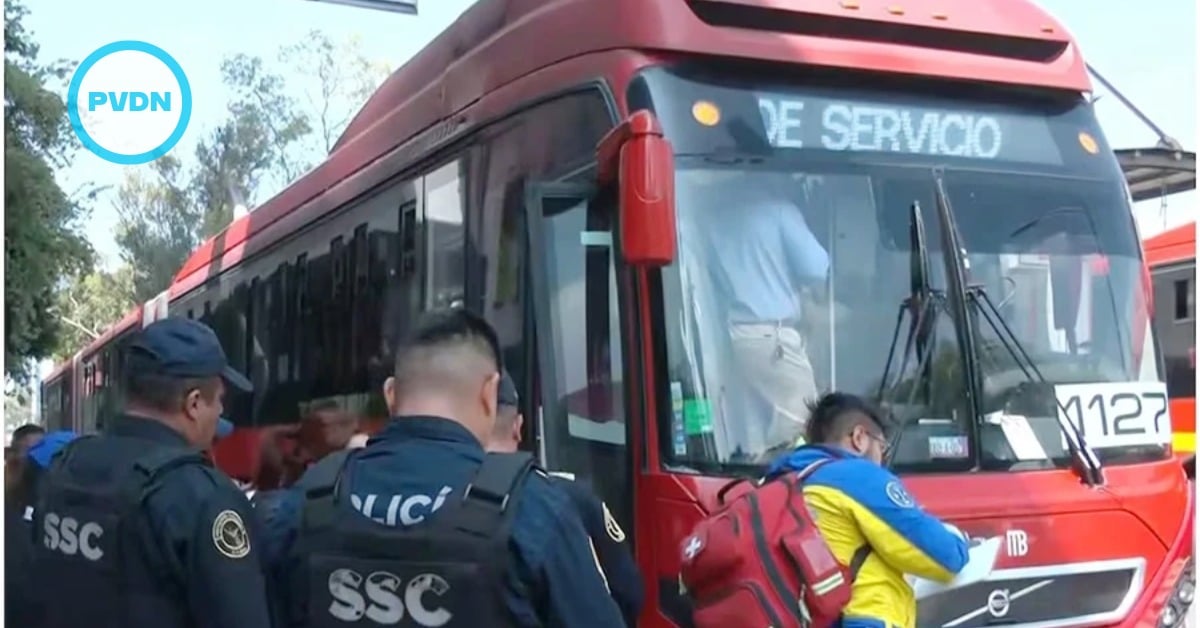
The afternoon rush in Mexico City’s Historic Center lurched to a stop on Thursday when a Line 4 Metrobús executed an emergency brake at Ayuntamiento and Balderas. Authorities said five people were injured, including a child, after a pedestrian entered the confined bus lane and forced the driver to halt abruptly. The pedestrian—a woman in her 30s—was also hurt and transported for medical evaluation, while paramedics treated passengers at the scene.
Excélsior identified the unit as 5031 and reported the ages of four riders attended by Protección Civil: a 51-year-old man, two women aged 41 and 48, and an eight-year-old child. None were reported in a life-threatening condition. Traffic in the immediate area slowed while first responders and transit staff cleared the scene and guided vehicles and pedestrians through the intersection.
The dynamic is simple and unforgiving. Metrobús buses run in a dedicated corridor; when a person or vehicle slips inside, drivers often have split seconds to prevent a tragedy. City officials regularly warn that walking or driving in the busway is prohibited and dangerous—rules that exist precisely to avoid emergency maneuvers like Thursday’s.
Metrobús emergency braking
Line 4 threads the city’s core, linking hubs like Buenavista and San Lázaro on a route that narrows near the Historic Center. That geometry leaves little margin when someone steps into the lane, and sudden stops can injure standing passengers even if a collision is avoided. The corridor around Balderas and Ayuntamiento is notably busy with cross-traffic and footfall, which helps explain why a clean stop still produced injuries inside the coach.
This was not an isolated kind of event. Recent reporting shows that emergency braking and lane intrusions have driven a noticeable share of Metrobús injuries over the last year, underscoring a citywide safety problem more than a single-corner anomaly. It’s a reminder that the infrastructure and the rules must work together: protected lanes, visible crosswalks, attentive operators—and pedestrians who cross only at marked points.
What happened on Thursday also fits a broader pattern of Metrobús incidents that, while different in cause, share the same outcome: riders get hurt when the system’s margins collapse. Earlier this year, for example, a Line 7 crash near Reforma left several people injured, reinforcing why enforcement around dedicated lanes and turning movements matters.
Back on Ayuntamiento and Balderas, the basic facts are not in dispute. El Universal and Excélsior agree on the location, the emergency stop, and the five injuries, and multiple outlets echoed those details as the afternoon progressed. That convergence suggests a standard response protocol unfolded: paramedics treated contusions and stabilized the pedestrian, transit personnel managed the scene, and the unit was cleared for inspection.
What changes now for riders and the corridor
For everyday users, the practical question is whether this corner will feel safer tomorrow. The answer hinges on three things. First, visibility: clearer markings and steady enforcement around the busway reduce risky crossings. Second, rider habits: holding rails, avoiding phone distractions near station doors, and bracing during approaches can limit injuries when buses stop short. Third, continued operator training and vehicle checks keep reaction times sharp and braking consistent. None of that is a silver bullet, but together they cut the odds of a bad moment turning into an ambulance call.
Legally and administratively, the framework is already there. The Reglamento and the city’s Mobility Law prioritize pedestrian safety but also require transit operators to carry insurance and submit units involved in incidents for review. When people enter the busway outside designated crossings, enforcement becomes the last line of prevention. Thursday’s emergency stop avoided a collision, which is exactly what those split-second decisions are meant to do—even if it left bruises behind.
The takeaway is both sober and hopeful. The system worked under stress: the driver stopped, first responders came fast, and five people are recovering. The challenge is making that kind of emergency stop rarer. That means keeping the lane truly exclusive, helping pedestrians cross where they’re supposed to, and making sure everybody—from operators to riders to passersby—treats the busway like the hazardous zone it is. On a crowded afternoon in the city’s heart, that shared discipline is the difference between a scare and something worse.