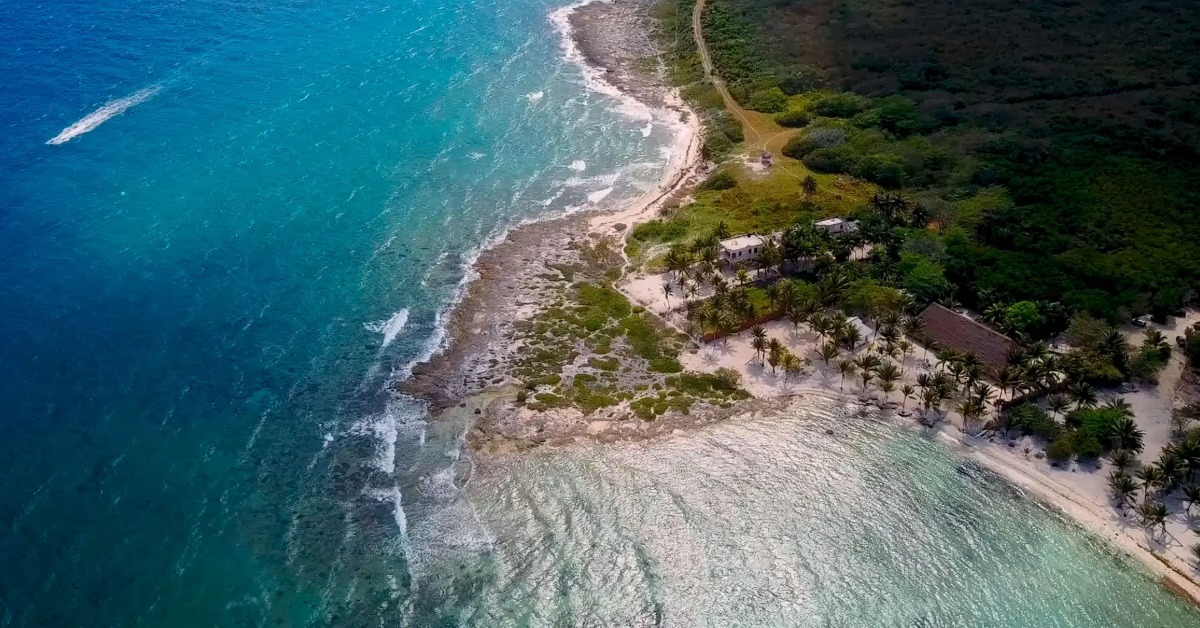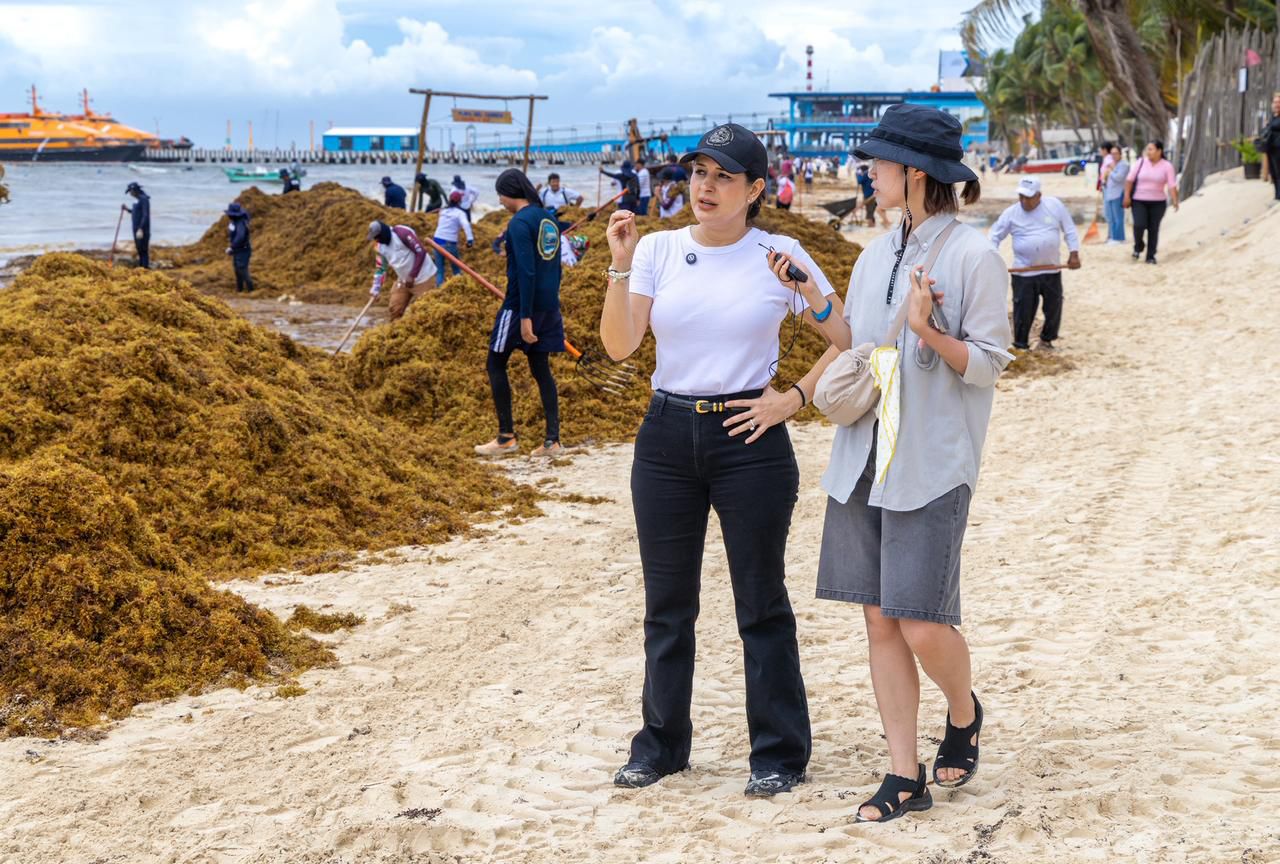
Quintana Roo has ships, barriers, beach crews, and monitoring systems in place, but the latest sargassum surge is testing whether that response is enough. Playa del Carmen, the Riviera Maya, and Mahahual are seeing some of the heaviest accumulations, while officials say that wind, currents, and rough seas are complicating containment efforts. The numbers show a cleanup effort moving at full speed. They also show a coastline still being overtaken.
Sargassum surge overwhelms Mexican Caribbean cleanup
Quintana Roo’s sargassum season has moved from the warning stage into a daily containment test. New reports show heavy arrivals overwhelming parts of the Mexican Caribbean even as authorities add crews, barriers, and Navy vessels.
A tourism-sector report published Thursday said the hardest-hit areas now include the Riviera Maya, Playa del Carmen, and Mahahual, where beach accumulations have been classified as excessive in recent monitoring. The finding matches the pattern described by state and municipal officials over the past two weeks. The numbers still vary by source and coastline.
The operational problem is the gap between what crews remove and what continues to arrive. The Mexican Navy said in mid-May that more than 39,500 tons had been collected this year across Isla Mujeres, Benito Juárez, Puerto Morelos, Cozumel, Playa del Carmen, Tulum, and Mahahual. Vallarta Daily previously reported those Navy collection figures, followed days later by a warning that more than 90,000 tons of floating sargassum had been detected offshore.
More recent state-level accounts put the total removed near 50,000 tons by the end of May. That does not mean the shoreline is under control. It means the cleanup machinery is working inside a larger surge.
A response built for one volume is facing another
Quintana Roo began the year with an early response plan. State officials said in February that 6,600 meters of anti-sargassum barriers had been installed at strategic points, including Mahahual, Puerto Morelos, and Playa del Carmen. By late April, the state said that 9,500 meters had been installed, and the target for 2026 was 16,000 meters.
The plan has not been fully deployed. Óscar Rébora Aguilera, the state ecology and environment secretary, said this week that only about 8,000 of the 16,000 meters had been installed because weather and sea conditions complicated the work. He also said more than 50,000 tons had already been collected this season.
“Of the 16,000, 8,000 meters have been installed,” Rébora said, adding that the rest could not be placed yet because of weather conditions.
That is the center of the current problem. The response depends on barriers, boats, and land crews. The placement of barriers depends on the same winds, currents, and rough water that move sargassum onto the beaches.
Playa del Carmen is calling for help
Playa del Carmen has become one of the clearest pressure points in the state response. The municipality said its 2026 strategy was activated early after unusual arrivals began in January. The move followed a 2025 season in which more than 30,000 tons were collected there.
By May 28, Mayor Estefanía Mercado had launched the Reto Sargazo 2026, inviting business groups, hotel operators, public employees, and the wider community to join the cleanup effort. The municipality said more than 300 people from the Navy, ZOFEMAT, and City Hall were already working on the beaches.
“We need reinforcements,” Mercado said.
The city reported that about 14,000 tons had been removed from public beaches in the current season. It also said more than 2.5 kilometers of barriers had been installed, with another 2.5 kilometers expected.
Even then, officials warned against treating the coastline as a single condition. ZOFEMAT director Irving Rafael Lili Madrigal said the arrivals remain uneven.
“There are areas where it lands heavily and others where we have practically no presence,” he said.
The pressure reaches Mahahual and the southern coast
Mahahual and the southern coast are part of the same containment strain. State officials and monitoring reports have identified Othón P. Blanco, Tulum, and Playa del Carmen as areas experiencing some of the heaviest arrivals this year.
A recent account, based on state comments, described two main pathways for the algae: one between Cozumel and Tulum and another between Banco Chinchorro and Mahahual. Those corridors help explain why the problem is not spread evenly across the coast.
The Navy’s January plan described 16 surface units, including one ocean sargassum vessel, 11 coastal vessels, and four amphibious sargassum units, along with 16 support boats and 9,500 meters of containment barriers. By May, the Navy said the operation included one ocean vessel, 11 coastal vessels, one amphibious unit, 18 support boats, and more than 7,600 meters of installed barrier.
The state later announced a new high-capacity vessel as part of an effort to collect more material at sea before it decomposes on beaches. Environment Secretary Alicia Bárcena called the broader Caribbean problem “serious” and said it required long-term coordination.
The environmental cost starts after landfall
Sargassum is not only beach debris. Mexico’s CONABIO says the floating algae that reaches the Caribbean coast is mainly Sargassum natans and Sargassum fluitans. In open water, smaller amounts provide habitat for fish, turtles, and other marine life.
The damage comes when large quantities accumulate and decompose in shallow water and along the shore. CONABIO says a massive buildup can reduce light and oxygen availability, affect beaches and fisheries, and release hydrogen sulfide during decomposition.
The U.S. Environmental Protection Agency says that decomposing sargassum can produce hydrogen sulfide and ammonia, which can cause respiratory, cardiovascular, and neurological effects. It also notes that heavy nearshore accumulations can lower dissolved oxygen and reduce light for seagrasses and corals.
That risk adds pressure to remove the algae quickly. The removal is also labor-heavy and hard to scale. Crews have to move quickly enough to prevent fresh arrivals from decomposing while limiting damage to sand, turtle nesting areas, and nearshore habitats.
More sargassum is expected in June
Regional satellite monitoring still points upward. The Caribbean Coastal Ocean Observing System, using the University of South Florida outlook, said sargassum amounts increased in most regions in May. It also said that most regions, except the West Atlantic, showed record-high May amounts.
The same outlook said amounts are likely to increase in June and that 2026 could become a major sargassum year, possibly a record year by summer.
That leaves Quintana Roo trying to manage a moving target. The state’s strategy is no longer only about removing what washed ashore overnight. It is about whether vessels, barriers, crews, and processing plans can keep pace with a season that has not yet peaked.