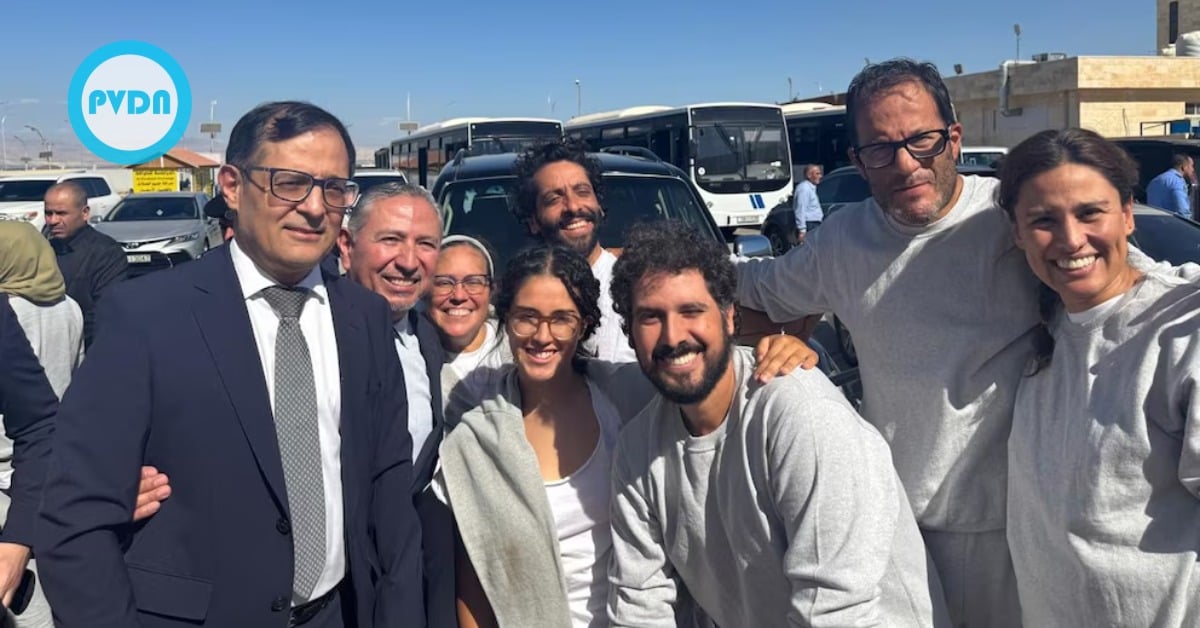
They stepped into the military wing of Mexico City’s airport just after sunrise, tired but smiling. The six Mexican Sumud activists say they were snatched in international waters, locked up, and pushed to sign deportation papers. Mexico’s foreign minister met them on arrival as supporters sang and cried. Israel’s government says its blockade is legal and rejects abuse claims. What happened in those days between the boarding at sea and the touchdown in CDMX—and what comes next—now moves from the water to the courts and the press.
Mexican Sumud activists
They landed early Wednesday at Mexico City’s international airport, escorted by Ambassador Mauricio Escanero and received by Foreign Minister Juan Ramón de la Fuente. Medical checks and immigration processing took place inside the military area while family and friends waited with banners outside. The government later said it would cover repatriation costs.
The six are Sol González Eguía, Ernesto Ledesma Arronte, Arlín Medrano Guzmán, Carlos Pérez Osorio, Diego Vázquez Galindo, and Laura Alejandra Veléz Ruiz Gaitán. They were part of the Global Sumud Flotilla, a civil mission that set sail to deliver aid to Gaza. All six told reporters they had been detained in Israel and deported after days in custody.
Their account is blunt. They say Israeli forces intercepted their vessel in international waters, took them to detention, and subjected them to physical and psychological mistreatment. Mexico’s Foreign Ministry confirmed their safe return, and De la Fuente greeted them at the airport. Israel rejects abuse allegations and defends interdictions as lawful under the blockade.
On the timeline, the repatriation began after Mexico’s diplomats visited the detainees and secured their exit route through Jordan. Media in Mexico tracked the journey as the group boarded a flight and headed home. When they reached CDMX, the mood turned from worry to relief, with supporters breaking into song as the six walked out.
The names matter because each one anchors a different piece of Mexico’s public life—students, journalists, and community organizers. They emphasized that their mission was humanitarian, and the stories they heard from Palestinians motivated them to take action. They also promised to speak in detail about what happened behind bars. Some of their remarks described isolation, rough handling, and pressure to sign. Israel maintains that detainees are treated according to the law.
What we know, and what is still contested
The stop at sea is not in dispute. Israel intercepted the flotilla and detained hundreds of activists from many countries. Several were released and deported. Others remained in custody as legal processes continued. A Spanish participant, Reyes Rigo, had her detention extended this week pending investigation, a reminder that not everyone is out yet. Organizers say boarding took place well offshore; Israel says the blockade framework justifies interdiction.
In Mexico, the state’s message has been diplomatic but firm: protect nationals and bring them home. The Foreign Ministry publicized its consular steps, and Mexico’s top diplomat met the group on arrival. Independent outlets also verified the time and place, noting that the reception occurred inside the airport’s military base.
What happened inside the detention center matters for any next steps. Earlier reporting placed the group at Ketziot prison in the Negev, a facility where many flotilla participants were processed. Rights lawyers and relatives of detainees abroad have alleged harsh conditions; Israeli authorities deny systematic abuse. Those competing narratives are now headed for courts and human-rights mechanisms, where documentation—medical notes, transfer logs, and interview records—will be decisive.
For now, the six are home, and they say they want the focus back on Gaza’s civilians and the aid they tried to deliver. They spoke about babies’ formula, medicines, and the plain fact of hunger. They also discussed fear and how the community managed to keep it at bay. One line stuck with me at the exit doors: it wasn’t about heroics, they said. It was about doing something small and decent, then getting back to tell it straight.