Trains in Mexico are derailing at an alarming rate – far more often than most people might think. Official figures point to a pattern that has safety experts on edge and authorities racing to find answers. Is aging infrastructure to blame, criminal sabotage, or something else entirely? This surprising trend is raising tough questions about oversight and accountability on the nation’s railways, especially after a recent high-profile train disaster brought the issue to the forefront.
Frequent Train Derailments in Mexico Raise Safety Concerns
On a seemingly ordinary day in Mexico, yet another train lurches off its rails. It has become a distressingly routine occurrence. According to the country’s rail regulator, Mexico’s railway network now reports a train derailment roughly every two days on average. While this marks an improvement from a few years ago – when incidents were happening almost daily – the frequency remains alarmingly high. Each derailment represents more than just a statistical blip; it is a tangible sign of vulnerability in the nation’s rail infrastructure and operations. These incidents are occurring nationwide, affecting both freight trains and the country’s newly launched passenger rail projects. The fact that trains leave the tracks so regularly has set off alarm bells among experts and stakeholders, who warn that urgent action is needed to address underlying safety lapses before the next catastrophe strikes.
Causes Behind the Crashes
Why are Mexico’s trains derailing so often? Industry analysts point to a convergence of factors undermining rail safety. One major issue is vandalism and theft. In some regions, organized criminal groups routinely target freight trains – a throwback to old western outlaws, but in modern form. These criminals have been known to sabotage tracks or force trains to stop in order to steal cargo, sometimes even placing obstacles on the rails to intentionally cause a derailment. Such was the case in a recent incident in Hidalgo state, where armed thieves attempted to wreck a cargo train to loot its merchandise, tragically leading to a deadly shootout between the assailants and security guards. According to official reports, hundreds of acts of railway vandalism – from deliberate track obstructions to signal system tampering – are recorded in Mexico each year. These malicious interventions significantly increase the risk of accidents.
Beyond criminal interference, infrastructure problems also play a critical role. Mexico’s rail network is a patchwork of old and new lines, and some tracks suffer from years of wear and minimal maintenance. Issues like warped rails, faulty equipment, or unstable terrain can cause trains to jump the tracks. In fact, government auditors have previously flagged certain routes for having steep grades and tight curves in difficult terrain, warning that inadequate engineering or maintenance in those sections could make them accident-prone. Natural hazards add another layer of risk: heavy rains can trigger landslides or washouts that undermine tracks, and extreme weather can degrade rail conditions over time. While rail companies and authorities have introduced more modern technology and safety protocols in recent years, experts caution that these measures are only as good as their implementation. Human factors – such as operator error or insufficient training – can compound the technical shortcomings. In short, each derailment often results from a mix of negligence, external interference, and environmental challenges, painting a complex picture for investigators trying to prevent the next one.
High-Profile Train Accidents Shine a Light
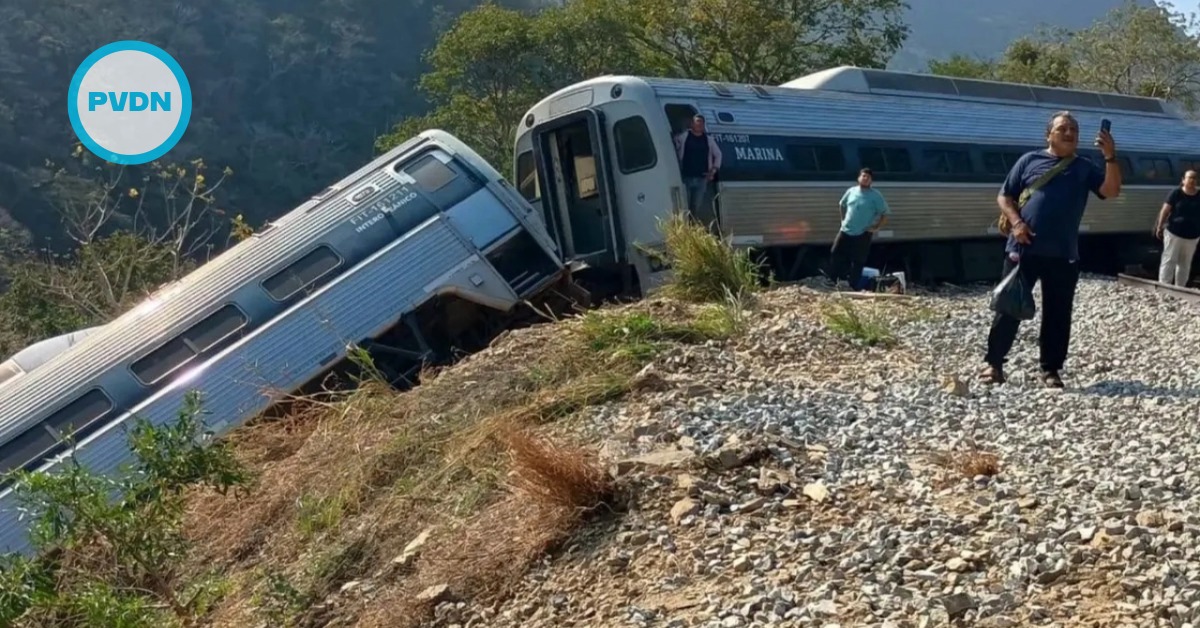
The issue of frequent derailments leapt into the national spotlight after a devastating crash in late 2025. In that incident, a passenger train on the new Interoceanic Railway line – a flagship project meant to connect Mexico’s Pacific and Atlantic coasts – derailed on a curve in southern Oaxaca, sending several cars tumbling off the tracks. The wreck claimed at least 13 lives and injured nearly 100 people, many of them families who had boarded the train for what should have been a routine journey. Survivors recalled the train picking up speed before a sharp turn, after which chaos ensued. The disaster horrified the country and underscored the very real human cost behind the statistical frequency of derailments.
What made the Oaxaca tragedy even more significant is that it was not an isolated case. It marked the third major train accident in Mexico that year. The Mayan Train – another high-profile rail project, aimed at ferrying tourists around the Yucatán Peninsula – had already experienced two derailments in 2025 during its initial months of operation. Fortunately, those earlier incidents did not result in deaths, but they were stark warnings. In one case, a train car on the Maya route derailed near a station in Yucatán, prompting an emergency response and stranding passengers. In another incident, a section of the train derailed in Quintana Roo, reportedly due to a mechanical issue, causing minor injuries and raising questions about procedural safety during the line’s rollout. These events, combined with the Oaxaca crash, shattered any illusion that modern “mega-project” trains were immune to the problems plaguing the rest of the rail system.
Mexico’s freight rail lines have also seen their share of headline-making mishaps. Freight trains carry everything from fuel and chemicals to consumer goods across the country, and when they derail, the consequences can be severe. There have been hazardous-material spills following freight derailments, sparking environmental concerns and community backlash. In one notable episode in Puebla, a derailed cargo train contaminated local water sources and ignited public outrage, leading residents to block the tracks in protest until the damage was addressed. Each high-profile accident serves as a grim reminder of how quickly a routine trip can turn into a disaster – and how the impact can ripple outward, affecting communities, commerce, and confidence in the rail system.
Oversight and Accountability in Question
The spate of derailments has inevitably led to pointed questions about oversight: Who is responsible for keeping Mexico’s trains on the rails, and why are they failing? The country’s rail regulator, the Agencia Reguladora del Transporte Ferroviario (ARTF), is tasked with monitoring rail safety and enforcing standards. ARTF’s own data has exposed the scale of the problem, but critics say simply counting accidents isn’t enough – the agency and the government must ensure preventive action. They note that despite a slight downward trend in annual derailments since 2021, the numbers remain troublingly high. Over the five-year period from 2020 to 2024, Mexico recorded nearly 1,500 train derailments. That period also saw over 7,000 total railway incidents of various kinds (from collisions to spills), resulting in hundreds of fatalities and injuries. For many observers, it’s evidence that systematic safety improvements have lagged even as the rail industry expands.
Government officials insist they are taking the problem seriously. Following the Oaxaca disaster, President Claudia Sheinbaum’s administration launched multiple investigations to pinpoint what went wrong. Teams of federal prosecutors and ARTF inspectors descended on the crash site to examine the tracks, the train’s “black box” recorder, and maintenance logs. Preliminary inquiries suggest that excessive speed on a problematic curve may have been a factor, but the full analysis is ongoing. Beyond the technical cause, there is a broader probe focusing on possible negligence or misconduct. Mexico’s Anti-Corruption Office has ordered a detailed audit of the Interoceanic train project to see if any contractors, officials, or suppliers cut corners that contributed to the accident. The idea is to hold any responsible parties accountable – in other words, to determine if the derailment was not just an “act of God” or bad luck, but a preventable failure of oversight.
The issue of accountability also extends to the private rail companies that operate much of Mexico’s freight network. Firms running freight routes, such as the major concession holders, are expected to maintain their tracks and equipment to safety standards. Yet derailments on freight lines persist, suggesting that maintenance regimes might be insufficient or uneven across the network. These companies face pressure to invest more in track repairs, advanced detection systems, and better crew training. At the same time, they argue that some problems – like organized theft and sabotage – require stronger government action to police and secure the rail corridors. It’s a delicate balance between corporate responsibility and public security efforts.
In response to the crisis, authorities are ramping up safety measures. Rail operators, under government directives, have begun implementing stricter speed controls on certain dangerous stretches of track and are installing more surveillance along routes vulnerable to vandalism. The federal government has even announced plans to seek international safety certification for key railway lines, bringing in outside experts to evaluate and improve the system. Such steps aim to reassure the public (and investors in these rail projects) that everything possible is being done to turn things around. President Sheinbaum, facing public pressure, has pledged that passenger safety will not be sacrificed for speed or political expediency. She traveled to the site of the Oaxaca crash and promised a thorough “no stone unturned” investigation, while also urging patience as the new rail lines work out their kinks.
Whether these efforts will be enough remains to be seen. For now, trains continue to rattle across Mexico hauling people and goods – and derailments continue to be reported with unsettling regularity. Each incident adds fuel to the debate over rail safety and underscores what is at stake. A modern rail network is crucial for Mexico’s economic growth and connectivity, but it must not come at the cost of lives and livelihoods. As investigations proceed and reforms are rolled out, millions of rail passengers and workers can only hope that the promise of safer rails is fulfilled, and that the statistic of “one derailment every two days” soon becomes a relic of the past rather than a prophecy of the future.
With information from El Universal, Reuters, The Guardian, Los Angeles Times (AP), Julio Astillero / OEM, Expansión Política, El Universal, Forbes México