A new cable-car line is being pitched as the next big shortcut across Mexico City’s western hills. Plans for Cablebús Line 5 sketch a 15.2-kilometer route with 12 stations, built to pull long, winding commutes into a straight shot to Metro Mixcoac. The price tag is already on paper, and the contractor has been selected, but the final station map and neighborhood impacts still have room to evolve. Here’s what’s known, what’s not, and why 2028 matters.
A record-length line with a very practical goal
Mexico City’s Cablebús network has never really been about tourism. It’s about terrain. In hilly zones where buses crawl, and cars funnel into a few overworked roads, an aerial line can turn an hour-plus slog into something predictable.
That logic is now being applied on a bigger scale. Line 5 is planned at 15.2 kilometers, which would put it beyond the current Guinness-certified record for the longest public-transit cable car route, a title Mexico City has already held since 2021 with Cablebús Line 2.
Where it will run and what it connects to
The backbone of the project is designed to connect high-elevation neighborhoods in Magdalena Contreras and Álvaro Obregón to the broader transit grid via Mixcoac, a major transfer point for Metro Lines 7 and 12. In early public planning, the trunk alignment was described as running from the community of El Oyamel to Mixcoac, with a branch that begins in San Bartolo Ameyalco and rejoins the main line around the El Tanque area. Station names and exact placements can still shift as the engineering package is finalized, but the intent is clear: deliver a faster, simpler transfer to the Metro for riders coming from areas where surface routes are slow and indirect.
For expats, the most immediate “why it matters” is the Mixcoac end of the line. If you live near or regularly pass through that station, this project aims to feed more riders into the same interchange—potentially easing some trips while also changing crowding patterns at peak times.
Capacity, cabins, and how it’s supposed to feel as a ride
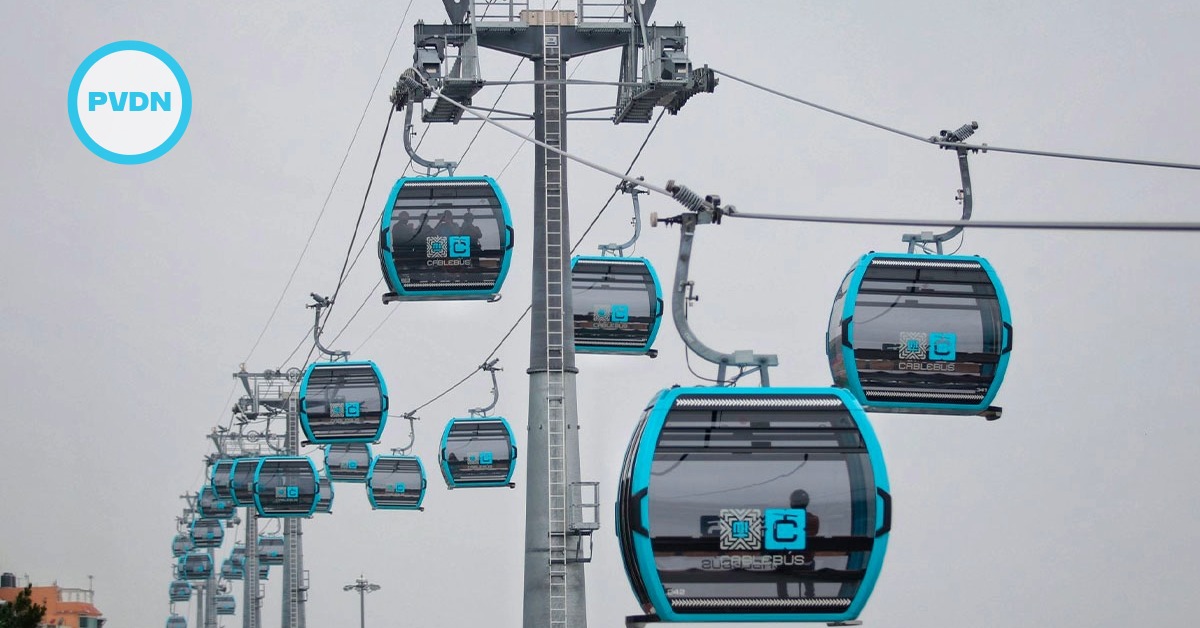
The system is planned as a detachable gondola line, built for frequent service rather than long headways. Project specifications released by the builder describe 12 stations, 114 towers, and a network divided into multiple sections, with cabins designed for 10 passengers each. The target throughput is up to 3,000 passengers per hour per direction.
In plain terms, the city is betting on two things cable cars do well: steady travel times and a light footprint compared with carving out new surface right-of-way. The pitch is that the line can hold its schedule even when the streets below don’t, while also offering barrier-free access and a relatively quiet, electric ride.
Money, timeline, and the next points of friction
The public investment being cited for Line 5 sits at around 7.9 billion pesos. The construction contract has already been awarded, and the official calendar tied to the contract places the work starting in late November 2025, with a term running into 2028—matching the projected opening year being advertised.
Between now and then, the story won’t just be construction milestones. It will also be about final station decisions, how worksites are managed in dense neighborhoods, and how the city integrates the line into fare policy and transfers. The most useful way to watch this project is to track what gets confirmed in official documents versus what appears in early maps, because the details that matter to daily riders—walk times to stations, transfer flows at Mixcoac, and service frequency—tend to sharpen only as delivery gets closer.