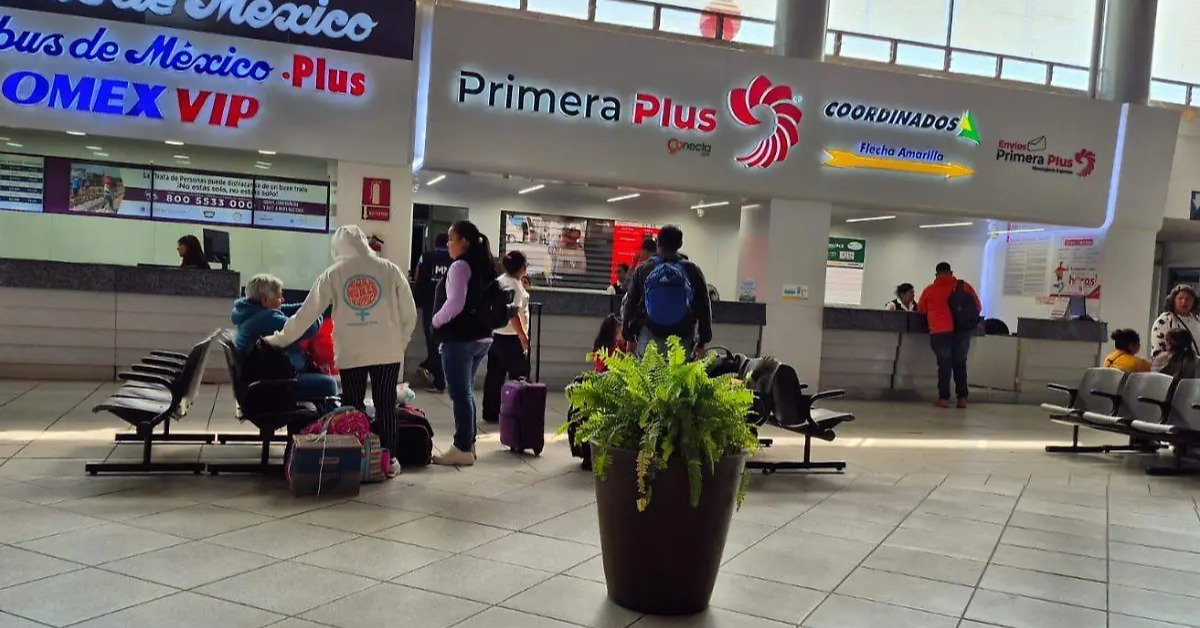
A federal court in Mexico has ruled that passenger and tourism transport companies cannot demand proof of a traveler’s immigration status as a condition for selling a ticket or allowing boarding. The decision strikes at a policy that had been pushed through official notices between 2019 and 2021. Under that approach, bus companies were told to ask for identification or migration documents and deny service if a person could not show a regular status in the country.
The ruling matters because it reaches beyond a single company or terminal. The court found that the policy violated the constitutional right to free movement and constituted discrimination on the basis of nationality. It also made clear that transport staff do not have the legal authority to act as immigration agents. In plain terms, a ticket counter is not an immigration checkpoint, and a bus line is not supposed to decide who may move around the country based on migration papers.
That point matters for many readers who live in Mexico full-time, spend part of the year here, or travel often between cities. Domestic bus travel remains one of the most common ways to move across the country. For foreigners, the old practice created confusion because a trip between Mexican cities could suddenly turn into an informal document check. The court has now said that the setup was not consistent with the Constitution.
What the court actually decided
The case was resolved by the Vigésimo Tribunal Colegiado en Materia Administrativa de la Ciudad de México, in amparo and revisión, 686/2025. The litigation was promoted by the Instituto para las Mujeres en la Migración and the Clínica de Derechos Humanos of the UNAM human-rights program. Their argument was that the policy turned bus lines into de facto migration filters inside the country.
The court agreed on several core points. First, it said the policy violated Article 11 of Mexico’s Constitution, which protects the right to move through national territory. Second, it said that demanding migration status in this setting was a discriminatory act tied to nationality and ran counter to Article 1 of the Constitution. Third, it said regular commercial transport of a migrant inside Mexico does not amount to human smuggling. That last point is important because fear of being accused of facilitating irregular migration has helped justify restrictive practices.
The ruling also goes beyond declaring the old policy unlawful. It directs authorities to take steps so that the decision is felt in practice. That includes designing and spreading a clear strategy so people can buy bus tickets without showing identification or proving migration status at the counter. It also includes verification visits at bus terminals and public communication that reaches people on the move, with attention to women, children, and other vulnerable travelers.
Why this dispute became so important
The policy did not appear out of nowhere. Migration enforcement inside Mexico intensified as the country faced pressure over northbound migration routes. Over time, controls that were supposed to be under the migration authority spilled over into everyday travel. Bus terminals became one of the places where that shift became visible. For some travelers, especially migrants and foreign nationals, a domestic journey could begin with questions that sounded more like border control than transportation service.
Rights groups argued for years that this created dangerous side effects. If people were blocked from normal bus travel, they were more likely to look for riskier routes, rely on smugglers, or ride in unsafe vehicles. That was one reason the challengers said the policy did not just inconvenience travelers. They argued it pushed already vulnerable people into more dangerous situations. The court’s reasoning reflects that concern.
There is also a broader legal backdrop. In 2022, Mexico’s Supreme Court backed limits on migration checks away from international transit points, saying those reviews were unconstitutional when they conflicted with free movement and non-discrimination. The new ruling on bus ticket sales fits into that wider legal trend. It does not erase Mexico’s power to enforce immigration law. But it does reinforce the idea that immigration control has limits, especially when ordinary travel inside the country is involved.
What this means for foreign residents and visitors
For international readers, the most useful takeaway is simple. A domestic bus trip inside Mexico should not require a transport company to screen your immigration status before selling you a ticket. The case is about internal travel, not about crossing an international border or going through immigration inspection at an airport arrival area. The distinction matters.
That said, legal rulings and daily practice do not always change at the same speed. A court decision can be clear on paper, while companies and local staff take time to adjust procedures. That means some travelers may still encounter outdated requests until bus lines and terminals fully absorb the new standard. The ruling tries to address that risk by ordering active dissemination and compliance checks, not just a legal declaration.
For foreigners living in Mexico, the decision may also ease a recurring uncertainty. Many residents keep passports, resident cards, and other documents handy when they travel, often out of caution. This ruling does not tell people to stop carrying important identification. It says transport companies cannot make immigration status the gatekeeper for a domestic ticket. That is a narrower, but still significant, point. It separates ordinary travel from discretionary immigration screening by private transport staff.
What happens next
The immediate pressure now falls on the Instituto Nacional de Migración and on transport operators. The migration authority has been told to communicate the new rules and verify that ticket counters are complying. Companies, in turn, will need to update internal guidance so frontline staff stop applying a policy the court has already rejected.
The larger significance of the case may be political as much as practical. Mexico has spent years trying to balance migration enforcement, human-rights obligations, and pressure tied to regional migration flows. This ruling is a reminder that constitutional protections still set limits on how far that enforcement can reach. When a person buys a seat on a bus traveling within Mexico, the court holds that the act falls first to mobility and public service rather than to immigration control.
For readers across Mexico, the ruling is worth watching because it touches something ordinary. It is not just about migration policy in the abstract. It is about what happens at a ticket window, who gets questioned, and whether domestic travel can be treated as a basic service rather than a checkpoint.