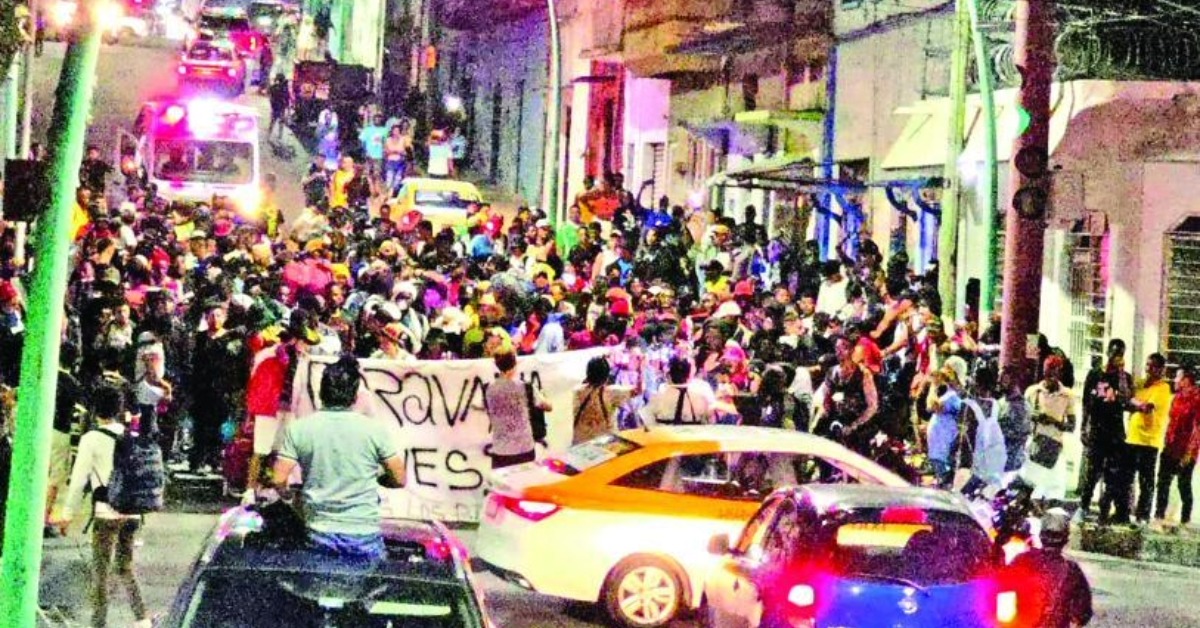
About 500 migrants have left Tapachula in the first caravan of 2026, but this march is not following the usual script. Many say the United States is no longer the immediate goal. They want permission to move, work, and keep processing their cases elsewhere in Mexico after months of low pay and stalled paperwork in Chiapas. That makes this more than another caravan story. It is a window into how Mexico’s southern border has become a place of waiting, pressure, and forced decisions.
A march built on delay and low pay
The first migrant caravan of 2026 has left Tapachula. About 500 people say they could no longer wait in southern Mexico for work, wages, or documents. Mexico City is part of the route and a political reference point. But many marchers describe a wider goal. They want permission to move beyond Chiapas, continue their cases, and seek jobs in cities with higher pay.
Recent local reporting identifies many participants as Haitians and Cubans, including some deported from the United States. Others come from Honduras, El Salvador, Nicaragua, and Venezuela. Some say they have spent months, and in some cases more than a year, going back and forth to migration offices without a final answer. After the first stage of the march, the group had already reached Huixtla, about 40 kilometers from Tapachula.
Sheinbaum Says Migrant Caravans Will Stay in South
Why Tapachula keeps becoming the starting line
For readers outside Chiapas, Tapachula is not just another city on the map. It sits near the Guatemalan border and has become one of Mexico’s main points for migrant arrival, waiting, and paperwork. That makes it a place where national policy becomes daily reality. When cases slow, work is scarce, or movement is restricted, the frustration builds there first.
That helps explain why caravans keep reappearing. A caravan is not only a journey north. It is also a form of pressure. It makes an invisible backlog visible. Migrants who march together are often trying to force attention to a problem they say has been ignored. Many survive on informal work, borrowed money, or shelter support.
This caravan is not following the old script
What stands out in this case is that many migrants are no longer describing the United States as the immediate destination. Some still use Mexico City as a rallying point. Others speak more directly about Guadalajara, Monterrey, Veracruz, Puebla, or Ciudad Juárez. The common demand is movement inside Mexico, not only passage through it.
That marks an important shift. For years, caravans from Tapachula were widely understood as northbound attempts to reach the U.S. border. This one is also a response to being trapped inside Mexico. Many marchers say the problem is not only where they want to go next. It is that they cannot legally move, work steadily, or plan their lives while their status remains unresolved.
What the paperwork fight is really about
In this story, paperwork is not a technical detail. It shapes whether someone can rent a room, take a formal job, or board a bus without fear of being stopped. COMAR, Mexico’s refugee agency, handles asylum claims. INM, the immigration authority, controls much of the country’s migration enforcement and documentation process. Migrants say that when decisions stall, daily life narrows to survival.
Mexico does have legal procedures for refugee claims and migration status. It also has a formal process that can allow a refugee case to continue in another state. On paper, that offers a path forward. In practice, migrants say the wait can stretch for months. That gap between what exists in law and what happens in real life is one reason caravans form.
The wider backdrop has changed
This caravan is also moving through a different regional context. Recent reporting has shown that Mexico has been receiving growing numbers of non-Mexican deportees from the United States, especially Cubans. At the same time, migrants already in southern Mexico say they face low pay, limited jobs, and long waits for answers. Those pressures do not stay separate. They stack on top of one another in places like Tapachula.
That matters because it changes how Mexico fits into the migration story. For many international readers, Mexico is still seen mainly as a transit country. The reality is more complicated. It is also a country of waiting, containment, temporary settlement, and forced pause. This caravan reflects that change. It is less about one long march to the northern border and more about the struggle to move at all.
What happens next
The group may or may not reach Mexico City as a single caravan. Similar marches often fragment after a few days. Some people accept transport. Others seek appointments or stop in towns along the way. Even if that happens, the larger point remains. The first caravan of the year has exposed the same unresolved question that has defined southern Mexico for years. What happens to people who are told to wait, but cannot build a life while waiting?
For Mexico, this is not a local story confined to one highway in Chiapas. It touches labor markets, shelters, public services, and the country’s role in regional migration control. For migrants in this caravan, the message is more direct. They are saying that staying still is no longer workable. The road, even with all its risks, now looks more realistic than waiting in place.
In Depth:
Migrant caravan heads north through Mexico aiming for Canada, bypassing U.S.
Mexico Now Offers Free Police Escorted Buses to Migrants Wanting To Travel to US Border
First migrant caravan of the year left southern Mexico with a thousand people heading to the US
Mexico migration overhaul needs more than an INM rename
Mexico says 13 nationals died in ICE custody or raids
COMAR authorization to continue a refugee claim in another state