As Mexico readies its first nationwide earthquake cell-broadcast alert test on September 19, 2025, we mapped how far the sirens really reach outside the capital, why false alarms happen, and what apps can and can’t promise—anchored by the history that made early warning a national habit.
The morning the capital ran for nothing
On a bright Friday in August 2024, the Seismic Alert blared across Mexico City. People did what they’d been trained to do—drop what they were doing, get outside, wait for the jolt. It never came. Officials later called it an activation error. The episode exposed a simple truth: beyond CDMX’s dense loudspeaker grid, coverage breaks into patchwork; for millions, the “warning” is a radio cut-in, a building receiver, or a phone. And in September 2025, the government plans a first-ever nationwide cell-broadcast test, designed to push a distinct tone and message to tens of millions of active devices at 12:00 p.m. on Sept. 19—no data, no credit required.
The network behind the noise
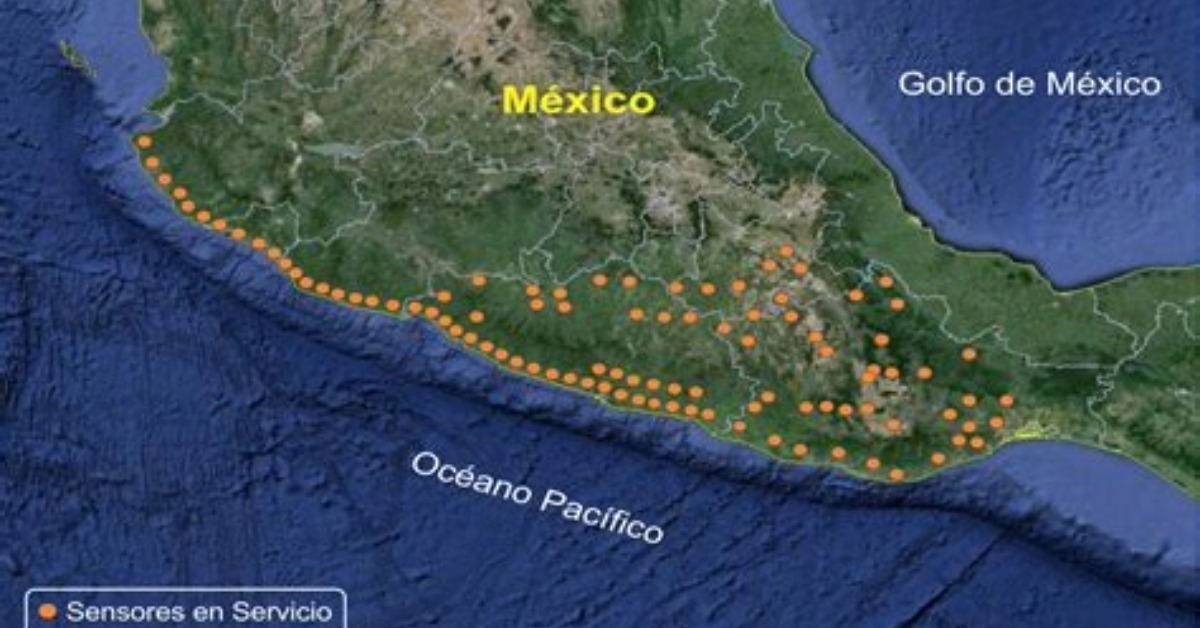
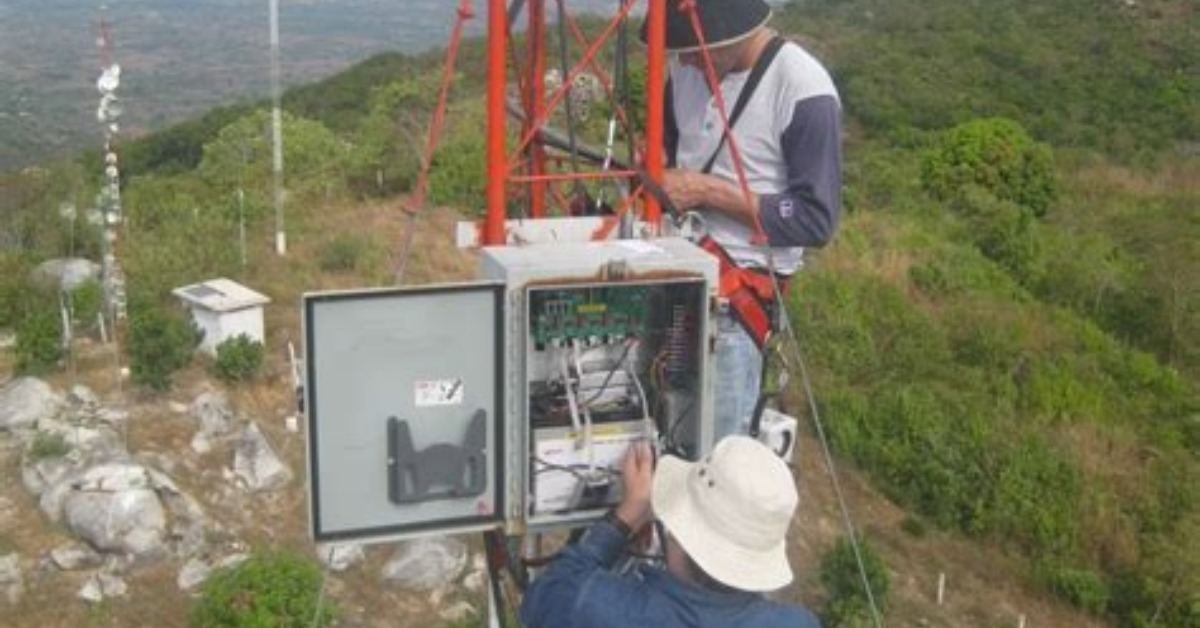
Mexico’s early warnings come from SASMEX, run by the nonprofit CIRES. Coastal sensors detect fast P-waves; if models estimate harmful shaking for a city, SASMEX issues an alert that local partners decide how to broadcast—radio/TV, dedicated receivers, and where they exist, municipal loudspeakers. This is city-by-city dissemination, not a national siren. CIRES lists public alerting to Ciudad de México, Puebla, Acapulco, Chilpancingo, Morelia, Oaxaca, Toluca, Cuernavaca (relay from CDMX), and Colima.
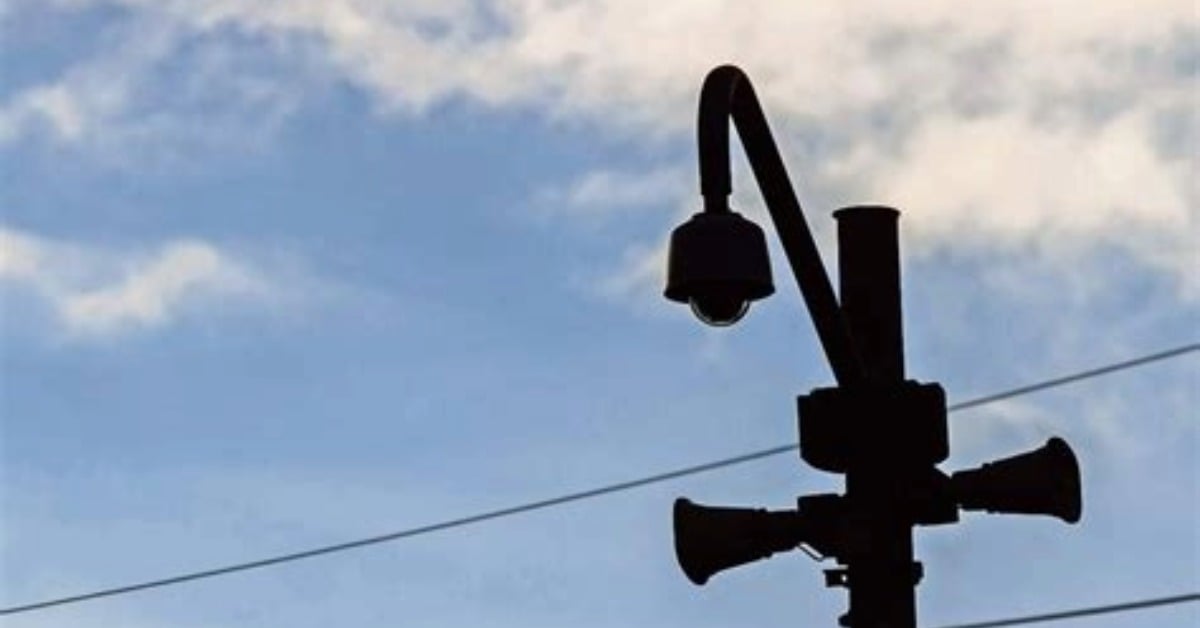
In the capital, the C5 operates more than 13,000 posts with loudspeakers—the backbone that makes CDMX feel uniquely “covered.” Outside the city, the picture is uneven, with smaller or partial grids and reliance on broadcast carriage and building receivers.
Map caption: “The SASMEX sensor arc along the Pacific feeds alerts to select cities where local authorities broadcast to the public. Outside those cities, warning is mainly via radio/TV or building receivers; a nationwide cell-broadcast test is slated for 12:00 p.m., Sept. 19, 2025.” blogcires.mxsimulacronacional.sspc.gob.mx
Earthquake sirens beyond CDMX: where they exist—and where they don’t
What this shows: Whether a city has a municipal loudspeaker grid for public seismic alerts, how residents actually receive SASMEX warnings today, and a quick note on gaps.
City
Municipal loudspeakers
How alerts reach people
Notes
Mexico City (CDMX)
Yes — citywide grid on 13k+ posts
Loudspeakers; radio/TV; building receivers; upcoming cell-broadcast
Backbone of the system; public grid managed by C5.
Puebla City
Partial
Radio/TV; building receivers; limited loudspeakers; cell-broadcast
State announced multi-municipal rollout; progress uneven.
Oaxaca City
Yes (limited) — ~14 sirens
Loudspeakers; radio/TV; building receivers; cell-broadcast
Small grid for the capital; outlying towns often lack horns.
Acapulco
Partial
Radio/TV; some municipal loudspeakers; cell-broadcast
Coverage concentrated in urban core; maintenance varies.
Chilpancingo
Partial
Radio/TV; some municipal loudspeakers; cell-broadcast
Depends on local C4 carriage and receivers.
Morelia
Limited
Radio/TV; building receivers; cell-broadcast
No large, public citywide horn grid published.
Toluca (Edomex)
Partial
Radio/TV; some local loudspeakers; cell-broadcast
Coverage uneven across municipalities.
Colima (capital)
Partial
Radio/TV; drills with sirens; cell-broadcast
Practice alerts audible in 2025 drills.
Guadalajara / Zapopan
In rollout
Pilots/partial carriage; radio/TV; cell-broadcast
Local initiative advancing; not yet in CIRES’ public list.
Puerto Vallarta
No citywide quake-siren grid
Radio/TV; building receivers/apps; separate tsunami alerting; cell-broadcast
Quake warnings rely on broadcast/receivers; tsunami system is distinct.
Disclaimer: SASMEX dissemination is city-by-city; “Partial” means some municipal horns or localized deployments, not a continuous, capital-scale grid.
Sources for the factbox include CIRES’ dissemination list, C5’s loudspeaker overview, Oaxaca’s disclosure of 14 sirens, and 2025 drill materials from federal and state authorities.
When an alarm is wrong
False activations are uncommon, but they’re disruptive. August 2, 2024, is the clean recent case: CDMX’s loudspeakers sounded; SSN quickly clarified that no alert-worthy quake had occurred; city authorities called it an activation error. It’s a governance lesson: SASMEX decides whether to alert; cities decide how to broadcast; SSN does not run alerts—it only reports earthquakes.
About those apps (and the new phone alerts)
No app can predict earthquakes. Both SSN and CENAPRED repeat it: hasta hoy, no existe una técnica que permita predecir los sismos. Some private apps relay official early warnings or run their own sensor networks, but they still estimate shaking once a quake has begun—no days-ahead prophecy. A cautionary tale: SkyAlert apologized in 2014 after a false push notification sent users into the street. Use apps as redundancy, not your only layer. The official cell-broadcast test, by contrast, will force-push a standardized alert tone and message to most active phones, regardless of carrier, data, or credit.
Why Mexico built an early-warning culture
Mexico sits at a messy tectonic handshake: the Cocos and Rivera plates dive beneath North America along the Pacific margin, sending energy inland—where soft soils in basins like the Valley of Mexico can amplify shaking. The country’s headline quakes—and the alert culture they forged—flow from that geography.
The quakes that set the rules
1932 | Jalisco–Colima coastal sequence (M~8.2, 7.8, 6.9). Three large June quakes generated destructive tsunamis that wiped out swaths of the Colima coast—famously Cuyutlán—showing how far impacts can travel from the trench
1957 | “El sismo del Ángel” (M~7.8). A Guerrero quake toppled the winged statue atop Mexico City’s Ángel de la Independencia, searing seismic risk into the capital’s identity and nudging codes and preparedness forward.
1985 | Michoacán (Mw 8.0–8.1). Mexico’s defining disaster. The shock forced a national reset: by May 1986, the government created the Sistema Nacional de Protección Civil (SINAPROC); within a few years, public earthquake alerting began and later expanded into today’s multistate SASMEX.
2017 | Tehuantepec (M8.2) and Puebla–Morelos (M7.1). In 12 days, Mexico endured its largest quake in a century—devastating parts of Oaxaca and Chiapas—and then a deadly intraslab event much closer to the capital. The Puebla–Morelos quake killed 369–370 people, most in CDMX, and exposed weak mid-rise stock; it also reminded everyone that “near-source” events can outrun sirens.
2020 | Oaxaca (M7.4). A coastal quake near Huatulco triggered evacuations and caused multiple fatalities—another reminder that significant shaking and tsunami advisories aren’t just capital-city stories.
2022 | Michoacán (M7.6–7.7). On the now-loaded date of Sept. 19, SASMEX gave Mexico City on the order of ~117 seconds of lead time—an eternity in earthquake terms—illustrating the value of dense coastal sensors for inland populations. (And yes: the “9/19” clustering is a coincidence, not prophecy.)
What history teaches about alerts
Distance buys time. Many of central Mexico’s worst shocks start offshore; that geography lets SASMEX catch P-waves and push radio alerts inland before damaging S-waves arrive.
Near-source quakes are different. Events like the 2017 Puebla–Morelos begin nearly underfoot; available warning can shrink to seconds or zero. Drills, retrofits, and automatic shut-offs matter.
Alerts evolved from tragedy.1985 birthed SINAPROC and, soon after, population-scale warning—imperfect, yes, but proven to buy life-saving seconds.
What your phone will (and won’t) change
Cell-broadcast is a delivery channel, not the detection network. It can cut through to most active phones—even during calls—and it doesn’t need data or balance. The September 19, 2025, drill is a capability test; permanent nationwide use and region-targeted messages will phase in with policy and operations. For residents outside siren grids, this closes a critical gap. For everyone else, it adds redundancy to radio/TV, municipal loudspeakers, and building receivers.
So, beyond CDMX, what should people actually do?
Assume loudspeaker coverage is limited unless your city publishes a map.
Add layers: a battery AM/FM set; at least one vetted app for redundancy; and understand what the cell-broadcast tone means when it arrives.
Ask for transparency: siren locations, maintenance logs, test calendars, and error postmortems should be public.
For newsrooms and local advocates — ready-to-file FOI (MX)
Where to file: Plataforma Nacional de Transparencia (PNT) to C5/C4 and state/municipal Protección Civil units.
Ask for: (A) Complete siren inventory (ID, model, WGS84 coords, install date, responsible agency, current status, last test); (B) Maintenance logs & operability since 2023; (C) False-activation/alerting incidents since 2023 with root cause and corrective actions—deliver in CSV/GeoJSON plus PDFs. Cite LGTAIP, request “búsqueda exhaustiva,” and demand harm tests for any redactions.