Mexico’s lower house moved a politically charged election reform to the Senate on Thursday after approving a constitutional change that would let authorities annul a vote when foreign intervention or interference is proven to have affected the result.
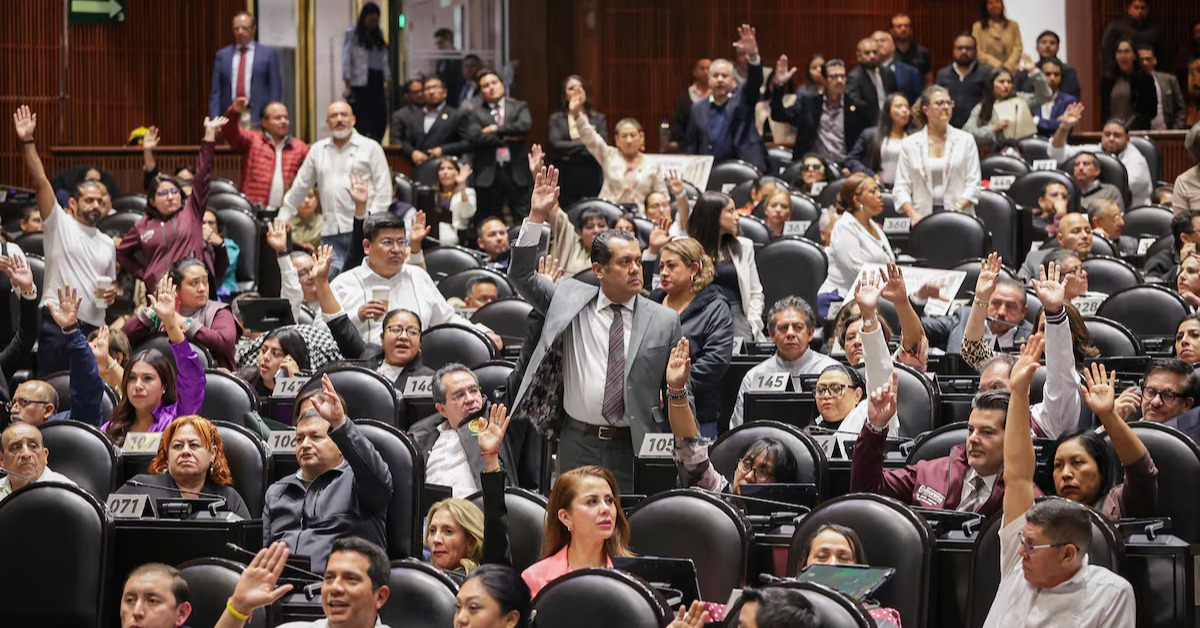
The measure was approved by 307 votes in favor, 128 against, and 1 abstention after a debate that stretched into the morning. The change would add a new ground for nullifying elections to Article 41 of Mexico’s Constitution.
The final wording was tightened during the session. The approved text says nullity would apply when “acts of intervention or foreign interference” are proven and when those acts influence electoral results.
That narrower phrase did not end the dispute. Morena and its allies describe the reform as a shield for national sovereignty. Opposition lawmakers warn that the same language could become a new avenue to challenge an unfavorable result, especially if subsequent laws leave broad discretion to courts and election authorities.
A reform sold as protection against outside pressure
Ricardo Monreal, Morena’s coordinator in the Chamber of Deputies and the proposal’s promoter, said the reform seeks to make foreign interference a clear constitutional ground for annulment. He said there was “no intention to distort” the principle that foreign governments or outside agents should not intervene in Mexican elections.
Morena’s caucus said the concern goes beyond direct government action. During the debate, ruling-party lawmakers pointed to illicit financing, propaganda, systematic disinformation, digital manipulation, and foreign pressure as forms of interference that could alter an election.
President Claudia Sheinbaum defended the reform after its approval in San Lázaro. She said there had been foreign financing in Mexico before and argued that election decisions should remain in Mexican hands. “In Mexico, Mexicans decide who governs us,” she said. She also acknowledged that the harder issue is proof. “The issue is how you prove that there was foreign intervention in an election, and that has to come in the law very clearly,” she said.
That question now moves from political slogan to legislative drafting. The constitutional language would set the ground for annulment. Secondary laws would determine how evidence is weighed, who can bring a challenge, and what conduct crosses the line from outside opinion into election interference.
Opposition warns of a wide lane for disputes
The strongest objections focused less on blocking foreign interference and more on how the rule could be used.
Rubén Moreira, the PRI coordinator in the Chamber of Deputies, said opposition lawmakers reject foreign intervention but object to being forced into a yes-or-no frame. He warned that the discussion could open later fights over whether international news, foreign advertising, or outside criticism could be treated as interference.
Elías Lixa of the PAN also objected to the timing. He argued that Congress should first complete the constitutional process before moving into changes to secondary election laws tied to the new language.
In the Senate, PAN coordinator Ricardo Anaya had already called the proposal “an absolute trap,” saying the language could allow Morena to challenge elections it loses by pointing to foreign media, international organizations or outside criticism.
Those criticisms place the reform within a broader debate over trust in Mexico’s electoral system. The country is already debating whether electoral reform can curb cartel influence in Mexico and whether recent institutional changes have weakened democratic checks.
The Senate gets the next vote
The Senate received the lower house’s reform package later Thursday and sent the foreign interference proposal to commissions. Senate President Laura Itzel Castillo said the chamber would begin analyzing and discussing the minutes it receives.
Because the proposal changes the Constitution, approval by the Chamber of Deputies is only one step. Constitutional amendments require two-thirds support from lawmakers present in Congress, then approval by a majority of state legislatures and the Mexico City legislature.
That process gives Morena and its allies a path to enact the change if they keep their legislative bloc together. It also gives opponents a narrower window to press for clearer definitions before the rule becomes part of the constitutional framework.
The timing is tight. Congress is working through election-related changes before the legal window closes ahead of the 2027 electoral calendar, when Mexico is scheduled to renew the Chamber of Deputies and hold several state and local races.
The text approved in the lower house does not, by itself, annul any election. It creates a new constitutional basis for doing so when foreign interference is proven to have influenced the outcome. The political fight now turns on what proof will mean, who gets to define interference, and whether the final rules can separate real foreign pressure from speech, journalism, and advocacy that governments may find inconvenient.