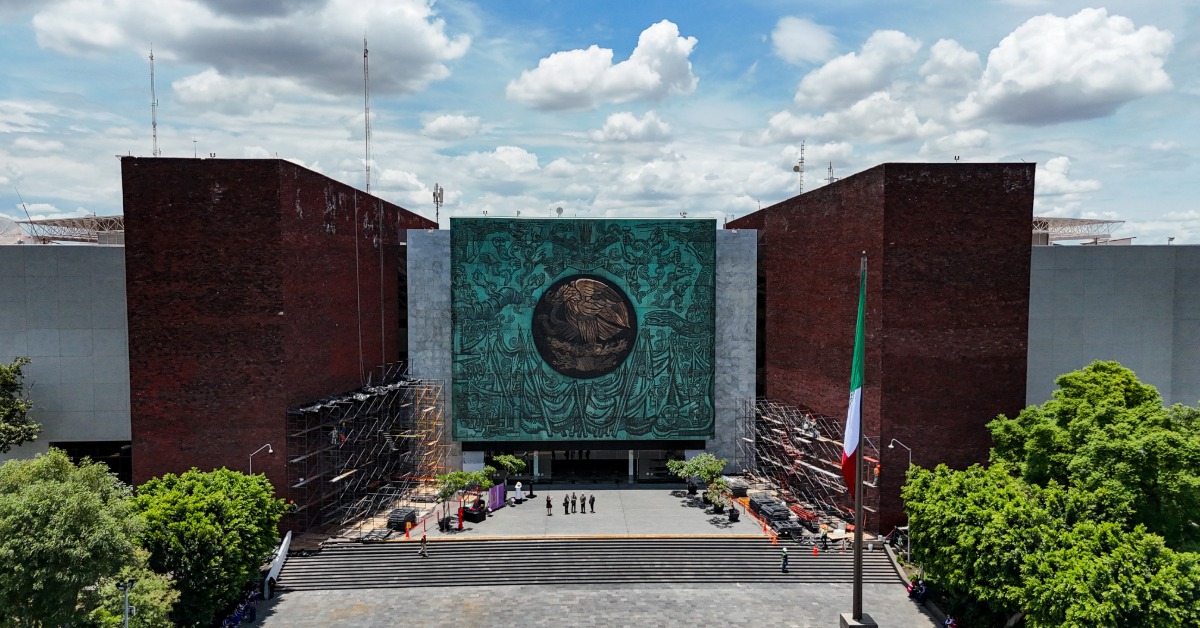
Mexico’s electoral reform is often framed as a fight over costs, plurinominal seats, and party power. That misses the deeper issue. The real question is whether new rules can make it harder for criminal groups to shape campaigns, pressure local candidates, and turn elections into territorial contests. The proposal changes representation, cuts financing, and promises tighter oversight. But those tools matter only if they protect the weakest point in Mexican democracy: the local race, where intimidation and silence can matter more than speeches.
The cartel test
Mexico’s electoral reform is being sold as a cleaner, cheaper way to run democracy. That framing is incomplete. The more important test is whether the proposal can reduce cartel leverage over campaigns and local government. The bill filed in the Chamber of Deputies reshapes how some seats are reached, cuts public electoral spending, trims the Senate, and tightens parts of the financing system. It also includes changes tied to campaign communication and voting from abroad. On paper, that sounds like a broad modernization plan. In practice, the reform will be judged on a narrower point. Can it make elections harder to capture in the places where politics is most exposed to coercion? That question matters because criminal influence in Mexico rarely begins with a dramatic national showdown. It usually starts lower down. It starts when a candidate needs permission to campaign, when a rival is warned to step aside, or when a municipal government becomes useful to a criminal network after the votes are counted. The true subject here is not just representation. It is public trust under pressure.
Why local races matter more than national slogans
The phrase narcopolitics can sound abstract until it is reduced to its real mechanics. Who can run? Who can campaign safely? Who can raise money without hidden strings? Who can govern once in office? That is why local races matter more than the loudest national talking points. Criminal groups do not need to capture the entire electoral system to shape outcomes. They only need to control strategic municipalities, intimidate a few candidates, or influence party selection in places where state protection is weak. Recent monitoring of the 2023–2024 process showed attacks, threats, kidnappings, and killings aimed at people seeking office. Those numbers matter less than the pattern they reveal. Violence is not random noise around elections. It is often part of the competition itself. Municipal offices are especially vulnerable because they are closely aligned with policing, permits, land use, public works, and local budgets. For many readers living in Mexico, politics becomes visible in daily life. It shapes the reliability of public services, the credibility of the local authority, and the basic sense of whether the state or another actor sets the rules.
The money rules target one channel of control
The reform’s strongest logic lies in campaign finance. Illicit influence thrives in opacity, in cash, in intermediaries, and in informal favors that never touch a bank record. The proposal tries to narrow that space. It pairs a planned cut in public electoral spending with stricter oversight of private money, tighter reporting requirements, and a stronger push for traceable financial flows. That matters because dirty money rarely arrives with a label. It moves through fragments, front people, shell expenses, and friendly hands. A system that reduces anonymity and expands auditable records can raise the cost of covert political financing. That is a serious goal, and it is one of the more practical parts of the package. But it is still only one part. Money rules can expose suspicious flows, yet they do not stop a threat made in private, a forced withdrawal, or a campaign team that decides survival matters more than the ballot. In other words, the reform may do useful work against one channel of criminal influence while leaving another mostly intact. Cleaner accounting is valuable. It is not the same as real protection for candidates facing territorial pressure.
Representation changes can cut both ways
The debate over representation usually starts with plurinominal seats and ends with arguments about fairness. This reform raises a different question. Do new seat pathways make politics more accountable, or do they make candidates more exposed? The Senate proposal is the clearest break. It removes the national-list proportional tier and reduces the chamber from 128 to 96 seats. That change matters because the current structure gives every major party a national route into the upper house. In 2024, those proportional Senate seats were distributed across Morena, PAN, PRI, PVEM, Movimiento Ciudadano, and PT. The Chamber proposal is more subtle. It changes the route into some lower-house seats by giving more weight to candidates with real territorial vote totals rather than party list placement alone. Supporters say it can weaken closed-party elites and create a more direct link between voters and legislators. Critics see a different risk. A system that rewards territorial performance can also push candidates to build stronger local machines and more personal networks. In peaceful settings, that may look like accountability. In contested territory, it can also increase vulnerability to coercion.
Trust is built where services meet the street
For expats and long-term foreign residents, this debate can sound distant until it reaches the level of lived experience. Trust in elections is not measured only by turnout or by how many seats each party wins. It is also measured by what happens after the campaign. Does the municipal government function without visible pressure? Can local officials enforce rules without negotiating with criminal interests? Are development decisions, business inspections, or public security choices made by public authority or by fear? That is where this reform will succeed or fail. If it reduces hidden money but leaves local actors exposed, the system may look cleaner while feeling no safer. If it changes seat allocation but does not improve the state’s ability to protect candidates and investigate electoral crime, the public may see more engineering and not more justice. Mexico already has a capable election administrator in many technical respects. The harder question is whether electoral administration, prosecutors, financial intelligence, and security authorities can work together before violence reshapes the field. That is the missing bridge between a constitutional reform and actual democratic confidence.
What will decide whether the reform works
As the initiative moves through Congress, the headline fight will focus on votes, allies, and amendments. That is normal. Constitutional reform always becomes a test for coalitions. But the more revealing question is what survives the negotiation. If the final package keeps only the visible savings and the symbolic restructuring, it may produce a strong slogan and a weak result. If it preserves stronger tools on financial traceability, candidate oversight, and interagency coordination, it could alter the incentives around local campaigns in a meaningful way. Even then, no electoral redesign can defeat criminal coercion on its own. Law can narrow openings. It cannot replace territorial control, credible prosecution, or physical protection. That is why the most honest way to read this reform is not as a cure, but as a test of seriousness. Does the state want a cheaper electoral system or a harder one to capture? The answer will not be found in the sales pitch. It will be found in the fine print, in the amendments, and later in the municipalities where the next race is decided under pressure.