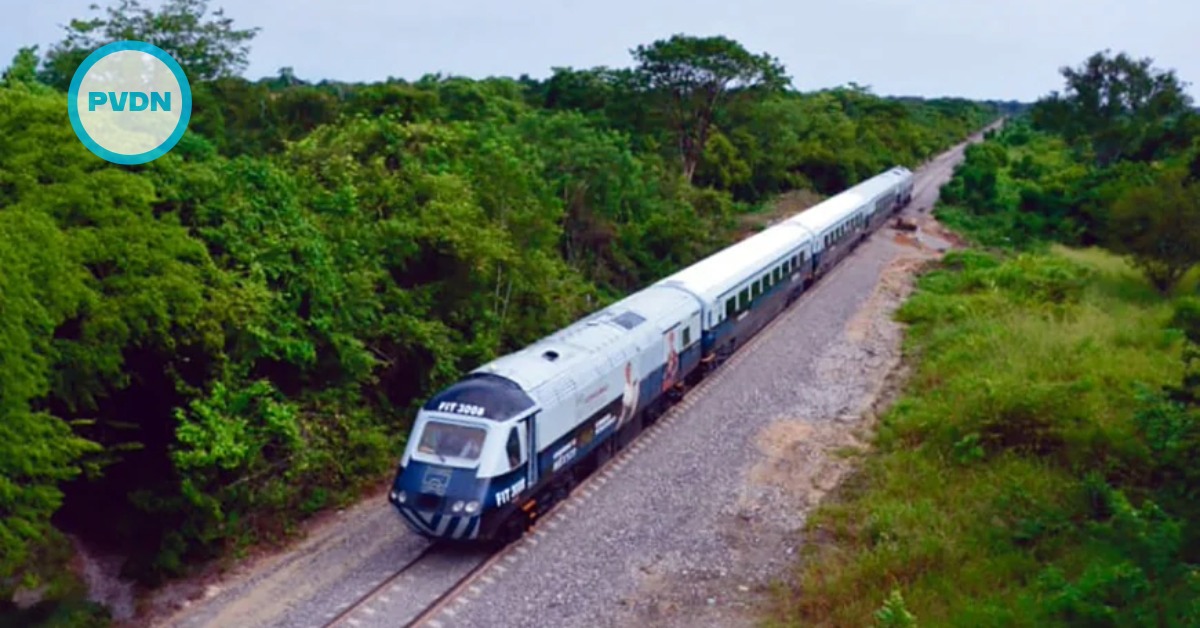
A first-person ride on Mexico’s Interoceanic Train with real ticket prices, station basics, and what to expect onboard now.
The Interoceanic Train is one of those projects most people have heard about, but few have actually ridden. It crosses the Isthmus of Tehuantepec, linking Coatzacoalcos, Veracruz, on the Gulf side with Salina Cruz, Oaxaca, on the Pacific. It was built with bigger goals in mind, including cargo and industrial development. For travelers, though, it’s also a straightforward way to move between two coastal regions without driving.
A recent passenger ride from Coatzacoalcos to Salina Cruz shows what this trip looks like in real life. It’s not a luxury cruise on rails. It’s also not a bare-bones commuter run. It sits somewhere in the middle, with a few details that matter a lot once you’re standing on the platform with a bag in your hand.
Most riders will notice the schedule first. This route is not an every-hour service. It typically runs on a limited schedule, which forces your whole itinerary to bend around the train rather than the other way around. That matters if you’re connecting from Mexico City, or if you’re trying to time a beach arrival and don’t want to spend an extra night in transit.
Interoceanic Train costs
Let’s start with the number everyone asks about. Interoceanic Train costs for the full Coatzacoalcos–Salina Cruz ride generally land in the mid-hundreds of pesos, depending on class and passenger type. Recently published fares for the full route put tourist class at roughly the high 400s, and executive class at approximately the low 600s for an adult ticket. Discounted tickets can bring that down sharply for eligible riders, including seniors with an INAPAM credential, students and teachers during certain periods, children, and passengers with disabilities who can present accepted documentation.
Those prices help you decide whether the train beats the bus for comfort, or whether it’s worth stretching to executive for a longer ride. Official descriptions of the service tiers also clarify what you’re paying for. Tourist class is positioned as basic comfort with air conditioning and luggage space. Executive is marketed as a step up, with more comfortable seating, more space, and onboard connectivity features that can matter on a multi-hour trip.
Buying the ticket is also part of the real cost calculation, because it shapes how you plan your day. Tickets are sold through the official passenger platform, and stations also use self-service kiosks. The ticketing process typically requires your name and trip details, and riders often travel using either a printed ticket or a QR code on a phone. If you’re counting on a discounted fare, it’s smart to assume you’ll need the proper credential in hand, not buried in an email or left at home.
The stations themselves are not built like airports, but the experience can feel closer than you might expect. On this ride, the passenger described an airport-style security filter at the start, including bag screening. That changes the rhythm of boarding. You can’t treat it like a last-second hop-on, especially if you arrive from an overnight bus and you’re running on fumes.
Stations on the line also matter because they explain the route’s pacing. The initial passenger service has been tied to key stops such as Medias Aguas, Donají, Mogoñé, Matías Romero, Chivela, Ixtepec, and Salina Cruz, with Coatzacoalcos as the Gulf-side anchor. Even if you never get off, those stops shape travel time and the feel of the trip, because they create pauses, staff movement, and periodic cleaning cycles.
By the time you board, the question stops being “Is it cheap?” and becomes “Is it workable for my trip?” For many people, that’s the real value test.
What the ride feels like end to end
Once the train starts moving, the experience becomes surprisingly physical. The passenger who rode in executive class described roomy cars, reclining seats, power outlets for charging a phone, and space that makes luggage less of a battle. That’s the kind of detail that sounds small until you’ve done a six-to-seven-hour ride with a backpack wedged into your knees.
The air-conditioning stood out immediately, and not in a gentle way. In this account, it was turned up enough that passengers complained about the cold, and the rider had to put a jacket back on after boarding. It’s a simple tip, but it’s the kind you only hear from someone who has sat through the chill. If you run cold, dress like you’re entering a movie theater, not heading to the tropics.
Bathrooms were a bright spot. The rider described them as clean and well-stocked, with paper, water, and soap, and noted that cleaning staff boarded at stations to keep trash cleared and the space usable. On a long trip, that’s not a luxury detail. It’s the difference between “fine” and “never again.”
Food is where expectations can get tripped up. This train does not offer full dining-car service on every trip. In the account of this ride, staff passed through with snacks, drinks, and souvenirs instead of a café-style setup. The rider intentionally skipped eating beforehand, expecting a strong breakfast option, only to find that popular items like coffee and tortas were already gone by the time the cart reached her. What remained were packaged sweets, cookies, soft drinks, and juices. The lesson is blunt. If you care about a real meal, you bring one, or you eat before you board.
Then there’s the part that sells the trip to anyone who likes overland travel. The scenery was described as the highlight, with long stretches of green, early sunlight, and the feeling of sliding through a humid, wind-shaped landscape. The route passes through the broader Isthmus region, which has its own personality and weather, including areas known for strong winds. Even with a simple onboard setup, the view does a lot of the storytelling.
Timing matters for arrival plans. On this ride, the train left in the morning and arrived in Salina Cruz in the early afternoon, after roughly six hours on the rails. That can work well if you’re trying to reach the coast the same day. It can also leave you scrambling if your lodging check-in is early, or if you’re counting on onward transport. The train may be the comfortable leg of the journey, but you still need a clean plan for the last mile once you step off.
For travelers weighing the Interoceanic Train against buses or driving, the clearest takeaway is that this service rewards planning. The fare is not the whole story. The schedule, the station routine, and what is and isn’t available onboard all shape whether the trip feels smooth or stressful. If you build around those realities, the ride can be one of the more memorable ways to cross southern Mexico without white-knuckling the highway.