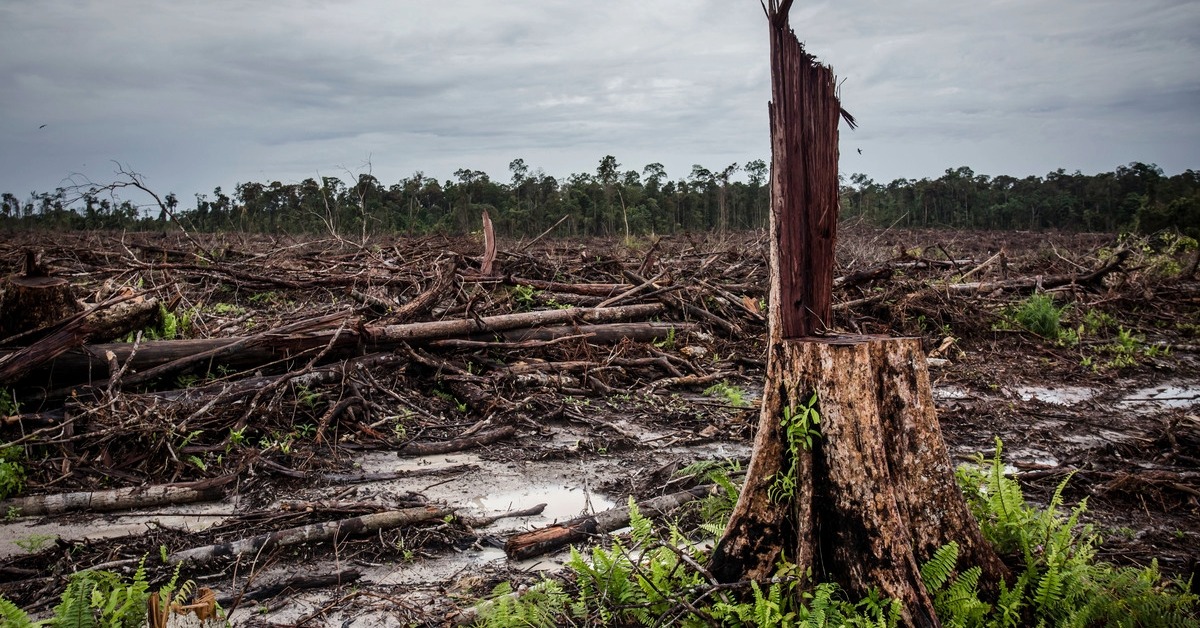
Mexico has a new forest certificate, and it targets a quiet pressure point: land that stops being forest and becomes something else. Semarnat says agricultural conversion has played a measurable role in forest ecosystem loss since 2001. The new document will be used to verify whether activities on specific land polygons avoided illegal forest land-use change. For farms, exporters, officials, and communities near forest zones, the paperwork may soon carry more weight than it used to.
Mexico’s New Forest Certificate Puts Farms on Notice
Mexico’s Environment Ministry has ordered the creation of a Certificado de Libre de Deforestación, a new document intended to verify that activities on a specific plot of land did not involve the illegal conversion of forest land.
Published Tuesday in the Diario Oficial de la Federación, the agreement instructs Semarnat’s Dirección General de Gestión Forestal, Suelos y Ordenamiento Ecológico to carry out the steps needed to issue the certificate. The order describes the measure as a matter of public order, as well as of social and environmental interest.
The certificate will apply to a defined poligonal, or land polygon. Under the agreement, the purpose is to show that activities carried out there did not illegally change the use of forest land.
Agriculture sits at the center of the new measure
Semarnat cited data from the Sistema Nacional de Monitoreo Forestal, showing that 21.99% of Mexico’s forest ecosystem loss from 2001 to 2024 was due to conversion to agricultural land. That share amounts to about 44,766 hectares of deforestation per year, according to the federal agreement.
The agency also pointed to INEGI data indicating that 28% of Mexico’s terrestrial ecosystems have already been transformed into agricultural, livestock, or urban zones.
That is the dry bureaucratic version. The real-world version is simpler: forest land becomes farm land, paperwork follows too late, and the damage has often already happened. The certificate seeks to bring that review closer to the point where land use and economic activity intersect.
El Sol de México reported that the certificate was launched to protect forest ecosystems and their resources, with the same agricultural conversion figure highlighted in the federal data.
The order follows a legislative push
The certificate did not appear in isolation. On May 22, La Jornada reported that President Claudia Sheinbaum had sent Congress an initiative to give Semarnat authority to issue deforestation-free certificates. That proposal sought changes to the Ley Orgánica de la Administración Pública Federal and the Ley General de Desarrollo Forestal Sustentable.
According to that report, the initiative described the certificate as a way to prove that a land polygon is outside forest terrain or has legal authorization for a land-use change.
The new DOF agreement goes a step further in administrative terms. It orders the forest management office inside Semarnat to coordinate with the areas that manage the information system referenced in Article 24 of the Ley General de Desarrollo Forestal Sustentable. That system is meant to help identify forest land and agricultural properties.
The same law bars federal agricultural support for activities in deforested zones or for activities that push land-use change in forest terrain, according to the agreement.
Export rules are also in the background
The agreement also points to a May 1, 2026, federal decree that added deforestation prevention as a possible basis for non-tariff export regulation or restriction.
That connection gives the certificate a wider lane than domestic conservation paperwork. It may also become part of how authorities assess whether goods or activities are tied to land that was cleared without authorization.
The move fits beside other federal restoration and land-use efforts. Vallarta Daily recently covered Mexico’s goal of reaching 1.5 billion plants by 2030 through Sembrando Vida, a separate restoration push tied to the 2026 planting phase.
The geography is not abstract for western Mexico. La Jornada reported that the legislative initiative identified Campeche, Chiapas, and Jalisco as among the states most affected by deforestation, and said that the expansion of agave and avocado had displaced some forest and dry forest areas in Jalisco and Michoacán.
Semarnat’s agreement was signed in Mexico City on May 19 by Environment Secretary Alicia Bárcena. It takes effect the next business day after publication in the DOF, placing the start date on May 27, 2026.