Mexico City mapped 376 ground fissures in Iztapalapa and Tláhuac and is testing a UNAM method to keep cracked streets from failing.
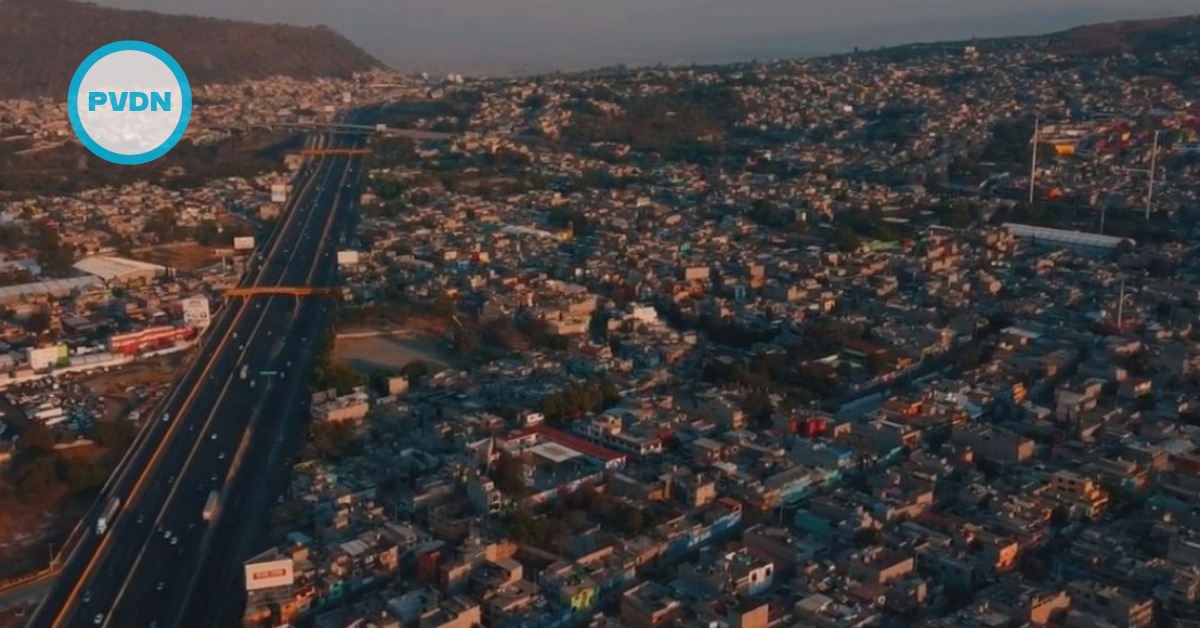
Mexico City has put hard numbers on a problem many residents in the east side already feel under their feet. Between October 2024 and August 2025, the city’s Works and Services Secretariat identified 376 geological fissures in 16 neighborhoods of Iztapalapa and Tláhuac, cracks that slice through streets, sidewalks and public spaces.
Instead of only pouring new asphalt, the city is rolling out a mitigation method developed with researchers at the National University’s Institute of Engineering. The approach, known locally as a deformation-dissipation box, is meant to accommodate ground movement, not pretend it has stopped.
The focus on Iztapalapa and Tláhuac is no accident. Mexico City stands on ancient lakebed clays that compress as groundwater is pumped out. Studies based on satellite radar have shown that the eastern Valley of Mexico can sink by around 35 centimetres a year in some spots, with more than a million people living in zones considered at elevated risk from subsidence and cracking.
Ground fissures in Mexico City now tracked street by street
According to city officials, the 376 fissures were mapped by a geological evaluation team using topographic, geophysical and geotechnical surveys. Once a crack is confirmed, the team classifies how it affects roads, parks and nearby structures, and designs targeted works at specific points instead of trying to rebuild entire blocks.
The first regeneration project under this strategy sits in Santa Martha Acatitla, where a damaged strip of land has been converted into a small garden with playground equipment. Three more sites are under detailed study in El Rosario and El Molino, in Iztapalapa, and in the Del Mar area of Tláhuac. Other affected communities include Agrícola Metropolitana, Miguel Hidalgo, Ojo de Agua and the towns of San Andrés Mixquic, San Juan Ixtayopan and Santiago Zapotitla.
At the heart of these works is the deformation-dissipation box. In simple terms, crews excavate a trench along the trace of a fissure and fill it with clean granular material, usually sand. Because the sand does not transmit tension in the same way as compacted soil or concrete, it can “slide” internally when the deeper ground keeps moving. That movement is partly absorbed within the trench rather than tearing open the pavement or park surface above.
Geotechnical teams linked to the national university have tested this concept for years in the southeast of Mexico City. Their papers describe it as an “angular strain dissipative trench,” and document how adapting its shape and depth to local soil conditions can keep street slopes within safe limits even as subsidence continues. By 2025, more than 1,500 cracks in the city’s southern and eastern boroughs had been treated with variants of this system.
The same technique was recently used at the La Concordia bridge in Iztapalapa, where a geological fissure opened near a major traffic node. There, engineers installed a box about 1.5 metres deep under the affected span to stabilize the ground and reduce the chance that a new void would open in the same line.
Residents live with slow-moving risk
For people in Iztapalapa and Tláhuac, the new boxes are arriving in neighborhoods that have lived with cracked streets and leaning homes for decades. When subsidence is uneven, one side of a block sinks faster than the other. Pavement buckles, curbs step down suddenly and buried pipes snap, forcing repeated repairs to water and sewer lines.
Scientific studies of the region’s subsoil describe a complex transition from soft lake clays to stiffer materials toward the surrounding hills. Where that transition is abrupt, and where deep wells draw down groundwater, the clay layer shrinks unevenly. The result is not just smooth sinking but sharp breaks in the surface, the same ground fissures that now appear on the city’s maps and risk atlases.
Researchers have warned that, if current trends continue, some parts of the metropolis could become very difficult to keep habitable within the next decade because of the combination of subsidence, cracking and aging infrastructure. That prospect hangs heavily over families whose homes already show diagonal cracks running across walls and door frames that no longer close square.
The Works Secretariat’s strategy does not promise to fix every damaged house. Instead, it focuses on public space: streets where buses and ambulances need to pass, small plazas that can either become fenced-off hazards or safer gathering points. By turning a fissured strip of land into a park, as in Santa Martha Acatitla, the city is trying to turn a weakness in the ground into a usable asset, at least for a time.
City engineers describe these interventions as “small scale and high impact.” A single dissipative box can protect a street crossing, a play area or a buried pipe, even though the deeper soils will continue to settle. From the resident’s point of view, the difference is tangible: fewer sudden steps in the pavement, fewer barricaded corners, and a sense that authorities are paying attention to the cracks that keep creeping closer.
Long term, though, the fissures raise harder questions. The underlying causes—overpumping of the aquifer, heavy urban loads on soft clays, and the expansion of development into fragile zones—cannot be solved with trenches alone. The risk maps produced from satellite data and population statistics show that more than 1 million people in Mexico City already live in areas of intermediate-to-very-high subsidence risk.
The 376 mapped fissures in Iztapalapa and Tláhuac are one snapshot of that reality. They show where the ground has already failed, and where public works crews can act. They do not show the deeper pressure on a city still sinking unevenly year after year.
For now, the deformation-dissipation boxes buy time. They keep certain streets open, protect some pipes and give neighbors a park instead of a fenced-off scar. For the families living along those cracks, that time matters. It is the difference between dodging another taped-off hole on the way to school and seeing a once-broken corner of the neighborhood become a safer place to walk, play and wait for the bus.