In June 2026, Mexico City will be trying to host two giant crowds at once: football fans and Pride marchers. LGBT+ organizers say they’re building a “Pride Mundial” around June 27, threading their march and a closing concert through World Cup security plans and FIFA’s packed calendar. The pitch isn’t just about parties; it’s about visibility, rights, and who gets the Zócalo when the world is watching. One unexpected pop icon has been tapped as a symbol of that message.
A June crossroads for the city
Mexico City already knows how to hold a crowd. Pride, Día de Muertos, political rallies, impromptu street celebrations after a big match — the capital has a long habit of taking over its own avenues and making the public square feel personal.
What’s different about 2026 is timing. Organizers have set the Mexico City Pride march for Saturday, June 27, a date that drops into the middle of the FIFA World Cup calendar, when the city is expected to be cycling through visiting fans, security operations, and event buildouts. The tournament opens in Mexico City on June 11, and the stadium FIFA refers to as Mexico City Stadium — better known locally as Estadio Azteca — is scheduled to host multiple games in late June and early July.
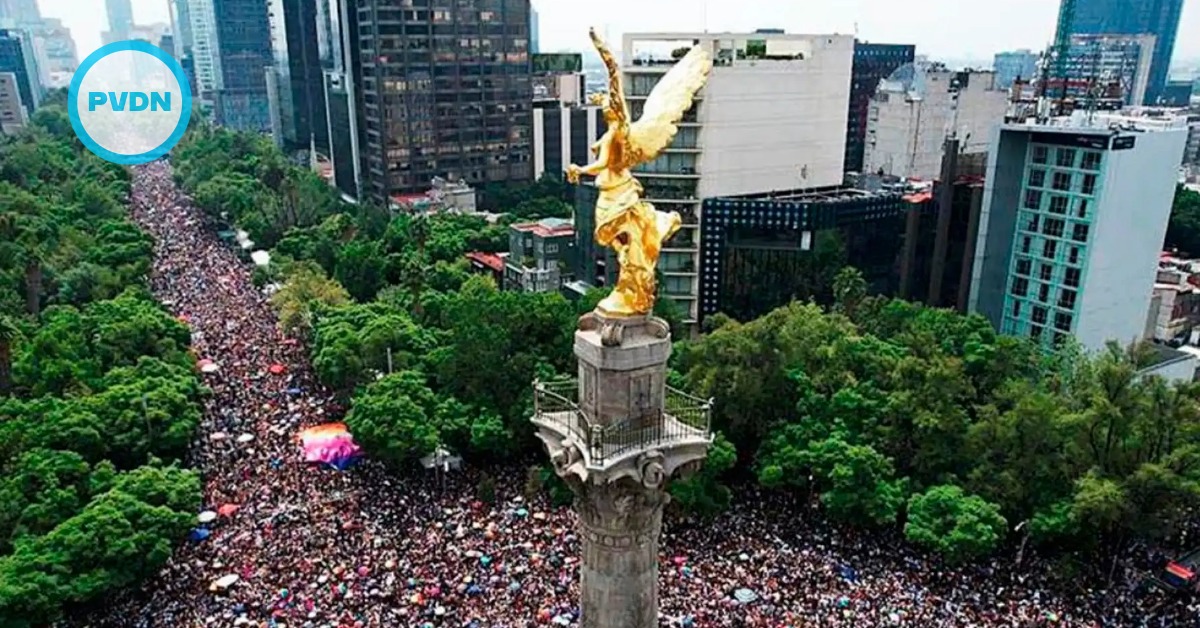
For residents, that overlap isn’t an abstract planning puzzle. Pride’s traditional route runs from the Ángel de la Independencia down Paseo de la Reforma and into the historic center, ending at the Zócalo. Those are also the corridors where the city tends to concentrate major “showcase” moments, from sports activations to big public screenings. Put simply: Pride isn’t happening in a corner of town. It happens on the postcard.
A Pride Mundial built around logistics and rights
The organizing committee and allied groups are leaning into the collision rather than ducking it. Their pitch for a “Pride Mundial” is both branding and strategy: a way of saying that if the world is already arriving for football, Pride intends to be part of what those visitors remember about Mexico City.
Behind the slogan is a more practical message. Organizers say they’re already coordinating with city and federal authorities so that FIFA-related operations don’t become a pretext to restrict the march, reroute it out of the center, or squeeze the closing events into something smaller and easier to manage. Their framing is blunt: international spectacle shouldn’t cancel local rights — especially the right to demonstrate in public space.
That tension is most visible around the Zócalo. The square is the symbolic heart of the capital and the emotional finish line for Pride. It’s also being discussed as a centerpiece for World Cup fan programming. Pride organizers have signaled they don’t intend to give it up, arguing that a closing concert and public celebration are part of the event’s identity, not optional extras.
For expats — especially those who’ve learned Mexico City by its rhythms of weekend closures and sudden citywide events — this is the part to watch. The challenge isn’t whether the march can happen. It’s whether it can happen on its own terms in a month when the city will be tempted to prioritize the simplest version of crowd control.
The message behind the Tatiana crown
The most eye-catching detail so far isn’t a route map or a stage design. It’s a symbolic appointment: Tatiana, the Mexican children’s performer who has soundtracked multiple generations, was crowned as a queen figure for the march — including a title tied to “les niñes,” a gender-neutral Spanish form increasingly used in activist spaces.
Organizers describe the choice as a deliberate response to what they see as growing hostility toward LGBT+ children and transgender people. In their telling, putting a mainstream, family-facing figure at the center is meant to do two things at once: create a softer, more approachable doorway for families and allies, and push back against the idea that LGBT+ inclusion should be kept away from kids.
It’s also a savvy cultural move. For many Mexicans — including plenty of expats raising children here — Tatiana is shorthand for childhood TV, school parties, and an era of pop that didn’t require translation. Making her part of Pride is a way of saying: this isn’t a niche event aimed only at the converted. It’s a public tradition the city claims as its own.
Whether that symbolism lands broadly will depend on how the next few months unfold, and on whether organizers can hold the line between celebration and politics. Pride in Mexico City has always carried both, but the World Cup spotlight raises the stakes: every message gets amplified, and every misstep travels faster.
What could change between now and June
The date is set, but the details will keep moving. Start times, exact security perimeters, transit adjustments, and permissions for staging can shift as World Cup operations get closer. Even the balance of the city’s attention — how much is consumed by football versus local life — will depend on matchdays and momentum.
Still, the main point of the “Pride Mundial” pitch is already clear. Organizers are trying to turn a potential squeeze into leverage: if the world is watching Mexico City in June 2026, they want that gaze to include the city’s LGBT+ community, its allies, and its public demand for inclusion.
For expats planning their summer — whether you’re staying put, hosting visiting friends, or thinking about leaving town to dodge the crowds — it’s worth treating late June as a hinge point. Expect heavy hotel demand, packed transit, and major street closures around Reforma and the Centro Histórico. And expect, too, that the city’s loudest debate won’t be about who wins on the field, but about what kind of city Mexico City wants to show the world.