An armed group stormed a San Rafael apartment building in Mexico City, beating residents, looting homes and forcing more than ten families into the street.
In the early hours of Monday morning, an ordinary workday in central Mexico City began with terror. Around 2:30 a.m., residents of an old apartment building on Antonio Caso Street in the San Rafael neighborhood reported that roughly 70 men and women forced their way into the property. Some wore hoods. Several carried firearms or knives. Within moments, the hallways filled with shouting, blows and the sound of doors being kicked in.
Families described being dragged from their beds while still half asleep. Adults tried to grab documents, cash and phones as they were pushed toward the stairs. Children cried in confusion. According to neighbors, the intruders beat several residents, threatened others at gunpoint and went room by room taking valuables before ordering everyone out. By dawn, more than ten families, an estimated 45 to 50 people, were standing on the pavement with their belongings scattered around them.
One long-time tenant, who said he had lived in the building for eight years, recalled waking to a crash in the corridor and then the sight of men overturning furniture. When he tried to protect his things, one of the assailants pulled a knife. He grabbed the blade to stop it, cutting his hand. He later realized that about 50,000 pesos in savings, along with phones and a computer, were gone.
Another resident, an older man who had rented in the building for around four decades, said he was confronted with a pistol and ordered to leave. He also reported losing several thousand pesos from his social program pension. The accounts match each other on one key point: the intruders appeared organized, coordinated and determined to seize the building in a single, sudden operation.
San Rafael violent eviction
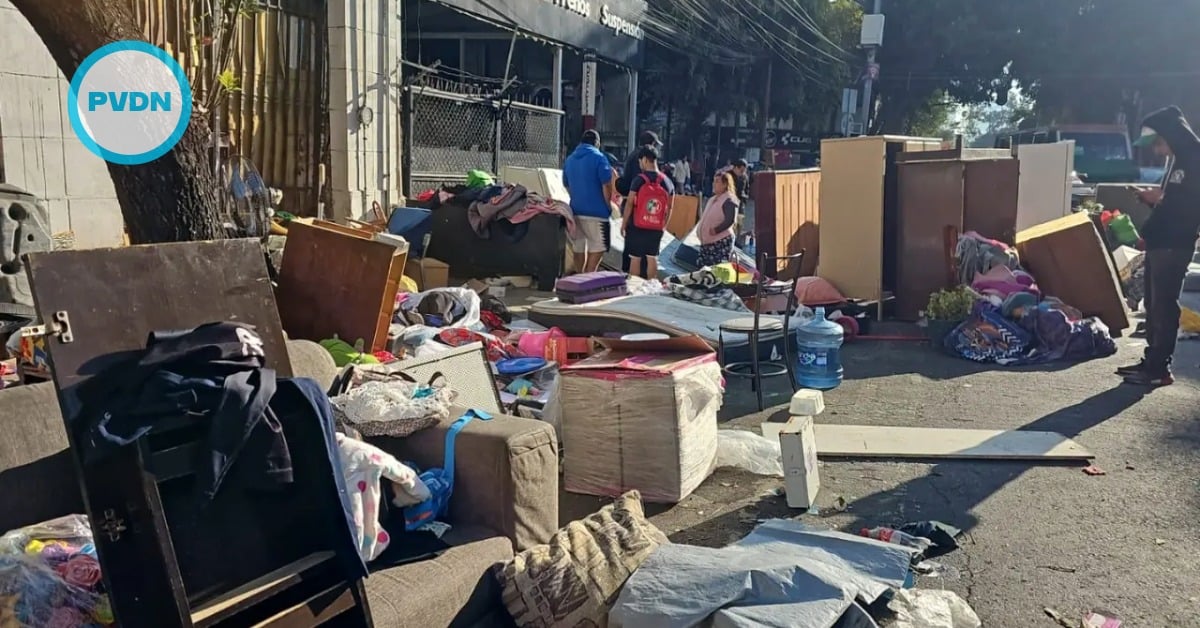
Outside, the scene looked like a small camp thrown together in a matter of minutes. Mattresses, refrigerators, bags of clothing and potted plants lined the curb along Antonio Caso. Neighbors helped move heavier items away from traffic while residents tried to salvage documents and medicines. Some people sat on the ground wrapped in blankets, still in nightclothes, unsure where they would sleep that night.
As hours passed, frustration turned into open protest. Residents and supporters blocked the intersection of Antonio Caso and Manuel María Contreras for roughly seven hours, demanding a response from authorities. They accused the local government and the city’s police of ignoring emergency calls during the attack. One woman said her nephew pressed a panic button, part of the city’s security system, but no patrol arrived while the assailants were inside the building.
Witnesses also described how the group secured control of the property. They said the intruders brought heavy equipment, knocked down the building’s main gate with a crane and later welded doors shut to keep evicted families from returning. By late afternoon, residents counted between 20 and 30 people still stationed inside as lookouts, watching the street from windows and doors while motorcycles, some without license plates, remained parked outside.
It was only in the afternoon that officials from the city’s political outreach office arrived to meet the displaced families. After a closed-door conversation, residents said they had been offered eight nights in a hotel, a monthly payment of 4,000 pesos for six months and legal assistance while investigators review how the takeover happened. The support may cover basic immediate needs, but it does not answer the central question on residents’ minds: who sent the armed group, and under what legal authority.
Authorities have not publicly detailed any court order or eviction notice related to the property. Some tenants acknowledge long-running disputes over ownership of buildings in the area, a familiar story in central neighborhoods where land values have risen sharply. But they insist that no one showed them documents on the night of the raid, and that nothing can justify what they describe as a violent, surprise expulsion carried out while families slept.
Families left in limbo after armed raid
The events in San Rafael do not happen in a vacuum. In recent months, tenants’ groups and housing advocates have documented a string of controversial evictions across central Mexico City, many concentrated in the same borough. In August, families expelled from a building in the historic center set up a camp on the street outside; at least two elderly residents later died after weeks of living in precarious conditions. Their stories deepened public concern over how private disputes and real estate pressures are reshaping inner-city neighborhoods.
Legal specialists who track housing cases in the capital have warned that many evictions here fall short of international standards, which call for daytime operations, prior notice, due process and dignified relocation options. They argue that pre-dawn raids carried out with private enforcers, sometimes supported by official personnel, violate those principles and expose tenants to violence, family separation and homelessness. The accounts from San Rafael, with armed civilians taking the lead in forcing families out, echo those broader concerns.
At the same time, the episode raises questions for city leaders. Three months ago, the capital’s government announced plans for a formal protocol governing evictions, promising clearer rules and safeguards for affected residents. The overnight raid in San Rafael suggests that, if such guidelines exist, they did little to protect the tenants of Antonio Caso 163. For the families now camped on the sidewalk or in temporary hotel rooms, the gap between promises on paper and reality on the ground feels painfully wide.
For now, the people who once called the building home are focused on immediate survival. Some are trying to keep children in school while living out of bags. Others are searching for new rentals in a city where prices have surged, especially in well-located neighborhoods like San Rafael. Many say they cannot afford market rates without falling into debt.
As investigations begin, the former tenants say they want more than short-term aid. They are asking for a full inquiry into who ordered the operation, why police did not stop an armed group from taking a residential building, and what guarantees the city can offer to prevent similar attacks. Until those questions are answered, the San Rafael violent eviction will remain a powerful symbol of how fragile the right to housing can be when legal gray zones and force collide.