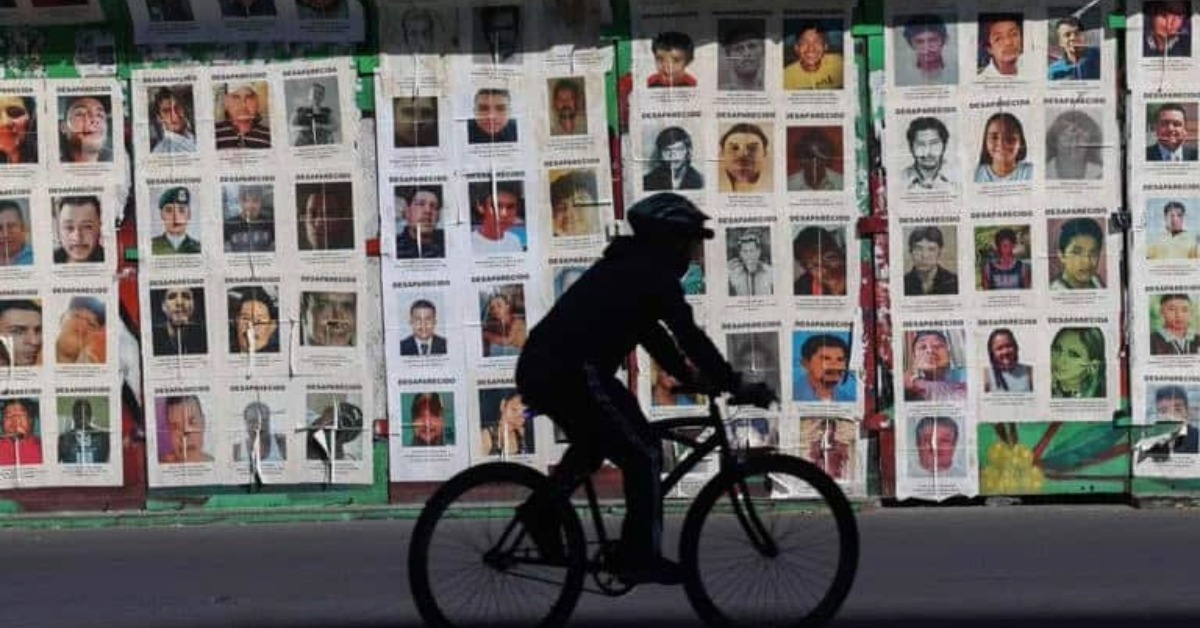
The Inter-American Commission on Human Rights has warned that Mexico’s disappearance crisis remains one of the country’s most serious human rights challenges.
In its 2025 annual report, the commission said Mexico had 133,601 people registered as disappeared or not located. The highest totals were reported in the State of Mexico, Jalisco, and Tamaulipas.
The warning places Mexico back under regional scrutiny at a time when the government is trying to show progress. Officials have pointed to new legal changes, search actions, forensic coordination, and dialogue with families. But the commission said the scale of the crisis still points to deep institutional problems.
For readers outside Mexico, the issue can be hard to understand. This is not only a crime story. It is also a story of justice, forensic science, policing, and governance.
What the CIDH is saying
The CIDH described disappearances and the forensic emergency as a grave humanitarian crisis. It said the country still lacks reliable official figures on unidentified bodies.
Human rights groups cited in the report estimate that Mexico has more than 70,000 unidentified bodies in forensic services and other storage facilities. The commission noted that those figures remain difficult to update because reporting systems are not consistent.
That matters because many families are not only searching for living relatives. They are also trying to identify remains recovered from clandestine graves, crime scenes, morgues, and forensic storage sites.
The report also raised concerns about the Centro Nacional de Identificación Humana and the Banco Nacional de Datos Forenses. These institutions are meant to help Mexico identify bodies and connect forensic information across the country.
The CIDH said civil organizations warned of weakened capacity, limited resources, and technical problems in those systems.
Why disappearances surged after 2006
Mexico’s modern disappearance crisis is often traced to 2006, when the federal government expanded its military-led campaign against organized crime.
Since then, disappearances have grown alongside cartel violence, territorial disputes, corruption, and weak investigations. In some cases, organized crime groups are accused. In others, families and rights groups allege direct or indirect involvement by authorities.
It is important to separate the two terms. A person can be missing for many reasons. An enforced disappearance involves state agents, or people acting with state authorization, support, or tolerance.
That distinction is central to international human rights law. It is also why Mexico’s case has drawn attention from both the CIDH and the United Nations.
Search collectives face growing danger
One of the most difficult aspects of the crisis is the role of families.
Across Mexico, mothers, fathers, siblings, and spouses have formed search collectives. These groups look for clandestine graves, review case files, pressure prosecutors, and help other families navigate the system.
The CIDH said defending human rights remains dangerous in Mexico, including for people searching for disappeared relatives. The report cited attacks, disappearances, and killings involving searchers and human rights defenders.
This risk changes the nature of the crisis. Families are not only grieving. Many are doing fieldwork that should normally fall to the authorities.
For foreign residents and long-term visitors, this is part of the larger safety context behind headlines about violence. It does not mean every community faces the same risk. But it does show how weak investigations can affect public confidence far beyond the families directly involved.
The government’s response
The Mexican government reported several actions to the commission.
Between October 2024 and June 2025, officials said they carried out more than 5,700 search actions, including searches for people believed to be alive and forensic searches. The government also reported 14 dialogue meetings with families and organizations.
Officials also pointed to reforms to the disappearance law, changes aimed at improving the operation and integration of registries, and work on identification processes.
The CIDH recognized some advances. It noted social policy gains, labor measures, housing and health programs, and steps related to anti-torture policy.
But the commission said those advances do not erase concerns over civil rights, justice, security, and accountability.
The problem with the numbers
Mexico’s disappearance registry has become a political and technical dispute.
The federal government has reviewed records and said many files are incomplete, duplicated or show signs that a person may be alive. Officials have argued that the registry needs better data and more consistent investigation files.
Families and search groups have reacted with caution or anger. Their fear is that statistical reviews could reduce the official count without actually locating people.
That fear is understandable. In a crisis built on absence, the registry is often the only official proof that a person has not been found.
Better data can help searches. But poor communication can make families feel that their loved ones are being erased a second time.
Militarization and justice concerns
The CIDH report also looked beyond disappearances.
It raised concerns about the militarization of public security, especially after the Guardia Nacional was placed under the Defense Ministry. Critics argue this expands military influence in civilian policing, intelligence, and public security.
The commission also cited concerns about torture and prison conditions. Mexico was classified as having a high risk of torture and ill-treatment in a global index cited in the report.
Prison conditions were another warning point. The CIDH said many detention centers are overcrowded and that deaths in custody had increased, possibly linked to medical-care failures.
These issues relate to disappearances because they raise the broader question of whether institutions can investigate, protect rights, and hold authorities accountable.
Why the international pressure matters
The CIDH warning comes as Mexico faces pressure from another international process.
The United Nations Committee on Enforced Disappearances has asked that Mexico’s situation be brought before the UN General Assembly. The committee said there are well-founded indications that enforced disappearances in Mexico may amount to crimes against humanity.
The Mexican government has rejected parts of that assessment and says it is working to address the crisis. At the same time, UN human rights officials have offered technical support.
The practical question is not only whether Mexico accepts criticism. It is whether international pressure leads to stronger searches, better forensic systems, safer conditions for families, and more effective prosecutions.
What comes next
The CIDH said a specific report on disappearances in Mexico is expected. That report could bring more detailed recommendations and put new pressure on federal and state authorities.
For now, the message is clear. Mexico has taken some steps, but the crisis remains unresolved.
The families of the disappeared are still waiting for answers. The forensic backlog remains large. Search collectives still face danger. And the institutions meant to find people, identify remains and prosecute crimes are still being tested every day.