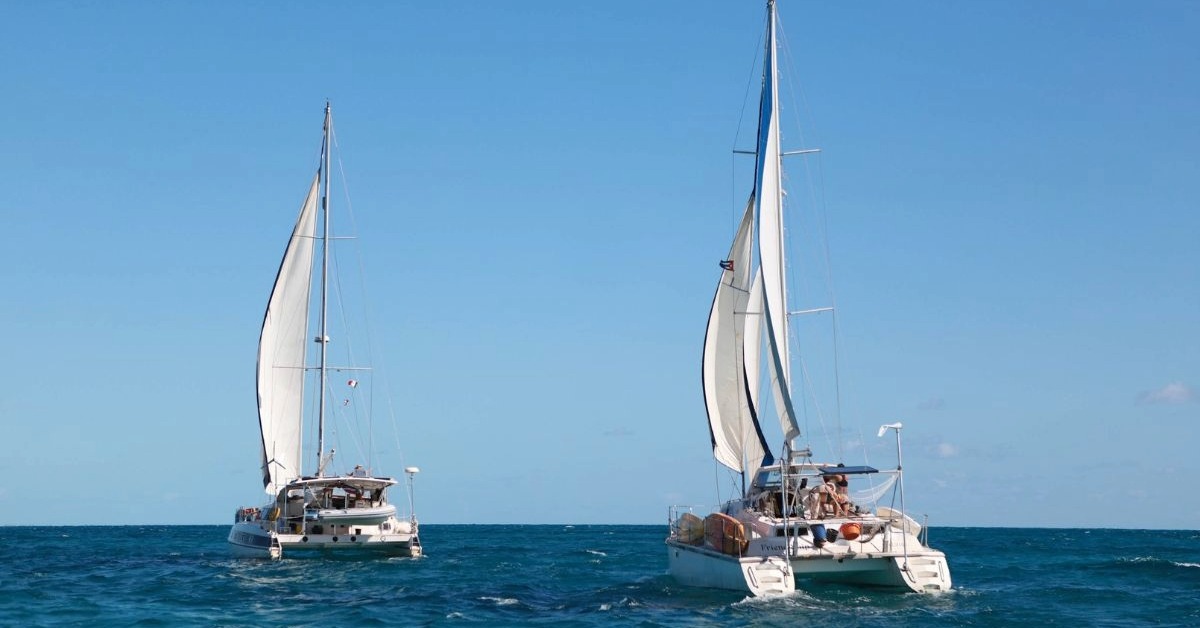
Two aid sailboats that left Mexico for Cuba have failed to arrive, turning a symbolic solidarity mission into a regional search. Cuban officials say they are doing all they can, while Mexican authorities have activated rescue protocols in the Caribbean. The case has drawn attention because the boats were part of the Nuestra América convoy, an international effort to deliver supplies to an island facing fuel shortages, blackouts, and growing hardship. What happened at sea remains unclear.
Search widens after two sailboats fail to arrive
Cuba says it is working with Mexican authorities to help locate two aid sailboats that disappeared on the route to Havana. The vessels left Isla Mujeres, Quintana Roo, on March 20 as part of the Nuestra América convoy. They were expected to arrive in Cuba on March 24 or 25. By Friday, there was still no confirmed arrival and no successful communication with the crews.
Mexican authorities activated search-and-rescue protocols through the Navy, which also serves as the coast guard. Cuban President Miguel Díaz-Canel said his government was doing everything possible in the search. Reports indicate the two boats carried nine crew members from several countries. Organizers have described them as experienced sailors and said the vessels were equipped with safety and signaling equipment.
That detail matters. A missed arrival does not automatically confirm a sinking or another maritime disaster. Rescue procedures can begin when a vessel fails to check in or misses its destination window. Even so, every day without contact makes the situation more serious. In the Caribbean, weather, currents, mechanical problems, and communications failures can quickly complicate search efforts.
What the convoy was trying to do
The missing boats were part of a broader civilian mission to bring humanitarian aid to Cuba. Organizers say the convoy was carrying food, medicine, baby formula, hygiene products, and basic energy supplies. A separate boat from the same mission reached Havana earlier this week, showing that at least part of the effort had been completed.
The convoy was not only about cargo. It was also intended as a political statement. Its backers describe it as a grassroots effort supported by organizations from more than 30 countries. Their argument is that Cuba’s shortages cannot be understood without looking at tighter U.S. pressure and the island’s reduced access to fuel and imports.
That framing is contested. Cuban officials blame sanctions and blocked oil supplies for much of the present emergency. Critics of the Cuban government argue that the island’s economic system and weak management have also played a central role. Both debates now sit in the background of a story that has become more immediate and more human. At its center are nine people still unaccounted for at sea.
Why Cuba needs aid now
The broader context is essential for international readers. Cuba is going through one of its hardest periods in years. The island has been dealing with severe fuel shortages, repeated blackouts, and continuing disruptions to transport, food distribution, and medical services. In March alone, Cuba suffered multiple major power failures, leaving millions affected and exposing the fragility of the electric system.
For that reason, even relatively small aid deliveries have taken on outsized importance. A few sailboats cannot solve a national energy crisis. They cannot stabilize a power grid or restore regular fuel imports. But they can deliver supplies that matter on the ground and draw fresh attention to the depth of the emergency.
That helps explain why the Nuestra América convoy attracted international notice before the disappearance. It combined practical aid with symbolism. Supporters wanted to show that Cuba was not isolated, even as daily life on the island grew harder. The missing boats have now changed the story. What began as a show of solidarity has turned into a regional rescue effort.
Why this matters in Mexico
This is also a Mexico story, not only a Cuba story. The boats left from Mexican territory, and the search has involved the Mexican Navy and international rescue coordination. Mexico has also been one of Cuba’s most visible regional partners during the current crisis, both diplomatically and through aid shipments. That gives the case a wider meaning than a single maritime incident.
For readers in Mexico, especially in coastal states, the disappearance is also a reminder of how unforgiving nearby sea routes can be. The distance between the Mexican Caribbean and Cuba may appear manageable on a map. In practice, small craft depend on weather windows, strong communications, navigation discipline, and rapid coordination when something goes wrong.
The story also lands at a moment when Mexico’s role in regional affairs is being watched more closely. Aid leaving from Mexican ports carries humanitarian meaning, but it can also carry diplomatic weight. When a mission like this runs into trouble, those layers become impossible to separate.
What remains unknown
As of Friday, the central facts were still unresolved. The boats had not arrived. The crews had not been confirmed safe. Authorities in Mexico and Cuba continued the search, while organizers asked for any information that could help locate the vessels.
That leaves the story in a narrow space between hope and uncertainty. There is still no public confirmation of a wreck, a collision, or any other clear cause. Until authorities find the boats or establish contact, much of the most important information remains unknown.
What is already clear is that a mission meant to deliver aid to Cuba has become a maritime emergency with human, political, and regional consequences. That is why the story has moved beyond a routine missing-vessel report. It now touches on the safety of the crews, the urgency of Cuba’s shortages, and Mexico’s role in a crisis unfolding across a short but difficult stretch of sea.
With information from Secretaría de Marina