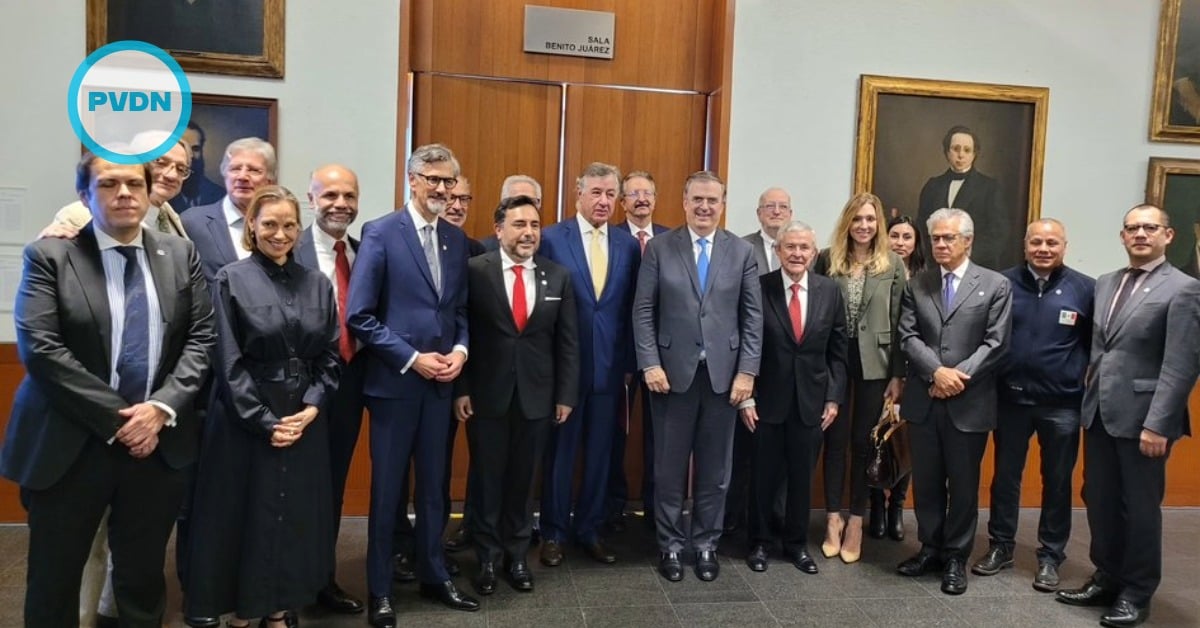
Mexico and France moved culture to the front row of statecraft on Friday, announcing the reactivation of the Franco Mexican strategic council and a temporary, reciprocal exchange of two pre-Hispanic manuscripts: the Codex Azcatitlan and the Codex Boturini. The news came after a joint appearance by President Claudia Sheinbaum and President Emmanuel Macron at Mexico City’s Palacio Nacional. Initial details were reported by Animal Político and confirmed during the leaders’ public remarks.
Franco Mexican strategic council
The council—first created during a previous cycle of bilateral enthusiasm—returns with a mandate to connect business, academia, culture, and science. Friday’s relaunch underscores a broader reset timed to high-profile events and negotiations, including the modernization of Mexico-EU trade ties that both governments say they want to move forward. French and Mexican outlets covering the visit highlighted the council’s revival as part of a package that also elevates cultural cooperation.
At the heart of that cultural push is the codex exchange. Mexico will receive the Codex Azcatitlan—held by the Bibliothèque nationale de France since the late 19th century—for exhibition in 2026, while France will display Mexico’s Codex Boturini (also known as the Tira de la Peregrinación). The arrangement is framed as a temporary, reciprocal loan, synchronized with the bicentennial of Mexico-France diplomatic relations.
The timing matters. The Sheinbaum-Macron announcement lands amid a years-long Mexican campaign to bring heritage objects home—permanently when possible, and via loans when the law makes permanence improbable. French public law classifies these manuscripts as inalienable national treasures, which is why loans often become the practical path. That legal backdrop helps explain why the codex plan is pitched as reciprocity rather than restitution.
What the codices mean—and why the swap resonates
The Codex Azcatitlan tells the Mexica story from migration to the early colonial period; it is cataloged in Paris in the BnF’s “Mexicain 59-64” collection and is digitized on Gallica. Its trip to Mexico would let audiences see, study, and debate a foundational narrative artifact at home. Meanwhile, the Codex Boturini—a long amate-paper strip chronicling the Mexica journey—anchors a core gallery experience in Mexico City; sending it to Paris expands that story’s reach to European viewers.
Friday’s exchange announcement also functioned as a political signal. In the courtyard optics of state visits, culture is often soft power. Here, it becomes a hard agenda. Mexican and French press accounts emphasized that the leaders coupled the codex move with an economic and scientific cooperation pitch, showing that heritage and commerce can travel together when the political lines up. The joint press availability, with both heads of state leaning into the symbolism, set that tone.
Context helps. Mexican officials and scholars have pressed France for years on manuscripts like the Azcatitlan and the Borbonicus. Those debates frequently run into legal walls in Paris; loans like this one thread the needle. By agreeing to a two-way exchange tied to the 2026 bicentennial, both sides get a diplomatic win without triggering a legal standoff. Reporting from El País and La Jornada tracked the evolution from request to agreement across the past two days, culminating in today’s confirmation.
What comes next is logistics. Loans of this caliber demand conservation, security, and insurance plans tailored to humidity levels and transit routes. Officials did not detail schedules beyond pointing to 2026 exhibits. Still, the careful framing—“temporal,” “reciprocal,” “simultaneous”—suggests a choreography designed to minimize risk and maximize public access on both sides of the Atlantic. Follow-up comments from Mexico’s foreign ministry and national press later in the day reinforced that framing.
For readers, the bottom line is simple but meaningful: two rare windows into Mexica history will be opened to new audiences, while a dormant binational brain trust gets turned back on. If the Franco Mexican strategic council sustains that momentum beyond the photo op, expect more than a single cultural exchange—expect a pipeline of joint work that treats heritage, research, and trade as parts of the same conversation.