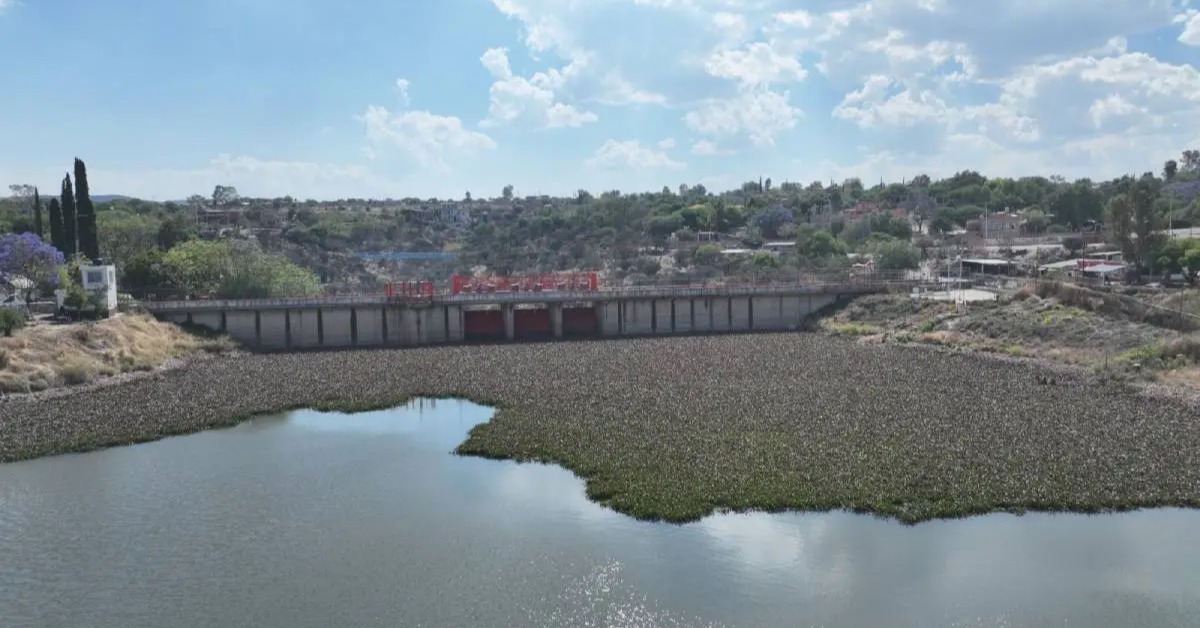
The cleanup now underway at Presa Ignacio Allende is the first visible step in what officials say must become a longer recovery effort. More than 250 residents and volunteers joined federal, state, and municipal authorities to remove water hyacinth, the floating invasive plant known in Mexico as lirio acuático. Conagua brought in heavy equipment for the opening phase, including excavators, dump trucks, and a front loader, after authorities held a public assembly on April 10 to explain the plan and hear concerns from nearby communities.
That matters because this was not presented as a one-day volunteer action. Officials described it as part of a broader intervention for the reservoir and the surrounding area. Along with plant removal, the plan includes stronger coordination among agencies, follow-up monitoring, and measures to improve water quality. For residents who have watched the reservoir deteriorate over several years, that distinction is important. The challenge is no longer only about clearing what is floating on the surface. It is whether the conditions behind the problem will finally be addressed.
Why water hyacinth is more than an eyesore
For readers unfamiliar with the issue, water hyacinth is not just a nuisance plant. It spreads fast, forms thick mats over the surface, blocks light, and reduces oxygen in the water. Once that happens, the damage goes beyond appearance. Fish habitat suffers. Boat movement becomes harder. Access to shorelines can narrow. The cost of cleanup also rises because crews must return repeatedly as growth returns.
That helps explain why the situation at Presa Allende has drawn so much local concern. In communities around the reservoir, people have described years of disruption to fishing, navigation, and other everyday uses of the water. Officials have also linked the response to a wider need for better wastewater treatment, pollution prevention, and regular oversight. In practical terms, that means the plant is being treated as both a symptom and a problem in itself. Pulling it out may improve conditions in the short term, but it will not be enough on its own if nutrient loads and contamination continue feeding new growth.
Why Presa Ignacio Allende matters beyond San Miguel
The reservoir sits on the Río Laja, southwest of San Miguel de Allende, and is tied to the wider water system of the Bajío. It is not just a scenic body of water near a tourist city. It has long been part of the region’s agricultural and environmental infrastructure, and local reporting has also described it as a source of food, income, and recreation for nearby communities when conditions were healthier.
That broader role is what turns this into more than a local environmental complaint. When a reservoir like this degrades, the effects do not stay neatly inside one municipality. The pressure spreads across livelihoods, local ecosystems, and regional water management. In this case, authorities have framed the cleanup as important for both San Miguel de Allende and Dolores Hidalgo, which helps explain why the response now includes multiple levels of government instead of leaving the issue to volunteers and residents alone.
A long problem is finally getting a larger response
The current intervention follows weeks of formal coordination, but the underlying problem is older. Local reporting says the plant’s recent expansion accelerated in the last several years and that residents had already been organizing cleanup efforts before the latest government response took shape. By mid-2024, volunteers had reportedly removed more than 70 tons, yet the plant kept returning. Officials now say roughly 45 percent of the reservoir remains affected.
That history is what gives the latest turnout real weight. The crowd size matters, and so does the visible arrival of machinery, but the main test will come later. Residents will be watching for steady follow-through, not a symbolic launch. They will want to see whether the cleanup continues near the dam area, whether treatment and anti-pollution measures move forward, and whether the promised monitoring becomes routine. For international readers, this is the real takeaway. Water crises do not always begin with empty taps. Sometimes they begin with a reservoir that still looks usable, even as it becomes harder to protect, harder to live from, and more expensive to restore.