Mexico’s Gulf spill is no longer a story about a few dirty beaches. Greenpeace says contamination now runs from northern Veracruz to Tabasco. The group warns that reefs, fishing communities, and remote stretches of coast remain exposed. Federal authorities say the cleanup is well advanced, and the source remains under investigation. The widening gap between the two accounts now defines the story, and it raises a broader question about how Mexico addresses and pays for environmental damage at sea.
A regional spill, not a local one
Greenpeace says the Gulf of Mexico oil spill has now affected 630 kilometers of coastline, extending from Tamiahua, Veracruz, to Paraíso, Tabasco. That marks a sharp expansion from earlier reports centered in southern Veracruz and Tabasco. The group says the spill is threatening reefs, remote beaches, and coastal communities that depend on fishing and tourism. It is also asking the federal government to declare an environmental emergency and widen restoration efforts.
For many readers outside Mexico, the scale is the real shift. This is no longer only a cleanup story near one industrial zone. The affected stretch overlaps the Corredor Arrecifal del Suroeste del Golfo de México, a coastal system of reefs, mangroves, lagoons, and nesting beaches. When oil reaches shore here, the risk is not limited to sand and surf. It can disrupt fisheries, stain wetlands, and leave heavy residues, known locally as chapopote, that return with the tides and wind.
Cleanup claims and field evidence diverge
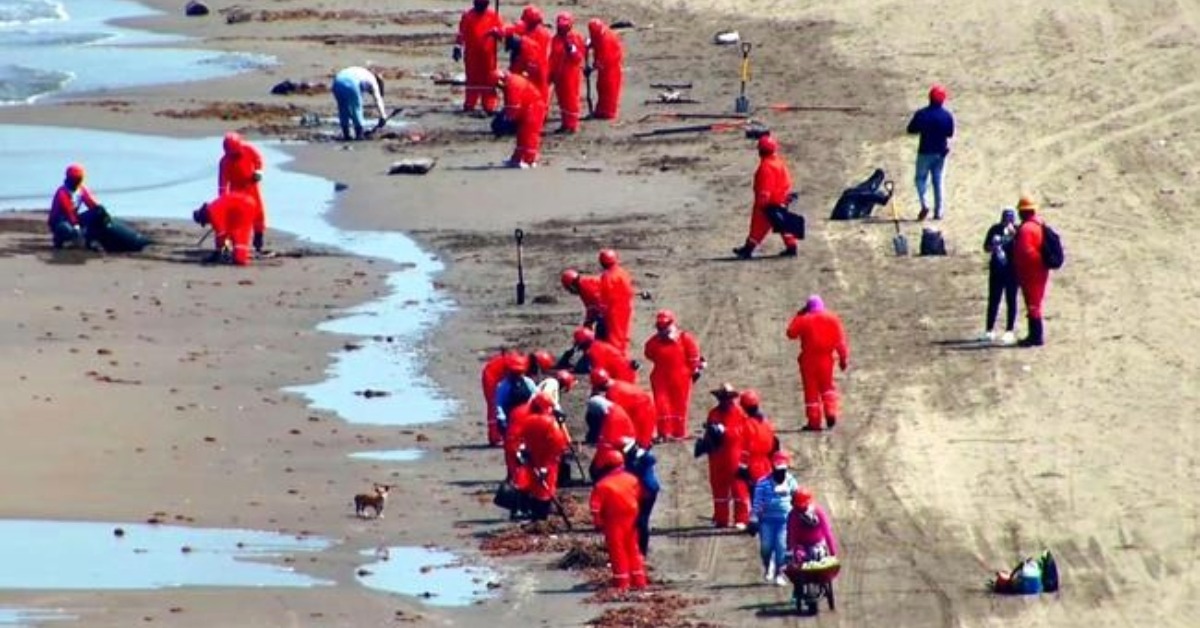
Federal authorities have described a more contained picture. A joint government update said cleanup reached 85% by March 16 and 88% by March 17, with 94.7 tons of hydrocarbon waste collected in Veracruz and Tabasco. Officials also said the original offshore plume had been contained and that monitoring at sea was continuing. On Tuesday, the Navy reported no visible slicks in parts of the Gulf it patrolled, even as crews collected more contaminated material on Veracruz beaches.
That is where the dispute becomes important. Greenpeace and the Red Corredor Arrecifal del Golfo de México say the official percentages cover only part of the coastline. Their field records say 26 sites had received no attention in their latest assessment. They also say some cleanup has been done only by residents, often without proper gear or training. In their view, work has centered on accessible or tourist-facing beaches while more isolated stretches remain exposed.
The unanswered question of responsibility
Responsibility is still unsettled. Earlier this month, Veracruz Governor Rocío Nahle said the contamination originated from a private vessel off the coast of Tabasco. She later pulled back from that explanation and said authorities were still tracing the source. On March 24, President Claudia Sheinbaum said the responsible company had still not been fully identified. She said the FGR was involved and that an interagency team was reviewing the cause.
That uncertainty is more than a legal detail. Without a confirmed source, it is harder to assign liability, measure damages, and order compensation. Coastal communities say they have already absorbed part of the cost. Fishing crews lost work days, tourism operators faced cancellations, and local residents joined cleanup efforts that should have included equipment, training, and clear safety rules.
What comes next
The next phase of the story will not be decided by a single shoreline inspection. It will turn on whether fresh material keeps washing ashore, whether officials release a clear account of the spill’s origin, and whether reef and wetland impacts are measured in public. Greenpeace wants a formal emergency declaration, stronger contingency plans, and broader ecosystem restoration. The government says monitoring and cleanup continue. For now, the gap between those positions remains wide.
What began as a coastal contamination event has become a test of how Mexico manages environmental risk along a working energy coast. The 630-kilometer claim matters because it shifts the debate from cleanup progress to institutional credibility. If the spill is truly regional, the response will need to be regional too.
With information from Greenpeace México, Petróleos Mexicanos, Secretaría de Medio Ambiente y Recursos Naturales, Mexico Daily News