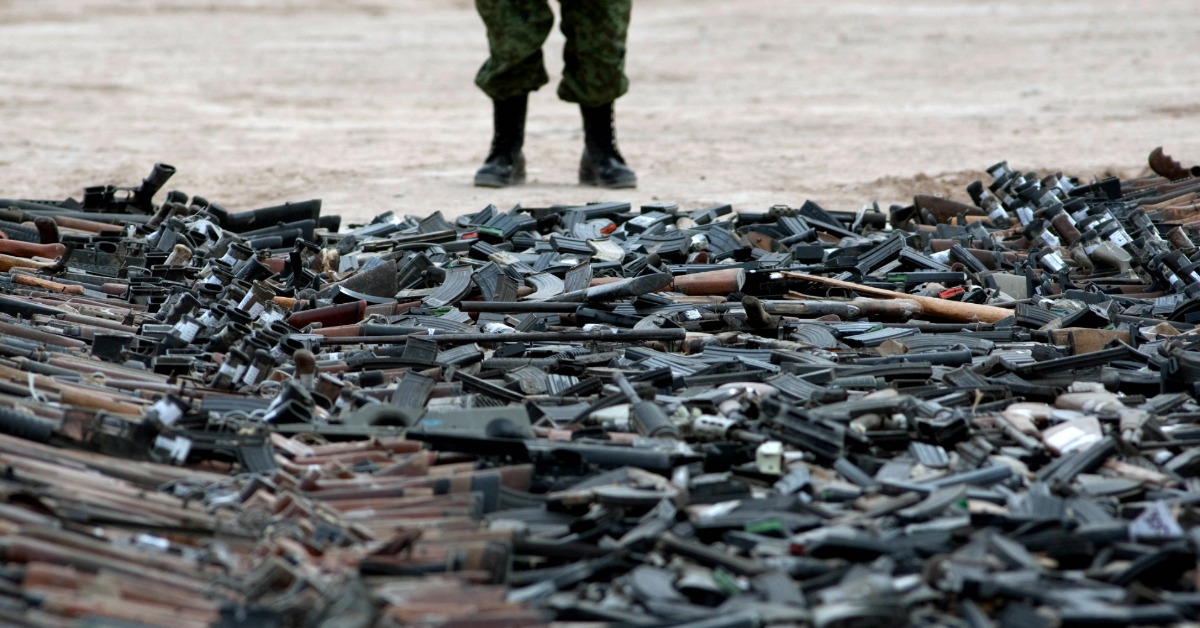
A cartel leader can fall, but the supply chain can stay intact. In a recent interview, a CIDE researcher argued that arms trafficking from the United States is the factor that keeps Mexico’s criminal groups resilient. The claim rests on two ideas: the volume of weapons moving south, and how rarely large-scale buyers are detected early. This version looks less at the cartel “succession” drama and more at the pipeline—how it works, what the available data can and cannot prove, and which pressure points still exist after recent legal and political setbacks.
The supply chain that outlasts a kingpin
In late February, authorities said Nemesio Oseguera Cervantes “El Mencho”, identified as CJNG’s top leader, was captured during an operation in Jalisco and later died from injuries. His removal sparked questions about what would happen next within the group. One view is that leadership losses matter, but they do not break the mechanics that keep a cartel armed. In that argument, the southbound gun flows function like a constant replacement system. Weapons do not need to be “made” in Mexico for cartels to keep fighting. They only need to be bought, moved, and delivered. The researcher’s warning is blunt: if firearms continue to arrive in large numbers, a new boss could rise with the same access to firepower. That makes a kingpin strategy less final than it looks. It also means the fight shifts from personalities to logistics, enforcement, and incentives on both sides of the border.
Why big buyers can slip through early
The practical challenge is that many weapons begin as legally purchased items. Trafficking networks rely on straw purchasers, bulk buys spread across shops, and repeat buying that is hard to spot in real time. In the interview, the researcher said he has identified cases in which a single person moved 600 to 800 guns from the United States into Mexico without triggering an effective alarm. That is the enforcement blind spot the argument hinges on. Border infrastructure is built to process trade and travel quickly, and inspections are uneven. Meanwhile, gun trafficking investigations are often slower than the market that feeds them. Even when a firearm is recovered in Mexico, tracing it back can be limited by missing serial numbers, incomplete records, or the simple fact that not every recovered gun is submitted for tracing. The result is a pipeline that can stay profitable and adaptable, even as leaders change.
What the data shows and what it can’t prove
ATF trace data offers one of the clearest public windows into the problem, with major limitations. In ATF’s Mexico trace report covering 2019–2024, U.S.-sourced firearms made up a large share of recovered guns submitted for tracing. In 2024, the report lists 70.5% as U.S.-sourced among those submissions. The same report stresses that traces are not a random sample and should not be treated as the full universe of crime guns. That caution matters because it leaves room for competing narratives. One side argues the data confirms a dominant U.S. supply line. Another argues the dataset is incomplete and can be misread when used as an estimate of total smuggling. Both can be true at once. The key point for readers is that, even with caveats, the trace picture consistently shows a heavy U.S. connection among the traced guns, while many weapons never enter the tracing system at all.
What pressure points remain after legal setbacks
Mexico has tried multiple routes to reduce the flow, including litigation, diplomacy, and enforcement cooperation. A U.S. Supreme Court ruling in 2025 narrowed Mexico’s civil lawsuit against gun manufacturers under U.S. liability protections, limiting that path as leverage. That puts more weight back onto enforcement tools: joint investigations, better tracing and intelligence sharing, targeted prosecutions of trafficking networks, and more consistent southbound inspections for high-risk corridors. None of those measures delivers instant headlines, and none guarantees a quick drop in cartel firepower. But they are the kinds of interventions that attack the core claim in the researcher’s warning: that cartels can replace leaders as long as they can replace weapons. For expats living in Mexico, this framing also changes what to watch. The signal is less about a single arrest and more about whether authorities can disrupt the supply chain that makes a new boss viable.
With information from El Financiero, ATF Firearms Trace Data Mexico, US Department of Justice press release, US Supreme Court, US Government Accountability Office