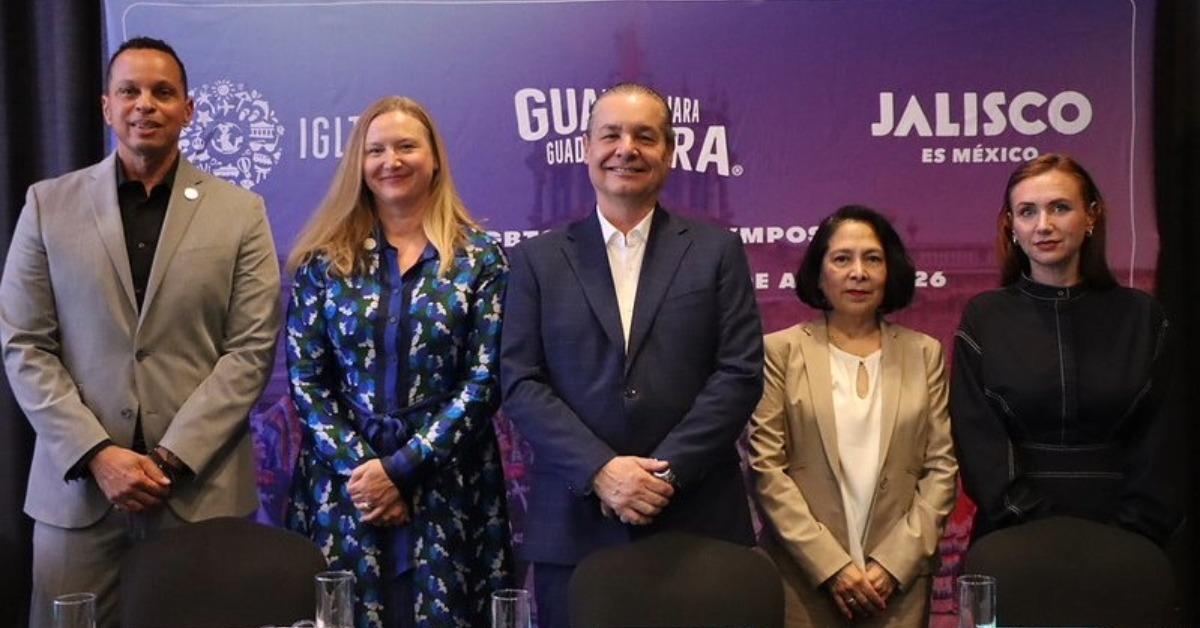
Jalisco tourism officials used a new LGBTQ+ travel symposium in Guadalajara to position the state as a stronger player in inclusive tourism, bringing together tourism-sector representatives from Mexico and abroad.
The event, held under the theme “Enriching the LGBTQ+ Travel Experience,” focused on hospitality, business networking, and training for destinations seeking to serve LGBTQ+ travelers more professionally. It was organized in partnership with the International LGBTQ+ Travel Association (IGLTA), a global tourism network focused on LGBTQ+ travel.
For Jalisco, the meeting was more than a one-day industry event. It formed part of a wider effort to link Guadalajara, Puerto Vallarta, and other state destinations to a tourism market that has become increasingly important for Mexico.
The symposium brought together about 120 tourism service providers. Participants included representatives from hotels, travel agencies, airlines, destination management companies, tourism promotion offices, community organizations, and specialized media.
The program included discussions on LGBTQ+ hospitality, diverse women in tourism, same-sex-parent families, inclusive destinations in North America, and local activism in Guadalajara.
Why Guadalajara matters in this story
Guadalajara is not new to LGBTQ+ visibility. The city has a long history of Pride events, community organizing, and cultural activity tied to diversity and human rights. It also hosted part of the Gay Games in 2023, giving the city experience with large LGBTQ+ events.
That matters for tourism. Large events test a city’s hotels, transport, security planning, nightlife, public spaces, and visitor services. They also show whether a destination can move beyond marketing slogans and provide practical support for travelers and event organizers.
Guadalajara is also preparing for PanAmerican Pride 2027, which is expected to bring LGBTQ+ communities from across the Americas to the city. That future event gives local officials and tourism businesses a reason to build training, partnerships, and visitor services now.
For many international readers, Guadalajara may be better known for mariachi, tequila connections, architecture, food, and business travel. Jalisco’s tourism strategy now appears to be adding inclusive travel to that identity.
Puerto Vallarta gives Jalisco a head start
Jalisco already has one of Mexico’s best-known LGBTQ+ tourism destinations: Puerto Vallarta.
Puerto Vallarta’s Romantic Zone, beach clubs, nightlife, restaurants, hotels, and annual Pride events have helped make the city one of Latin America’s most visible LGBTQ+ destinations. That reputation gives Jalisco an advantage that many states do not have.
The challenge is turning that success into a broader state strategy. Puerto Vallarta’s LGBTQ+ tourism model is closely tied to beach travel and nightlife. Guadalajara offers a different product, built around culture, food, urban tourism, business travel, events, and regional connections.
Together, the two destinations give Jalisco a wider pitch. A visitor could attend a conference or cultural event in Guadalajara, then add several days at the coast in Puerto Vallarta. That combination is especially useful for international travelers who want more than a single-destination beach trip.
Inclusive tourism is also business strategy
The tourism industry is paying closer attention to LGBTQ+ travelers because this market is large, frequent and often destination-loyal when visitors feel respected.
Industry estimates vary, but LGBTQ+ travel is widely described as a high-value segment. IGLTA has described LGBTQ+ tourism as a market with global spending power in the hundreds of billions of dollars. Mexico is already viewed as a strong destination in that market because of places such as Puerto Vallarta, Mexico City, Guadalajara, Cancún, the Riviera Maya, Los Cabos, and Zipolite.
But spending power is only part of the story. For LGBTQ+ travelers, destination choice can also depend on safety, acceptance, legal protections, visible community spaces, hotel staff training, and how local businesses respond when problems happen.
That is why symposiums like the one in Guadalajara focus on training, not just promotion. A rainbow logo is not enough if hotel staff, tour operators, police, restaurants, and transportation providers are not prepared to serve travelers with respect.
For expats and foreign residents in Mexico, the issue also goes beyond vacation travel. Inclusive tourism affects the feel of a city, the strength of local businesses, and the daily experience of LGBTQ+ residents who live in these destinations year-round.
Training is where the promise meets reality
Jalisco’s tourism push comes at a time when many destinations are trying to attract LGBTQ+ travelers without always understanding the community’s diversity.
There is no single LGBTQ+ traveler profile. Some visitors travel as couples, and some travel with children. Some look for nightlife. Others want history, food, wellness, outdoor activities, cultural events, or quiet hotels. Transgender travelers may have different safety and documentation concerns. Older LGBTQ+ travelers may prioritize comfort and reliability over nightlife.
That makes hospitality training important. Businesses need to understand language, privacy, family structures, safety concerns, and how to respond to discrimination complaints.
For hotels and tour operators, this can be practical. Staff may need to know how to address guests without making assumptions. Reservation systems may need to handle same-sex couples and families without awkward questions. Marketing should be accurate and not reduce LGBTQ+ visitors to nightlife stereotypes.
For destinations, the issue is broader. A city can promote itself as inclusive, but visitors will judge the full experience, from airport arrival to taxi rides, hotel check-in, restaurants, tours, nightlife, and public safety.
What this means for Mexico tourism
Jalisco’s move reflects a larger trend in Mexico’s tourism industry. Inclusive travel is becoming part of destination competition, especially as cities and beach resorts seek higher-value visitors and greater year-round demand.
Mexico already has several destinations with strong LGBTQ+ visibility. The next step is whether more states and cities can build professional standards around that market. That includes promotion, but also training, public policy, business accountability, and community involvement.
The Guadalajara symposium suggests Jalisco wants to compete on that level. The state can point to Puerto Vallarta’s established LGBTQ+ tourism economy, Guadalajara’s cultural and events infrastructure, and future international events as proof that the market is not confined to a single neighborhood or season.
Still, the success of the strategy will depend on follow-through. Tourism businesses will need to turn discussions into staff training and better visitor services. Public officials will need to make sure inclusion is reflected in planning, safety, and promotion. Community leaders will need to remain part of the conversation, not just appear in promotional campaigns.
For now, Jalisco is signaling that LGBTQ+ tourism is no longer a niche add-on. It is becoming part of how the state presents itself to Mexico and the world.