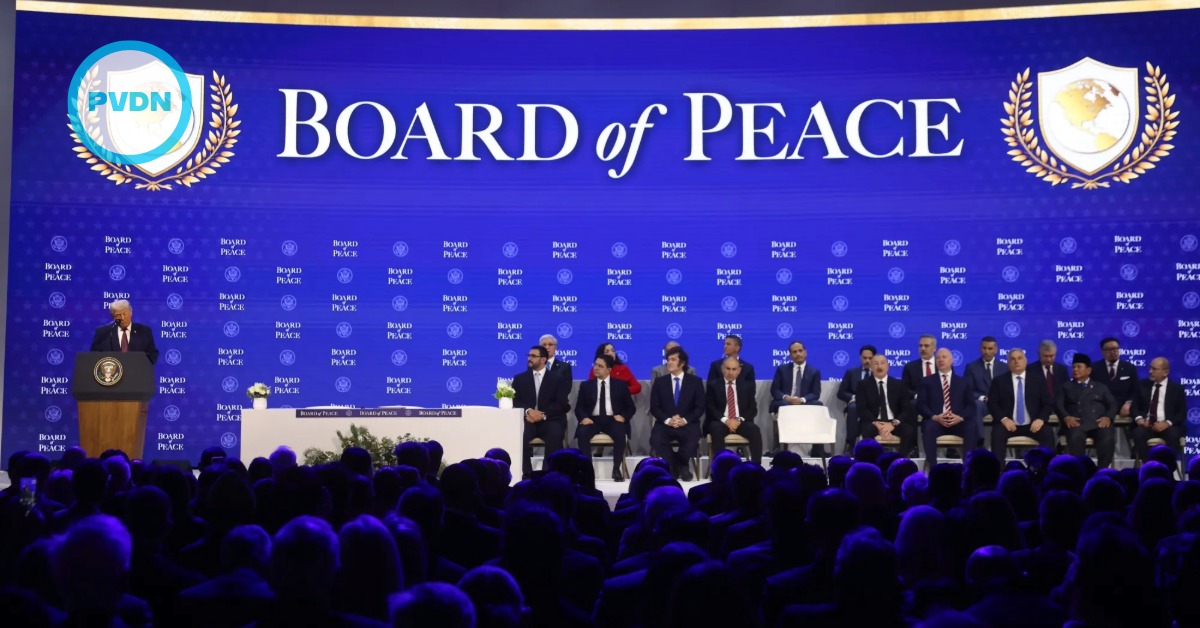
Mexico just gave Washington a polite no—without slamming the door. President Claudia Sheinbaum says she supports any push for peace, but she’s drawing a firm line around one word: Palestine. Behind the scenes is a new Trump-backed “Peace Board” promising billions for Gaza, and drawing mixed reactions from U.S. allies. Mexico’s decision hints at how far the new government will go in global diplomacy, and what it won’t trade away under pressure. The next meeting in Washington will test that line.
A careful no from Mexico City
On Tuesday morning, President Claudia Sheinbaum said Mexico will not join Donald Trump’s new Peace Board. She framed the decision as a practical choice, not a dismissal of peace efforts. Speaking at her morning briefing, she thanked Trump for the invitation. Mexico, she said, recognizes Palestine as a state. Because of that, any Middle East initiative should treat Israelis and Palestinians as equal parties. The invitation Mexico received did not spell out that kind of balance. She said the proposal’s scope, as described, did not match Mexico’s position. Rather than sign on as a member, Mexico will take part as an observer. Sheinbaum suggested the country’s UN ambassador, Héctor Vasconcelos, could attend on Mexico’s behalf. The move allows Mexico to stay in the room while avoiding a formal buy‑in. Mexico’s answer closes the door to membership, but not to dialogue. For a government still early in its term, it was a rare foreign‑policy moment made public in real time.
Why Palestine is Mexico’s condition
Sheinbaum’s line on Palestine is also a reminder of how Mexico explains its diplomacy to itself. The constitution instructs the executive to conduct foreign policy around self‑determination, non‑intervention, and peaceful dispute resolution. Those principles often translate into cautious participation and a preference for the United Nations. They also give presidents political cover when a proposal feels rushed or one‑sided. In this case, Sheinbaum argued that peace cannot be designed without Palestinian representation. Mexico has long tried to balance ties with Israel and advocacy for Palestinian rights. It often does that work through UN votes and formal statements. Mexico’s position is not new, but the timing is. Trump is asking governments to join a U.S.-led body with a broad mandate and a high profile. Sheinbaum is answering with a narrower offer: observe, listen, and push for a two‑state frame. That stance fits Mexico’s habit of seeking legitimacy through multilateral rules. It also protects Mexico from being seen as endorsing a plan that leaves statehood off the table.
What Trump’s Peace Board is trying to do
Trump has pitched the Peace Board as a mechanism to stabilize Gaza after the war and steer reconstruction. He says the board’s first official meeting will be held on Thursday, February 19, in Washington, D.C. In recent public statements, he said members have pledged more than $5 billion. The money would support humanitarian relief and rebuilding in Gaza. Trump has also described commitments of personnel for an international stabilization and policing effort, backed by a UN mandate. That mix of money and security is exactly what makes the project sensitive. Some governments view it as a useful shortcut in a stalled diplomatic landscape. Others worry it could compete with the UN system, or turn peacebuilding into a transactional club. Several U.S. partners have already kept their distance, citing concerns about the board’s structure and leadership. At the same time, regional powers in and around the Middle East have signaled interest. Mexico’s observer status places it among the cautious camp, without making it irrelevant to the conversation.
What this means for Mexico and those living here
For Mexico, observer status is a familiar middle ground in international politics. It allows diplomats to track decisions, speak up, and defend Mexico’s positions at the UN. It also avoids binding commitments that could demand funding, troops, or open‑ended political costs. For Sheinbaum, it is a way to show independence without turning this into a fight with Washington. That matters because Mexico’s most urgent agenda remains local and regional, from security to trade and migration. For expats living in Mexico, the practical impact will likely be indirect. It is also a reminder that Mexico’s diplomacy is often quieter than its headlines. The bigger signal is how the presidency handles high‑pressure invitations from the United States. So far, the approach is cautious, legalistic, and focused on clear principles. Watch for Mexico’s tone at the UN in the coming days, and who attends the Washington meeting. Mexico is choosing participation without ownership, at least for now. It is keeping a seat near the table, while insisting that the table has room for Palestine, too.