Mexico’s new security push has filled the news with images of seized fentanyl, burned labs, and handcuffed cartel figures. Yet the most important battlefield rarely makes the evening broadcast: the money. While authorities tally arrests and kilos, the cash that buys weapons, bribes, and recruits often slips quietly into shell companies, real estate, and cross-border transfers. Now, Washington is using terrorism labels and banking tools that Mexico hasn’t fully mirrored at home. The question is whether Mexico can turn headline-grabbing raids into something quieter and harder: financial suffocation.
The wins Mexico can count
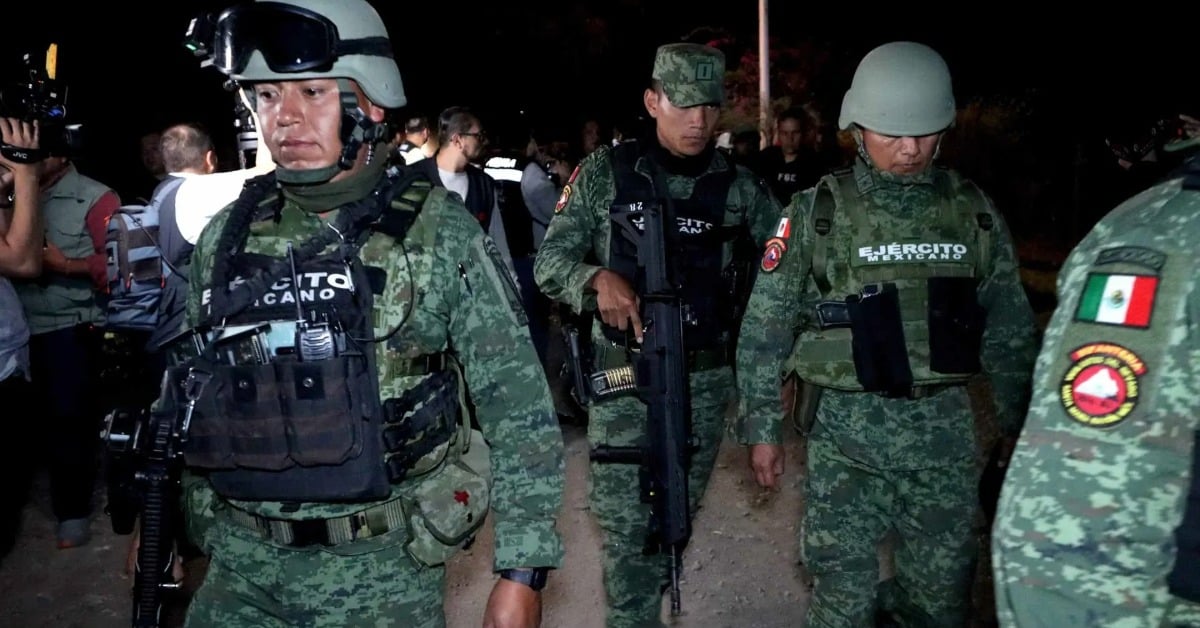
One year after Washington labeled six Mexican criminal groups as foreign terrorist organizations, Mexico has leaned into the kind of security strategy that photographs well. The Sheinbaum administration’s message is confrontation: bigger seizures, more arrests, more labs destroyed, and more high-profile transfers of suspected cartel figures to the United States.
By the government’s own accounting over the past year, the numbers are designed to signal momentum. Authorities say they sent 92 cartel leaders and operators to the United States, detained 28,921 suspected criminals, seized 202 tonnes of drugs, including 673 kilos of fentanyl, and dismantled more than 1,500 clandestine labs used to produce synthetic drugs. Those are hard results in the narrowest, most visible sense of law enforcement: people in custody, product off the street, infrastructure knocked out.
But cartels are not only armed groups. They are revenue machines. And the uncomfortable truth is that a cartel can replace a shipment faster than a state can build a case that follows the money through the legal economy.
The money layer Mexico still struggles to break
Specialists who track illicit finance keep returning to the same point: taking territory or capturing a boss is not the same as dismantling an organization’s ability to pay salaries, buy weapons, bribe officials, hire lawyers, and diversify into new rackets. When leadership is interchangeable and violence is outsourced, the financial plumbing becomes the real center of gravity.
That is why, in the past year, some of the most consequential blows to cartel-linked financial networks have not come from Mexico’s own institutions, but from the United States. Washington has used the “terrorist” label to widen its toolkit and justify a more aggressive posture against facilitators, banks, and businesses suspected of touching cartel money.
In June 2025, U.S. authorities identified three Mexico-based financial institutions as primary money laundering concerns tied to opioid trafficking and imposed restrictions on certain transactions involving them. Mexican authorities rejected the accusations as unproven and moved to stabilize the institutions through supervisory intervention and reviews. The episode mattered for more than the banks involved. It showed how quickly Mexico’s financial system can become a front line in a bilateral fight, with immediate consequences for confidence, compliance, and cross-border flows.
Then, in February 2026, Washington sanctioned a Mexico-based timeshare resort and a network of individuals and companies it says were part of a CJNG-linked fraud operation targeting U.S. citizens. Whatever one thinks of the politics of U.S. pressure, the pattern is clear: Washington is trying to make cartel business models more expensive and more fragile on the financial flank.
Mexico, meanwhile, still appears to be fighting the cartels as if the battlefield is primarily physical.
Why the financial war stalls
There are practical reasons Mexico’s financial offensive lags behind its tactical security operations. Proving money laundering is slow, technical work. It requires investigators, forensic accountants, data access, and prosecutors who can build cases that stand up in court. It also requires a state that can identify who truly controls a company, a property, a trust, or a set of accounts, even when names on paper are nominees.
Mexico has the institutions that should make this possible. The financial intelligence unit can flag suspicious flows. Financial regulators can pressure banks and other obligated entities to tighten controls. Prosecutors can pursue asset forfeiture and money laundering cases. Mexico is also a member of the global anti-money-laundering standard-setting community and has spent years building a legal framework that, on paper, looks modern.
Yet outcomes matter more than frameworks. Public data on the scale of money-laundering investigations, prosecutions, and final asset confiscations remains limited. The UIF itself has reported detecting tens of billions of pesos in suspected laundering in previous years and has acknowledged that those figures likely represent only a slice of the real problem. And when you look at asset forfeiture results, the mismatch with cartel wealth becomes hard to ignore. In 2024, for example, federal prosecutors reported recovering roughly 117 million pesos through extinción de dominio, an important tool but a relatively small figure compared to what organized crime can generate through drugs, extortion, fuel theft, human smuggling, and fraud.
Legal uncertainty also plays a role. The UIF’s power to freeze accounts and place individuals on blocked lists has been contested repeatedly, and court battles over the scope of those administrative measures can slow or reverse efforts to choke off access to the formal financial system. Even when a freeze occurs, it does not automatically result in a criminal conviction or permanent deprivation of assets. The gap between “blocked,” “seized,” and “confiscated” is where many cases go to die.
Finally, the laundering ecosystem is not confined to banks. It runs through real estate, cash-heavy businesses, trade, currency exchange, logistics, and, increasingly, more complex cross-border arrangements. That makes coordination essential. When agencies don’t share intelligence quickly, or when investigations don’t move from financial red flags to criminal cases, the system becomes a warning light with no brakes attached.
What real pressure on cartel finances would look like
Mexico has taken steps that suggest it understands the problem. A 2025 reform of Mexico’s anti-money-laundering law framework expanded obligations and strengthened the compliance architecture around “vulnerable activities,” while official guidance emphasized new criteria and phased implementation timelines. This is the kind of policy work that rarely grabs headlines but shapes what banks, notaries, real estate developers, and businesses must report, document, and monitor.
But the strategic shift required is deeper than compliance. It means making cartel finance a primary objective, not a secondary benefit of arrests and seizures. It means targeting facilitators as systematically as gunmen: prestanombres who front companies, professionals who normalize suspicious deals, business structures that mix dirty money with legitimate revenue, and the logistics and trade channels that convert cash into precursors, weapons, vehicles, property, and political influence.
For expats living in Mexico, this is not an abstract debate. A tougher financial strategy often shows up in everyday life as more bank questions, tighter documentation requirements, slower transfers, and greater scrutiny of property deals and cash-heavy transactions. It can feel like friction. But it is also one of the few ways a state can reduce cartel power without relying solely on a cycle of raids, retaliation, and replacement.
Mexico has demonstrated it can hit cartels hard. The open question is whether it is willing and able to hit them where it actually hurts: the money that keeps everything else standing.