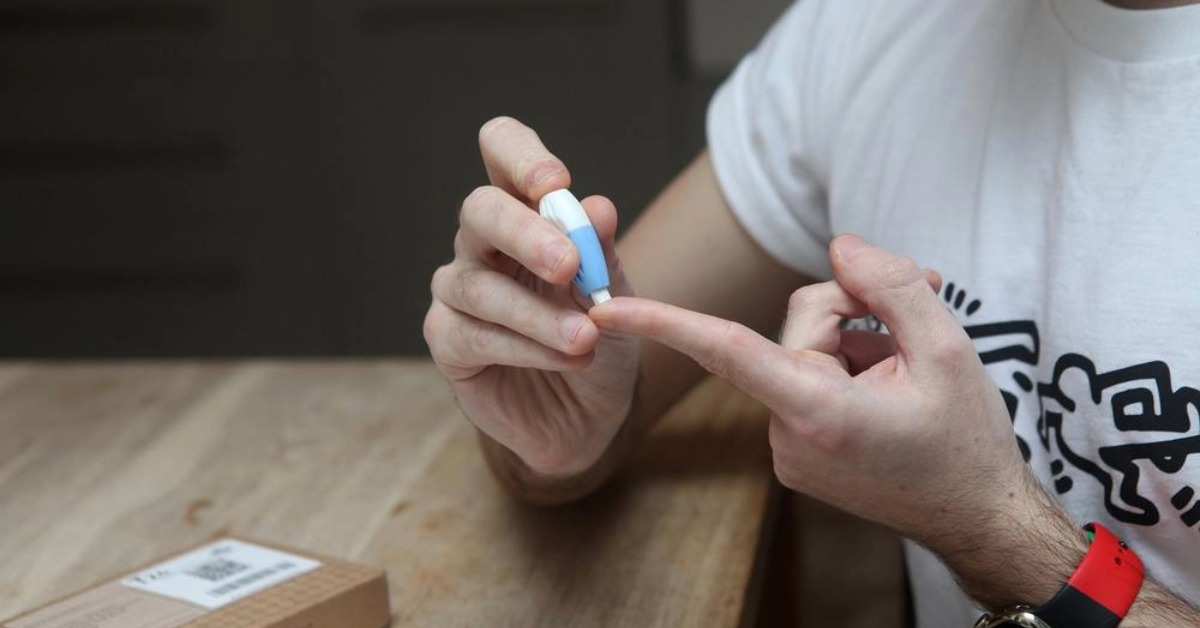
Mexico has been chosen for a pilot that could change how people learn their HIV status. In selected areas, users can request a free self-test, take it at home, and get guided support if the result is reactive. The pilot is limited in scope, but the underlying problem is much larger. Many people still avoid testing because of stigma, privacy concerns, distance, or fear of being seen at a clinic. That is why this small rollout may carry outsized weight.
A pilot built around privacy
Mexico has been selected to participate in a pilot HIV self-testing program backed by Grindr for Equality and CISIDAT. Program organizers describe it as the country’s first fully free, digitally linked self-testing pilot. The model offers home HIV test kits, discreet delivery, real-time guidance, and direct referral into public or community care. The current rollout centers on Puerto Vallarta and Guadalajara in Jalisco, as well as Yucatán.
That matters because this is not only a story about a new test. It is a story about a new way to reach people who never make it to formal services. In Mexico, HIV testing is available through clinics, public campaigns, and community groups. But access is still uneven. Some people fear being judged. Others do not want to be seen entering a site tied to HIV care. Many face barriers to travel, time, or money. By moving the first step into the home, the pilot tries to lower that wall.
Why stigma sits at the center
That focus on stigma is not rhetorical. It points to the weak spot in the care chain. Official estimates late in 2025 put the number of people living with HIV in Mexico at about 400,000. Roughly 80,000 of them may not know their status. A person who never gets tested cannot start treatment early. They also cannot be linked to prevention tools such as PrEP, taken before exposure, or PEP, used after possible exposure.
The regional picture adds urgency. Latin America has seen new HIV infections rise since 2010, even as other regions have made stronger gains. Health agencies say the epidemic remains concentrated in key populations, including gay and bisexual men, trans women, sex workers, and others who often face discrimination in health settings. In that context, privacy is not a side benefit. It can be the difference between getting tested and not getting tested at all.
What self-testing can and cannot do
HIV self-testing is not a fringe idea. The World Health Organization has recommended it since 2016 as an additional testing option, especially for people who may not use conventional services. Mexico moved in the same direction in January 2024, when Cofepris authorized an HIV self-test. The kits used in the pilot are described as third-generation finger-prick tests that can return a result in about 15 to 20 minutes. That makes testing faster and more private, but speed is only part of the story.
A self-test is still a screening tool, not a final diagnosis. A reactive result must be confirmed by a trained provider under Mexico’s testing rules. That is why the pilot matters most as a pathway, not as a gadget. The value lies in what comes after the kit: counseling, confirmatory testing, and rapid linkage to care. It also lies in prevention. Someone with a non-reactive result but ongoing risk may be directed toward PrEP. Someone with a recent exposure may need PEP within a narrow window.
The pilot also fits a broader shift in Mexico’s health response. In December 2025, federal health institutions announced a coordination plan to widen access to antiretroviral treatment, PrEP, and PEP, while improving registration and follow-up. A model that starts with home testing fits that push. The question is no longer only whether a test exists. It is whether people can use it without fear and then move quickly into the next step.
Why this small pilot matters
The choice of locations also helps explain the program. Puerto Vallarta is one of Mexico’s best-known LGBT+ destinations and a major tourism center. Guadalajara has a large urban population and an established prevention network. Yucatán has also been identified as a state with high HIV incidence. Organizers have said the pilot builds on local partnerships already in place through community groups and prevention programs. In other words, this is not random geography. It is a targeted test to determine where digital outreach may yield the strongest response.
For international readers, the key point is that Mexico is not just adding a new consumer health product. It is testing whether digital outreach, home delivery, peer support, and public-sector referral can work together in a country where stigma still blocks diagnosis. That is a different question from whether the test itself works. The test already exists. The real issue is whether people will trust the system around it enough to use it.
This pilot will not close Mexico’s diagnosis gap on its own. It is small, targeted, and still early. But it addresses a problem that large health systems often struggle to solve. Services can exist on paper and still remain out of reach in daily life. If this model helps more people test earlier and link to care sooner, it could influence how HIV prevention and diagnosis expand in Mexico over the next few years.
With information from Consorcio de Investigación en Salud, Grupo Animal, PAHO/WHO