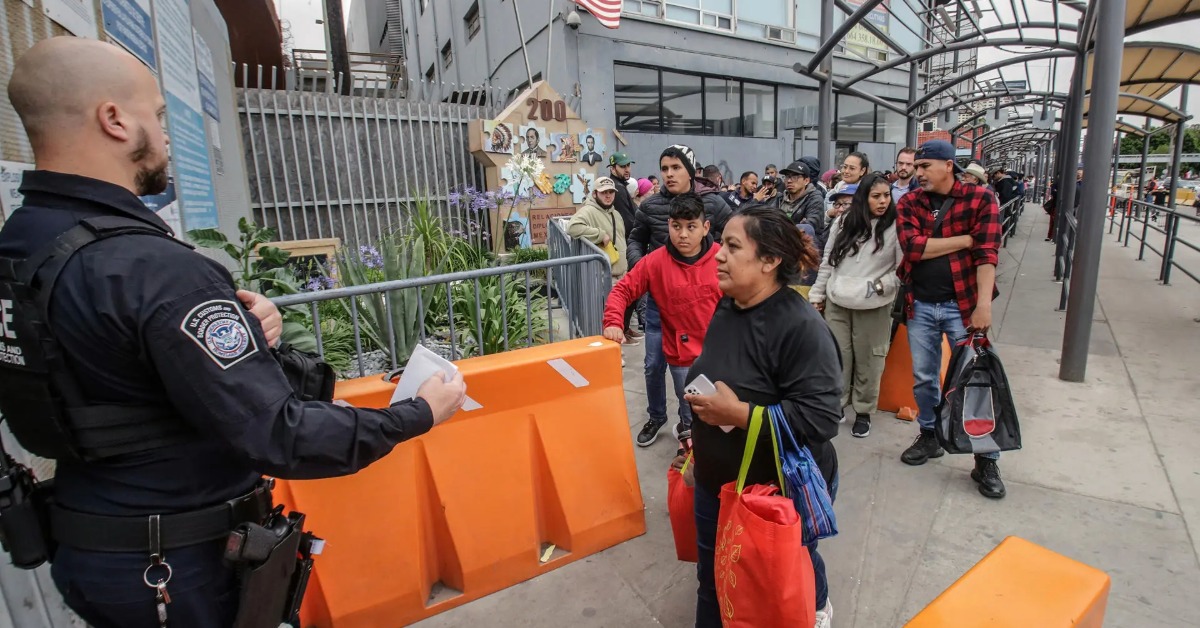
Mexico Te Abraza repatriation assistance is showing results as the federal government reports that more than 75,900 Mexican nationals have been returned from the United States since January, and each is being received with coordinated, multi-agency care aimed at reintegration with dignity. Interior Secretary Rosa Icela Rodríguez presented the latest figures during the August 1 “People’s Mañanera” from Palacio Nacional, framing the effort as a humanitarian priority set by President Claudia Sheinbaum.
The centerpiece of that care is the national strategy branded “Mexico Te Abraza,” a program launched earlier in 2025 to provide arriving repatriates with immediate and follow-up services that go beyond processing and paperwork. The strategy includes reception at key points such as Mexico City’s AIFA airport, Villahermosa, and Tapachula, with 13,978 returnees arriving by air and receiving integrated attention upon arrival.
Comprehensive support network under Mexico Te Abraza repatriation assistance
The government says the program has delivered more than 436,000 services through its ten reception centers, which can collectively serve up to 25,000 people at once. Of the 75,914 repatriated nationals, 36,162 have accessed the centers where they receive food, medical and psychological care, legal guidance, identity documents, and reintegration support, including employment orientation. Officials emphasized that operations have maintained a “white balance” with no major security incidents reported.
In partnership with 34 federal agencies, state governments, the private sector, and international organizations, the program has facilitated affiliation to the Mexican Social Security Institute (IMSS) for over 50,000 returnees and issued economic support cards, identity documents like CURP and birth certificates, and enrollment into social and labor inclusion programs. More than 4,935 repatriated individuals have already secured formal employment, a critical step toward sustainable reintegration.
Humanitarian framing and permanent infrastructure
Rodríguez framed the program as one born “from the soul,” reflecting President Sheinbaum’s directive to treat repatriated nationals with care and respect. She reiterated that the reception centers will remain permanently active, monitored 24/7, as part of the government’s commitment that “Mexico embraces them always.” The symbolic language underscores a shift from past repatriation approaches to a more structured, human-centered model.
The origins of the policy trace back to the early months of 2025, when rising deportations from the United States—amid shifting policies in the U.S. administration—prompted Mexico’s executive branch to formalize a comprehensive returnee support plan. The initial launch emphasized stipends, healthcare access, and integration pathways, building on a narrative that casting deported nationals as “heroes of the nation” required more than transportation home.
Coordination with border states and national scope
The reception infrastructure is not limited to a few hubs. Federal officials have highlighted active coordination with key border states including Baja California, Sonora, Chihuahua, Coahuila, Nuevo León, and Tamaulipas to ensure both logistical flow and localized support. This distributed network allows the government to adapt to volume and geographic movement of returnees while keeping the centralized strategy intact.
That coordination extends into the formal economy: returning migrants are being connected to jobs, welfare programs, and legal registration in ways designed to reduce vulnerability. Alongside employment, many are funneled into broader social welfare schemes, including those tied to pensions, family support, and vocational training — a dimension emphasized in earlier policy communication that sought to distinguish this effort from purely administrative repatriation.
Political context and messaging
The program’s visibility has also served a political purpose for the Sheinbaum administration, positioning humane repatriation as a contrast to hostile rhetoric from across the border and as a reaffirmation of national solidarity. The emphasis on permanence, human dignity, and reintegration is consistently framed in public messaging to signal a sustainable institutional commitment rather than a temporary emergency response.
Officials have leaned on language of national embrace and collective responsibility to reshape public perception of returnees, seeking to reduce stigma and present reintegration as a shared obligation. That messaging aligns with earlier declarations that the policy was designed not only to receive but to “support, include, and value” returning Mexican nationals.