Residents in Cabo San Lucas might finally feel the taps run more often. OOMSAPAS now controls the city’s first desalination plant and reports that production has increased to 106 liters per second, reaching 180 liters per second. A new heat-map plan will steer water to the neighborhoods that have waited the longest, cutting gaps from weeks to days. Here’s what changed at the plant, why it matters, and what to watch as the bigger 250 L/s project advances.
On September 29, 2025, Los Cabos’ municipal water utility announced that it has assumed complete control of the Cabo San Lucas desalination plant and has already increased output. OOMSAPAS reports production at 106 liters per second, up from roughly 80 L/s earlier this year, and is now targeting 180 L/s.
Cabo desal plant output
The takeover marks the end of years of private operation under a service-contract model. State officials told local media the plant had been under a private concession that was supposed to run into 2027. In August, OOMSAPAS’ director acknowledged output hovered around 90 L/s, well under what the facility should deliver. After the handover, he said production rose into the 110 L/s range, with 180 L/s framed as a realistic goal by year’s end.
The utility also outlined how it plans to make those liters count for households that have waited the longest. A “heat-map” model will direct water and pipa support to colonias that show the worst supply gaps, to shrink delivery windows in the red-flag zones from about 15 days to roughly six or seven. That aligns with steps OOMSAPAS flagged in mid-August: modifying tandeo patterns and dispatching weekly tanker brigades to the hardest-hit neighborhoods. Cabo desal plant output is the lever; more innovative routing is the immediate relief.
This is happening against a familiar backdrop for Los Cabos: rapid growth, thin infrastructure, and uneven water access. Recent reporting has documented families paying high monthly costs for trucked water while hotels and golf courses operate on steady supplies. The disparity has fueled repeated protests and calls for lasting solutions beyond short-term measures.
OOMSAPAS argues that the plant’s new management will help stabilize the tandeo schedule, which most residents live by. City channels continue to post day-by-day tandeo updates, a reminder that rotational service still defines water access for many neighborhoods, even as desalination increases.
What to watch next
Officials are selling 180 L/s as the near-term ceiling for this plant, with numbers as high as 190 L/s mentioned if everything runs smoothly. That is an ambitious lift from the levels seen during the private phase and would be felt if the distribution plan keeps pace. Still, it will not erase the deficit by itself. The agency has cited a supply gap of approximately 700 L/s for the Cabo San Lucas delegation—an indicator of the additional production and leak control the city requires.
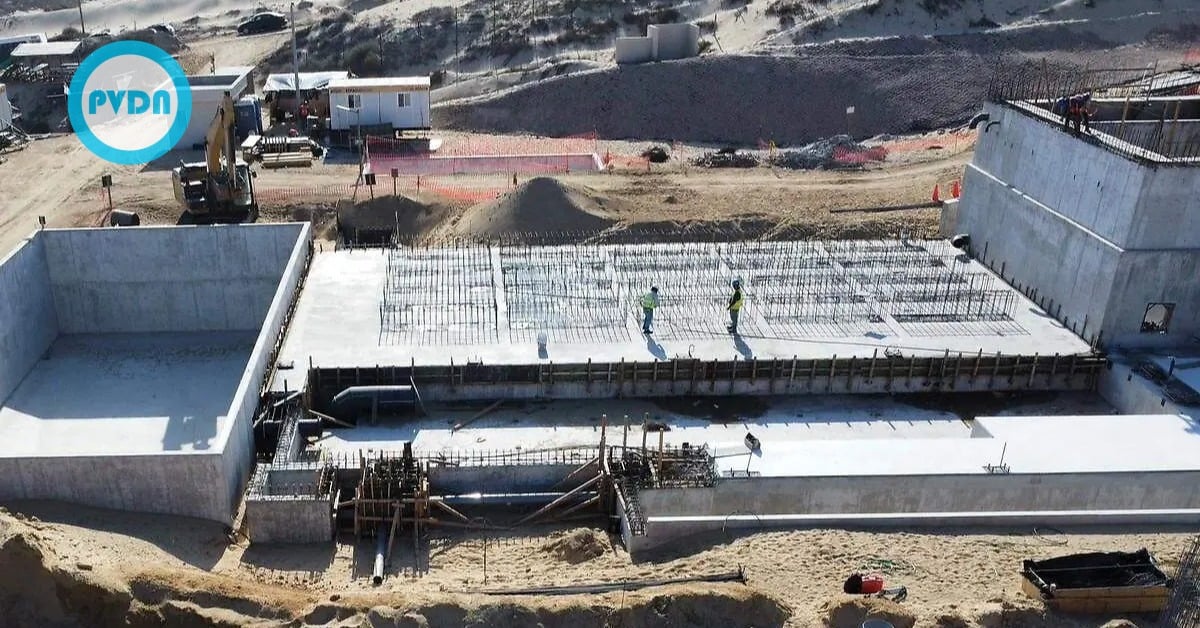
The bigger swing is the new “Desaladora 2,” designed for 250 L/s. Construction has been publicly tracked for months; by early July, it was reported to be about 40% complete, with commissioning expected in late 2026, not this year. City statements also frame that second plant as the signature piece in closing the structural shortfall. If that timeline holds, households should see a different Tandeo reality as that capacity comes online.
In the meantime, the metric that matters is sustained flow at the first plant. The utility’s mid-August heat-map and tanker strategy offers a bridge while output ramps. If OOMSAPAS keeps the plant near the new 106 L/s mark and climbs toward 180 L/s, residents in red-zone colonias should see intervals shrink from weeks to days, matching the promise officials made when they took control. The successive few billing cycles—and the daily tandeo posts—will tell people if the turnaround is real at street level.