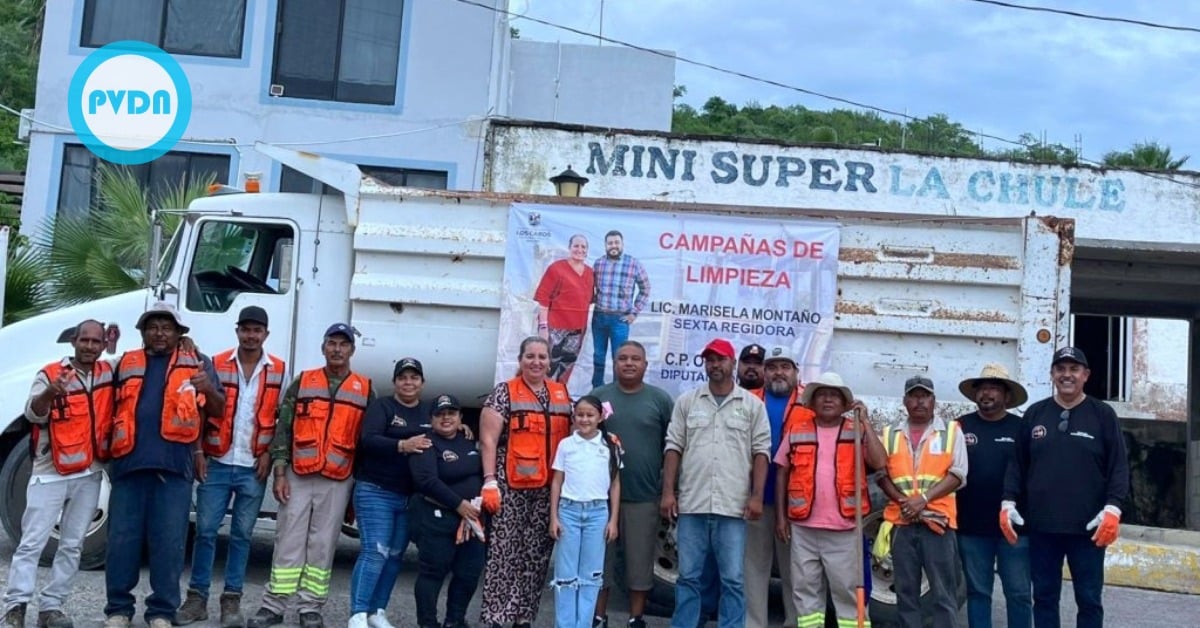
A weekend push in Los Cabos didn’t just tidy sidewalks. It moved more than a hundred tons of waste out of La Ballena and into the municipal landfill, with six garbage trucks and heavy machinery working block by block. City officials say the haul is part of a broader campaign aimed at stubborn dumping hotspots—and it’s already spreading to nearby communities. The number sounds big. It is. However, the scale also hints at the amount of trash Los Cabos generates and the pressure that puts on its landfill system.
Municipal crews in Los Cabos say they pulled more than 105 tons of trash from the La Ballena neighborhood in San José del Cabo, loading six garbage trucks with domestic waste and bulky junk before transferring the haul to the city’s landfill. The work relied on heavy machinery and focused on the main avenues where illegal dumping piles up fastest. Officials framed the result as part of a broader cleanup effort now underway in other communities.
City hall credited the campaign’s on-the-ground coordination to councilmember Marisela Montaño Peralta, working alongside local deputy Omar Torres and the operations team from the Directorate of Public Services. In La Ballena, the crew cleared curbside mounds and picked up “cacharros”—discarded appliances and furniture that often block drains and become magnets for pests when it rains. The city reported the results on September 27, emphasizing that the debris went directly to the municipal landfill.
Why the tonnage matters
More than 100 tons in a single neighborhood is a striking snapshot. Still, it fits a long-running pattern: Los Cabos generates hundreds of tons of solid waste daily, with Cabo San Lucas traditionally accounting for the largest share. That context helps explain both the scale of the La Ballena operation and why the city continues to dedicate trucks, loaders, and staff to rotating “descacharrización” drives.
The cleanup also touches a sensitive point: landfill capacity and management. Los Cabos routes neighborhood hauls to its municipal sites, which have faced scrutiny from environmental advocates and waste-picker groups over working conditions and long-term sustainability. Officials tout compaction and cell expansions to extend the useful life, while past reporting has highlighted gaps that the city says it’s working to close. Moves like the La Ballena sweep reduce street-level health risks, but they also funnel more volume into a system that needs steady oversight to stay safe and compliant.
La Ballena cleanup as a moving model
The campaign isn’t stopping at one neighborhood. After La Ballena, crews and volunteers took the formula to nearby communities such as Santa Catarina, combining street sweeping with junk collection and quick transfers to the landfill. Local outlets and official channels have echoed the exact 105-ton figure, signaling broad agreement on the basic facts while underscoring that the work is scheduled to continue. The city has even billed this as the fourth community cleanup in La Ballena this month, suggesting a shift from one-off events to sustained initiatives.
Residents I spoke with describe the change most clearly by smell and sight lines: fewer rotting piles near bus stops and open lots, clearer gutters ahead of late-season rains, and less metal scrap sitting in alleys. That’s not victory, but it’s relief. The next test is consistency—keeping trucks on route, keeping neighborhoods engaged, and maintaining transparency at the landfill regarding how it handles the influx. If the political will holds after the photo ops fade, the La Ballena cleanup could be a template rather than a moment.