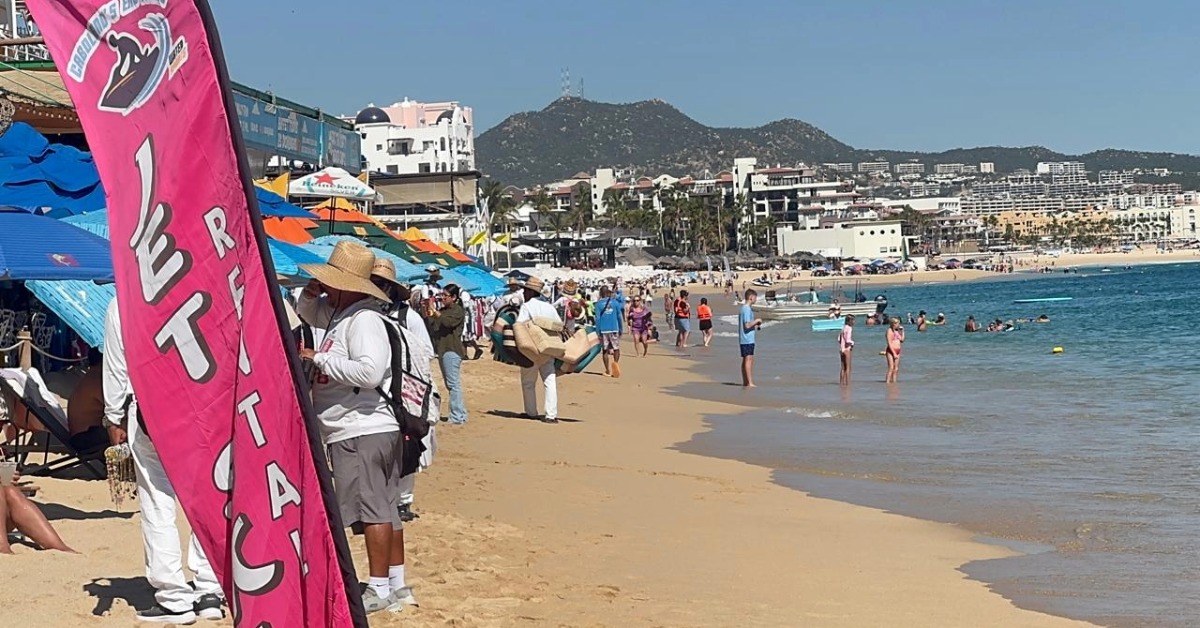
A familiar scene is back in Cabo San Lucas: more pop-up stalls along the marina and beach approaches. With Spring Break weeks away, business leaders are warning that scattered inspections are not enough. They want port and federal-zone authorities to work from the same playbook, not under separate mandates. The immediate question is which agency can act, and where, when vendors set up on federal property. What happens next could shape the visitor experience during the busiest weeks and set a precedent for the rest of the year.
A pre–Spring Break push for one enforcement plan
As Spring Break nears, business leaders in Los Cabos are pushing for one plan. They want tighter control of informal vending in Cabo San Lucas. The Consejo Coordinador de Los Cabos says unpermitted sellers have expanded in busy zones. Those zones include the Marina and nearby visitor corridors, which see constant foot traffic. The focus is on waterfront blocks used for tours, taxis, and cruise-related activity. Leaders say the issue rises with every high season. In a coordination roundtable, the group urged faster, visible enforcement. It said there is a willingness to act, but few lasting results. Julio Castillo Gómez, the council’s executive president, said many vendors lack permits. He also raised concerns about fairness for businesses that do comply. The council argues that fragmented checks encourage vendors to return within days. It wants clear criteria for permits, placement, and operating hours. Its message is simple: agree on rules, then apply them consistently before the surge.
Why federal and port zones complicate enforcement
Jurisdiction is the hard part, because the most contested areas are not all municipal. Along the shoreline, parts of the zona federal marítimo terrestre fall under federal rules. That can affect where vendors may work and what permits are required. Some vendors may need federal authorization in addition to local licensing. Inside the port precinct, the Administración del Sistema Portuario Nacional (ASIPONA) also plays a role. That structure can limit what municipal inspectors can enforce on their own. Business leaders say coordination must include federal counterparts, including the Secretaría de Marina. Federal regulations allow permits for ambulant commerce on beaches and the federal zone. They also set conditions on location, time limits, and identification. Permits are time-limited and do not automatically apply within concessioned areas. When agencies do not align, enforcement can stall at each boundary. A shared plan would clarify who issues permits, who verifies them, and who removes violations.
What visitors may notice as oversight tightens
Recent operations show what a coordinated approach would need to address. Municipal teams have conducted checks at the Marina and Playa El Médano. Those checks typically focus on permits, documentation, and the use of public walkways. Officials have said the municipality has 698 registered vendors permitted to operate in these areas. Separate inspections have also identified roughly 300 more operating outside that registry. In the latest push, business representatives reported about 20 semi-fixed stalls in the Marina. They said those stalls lacked authorization, and the port authority noted missing contracts. Tourism planners expect heavy demand for March and April, with high occupancy projected. Hotel security teams and consular staff often coordinate with local officials during student arrivals. That planning adds pressure to keep commercial activity traceable and spaces passable. If agencies align, visitors may see more ID checks and clearer vendor zones. They may also see faster removals of unpermitted setups during peak weeks.