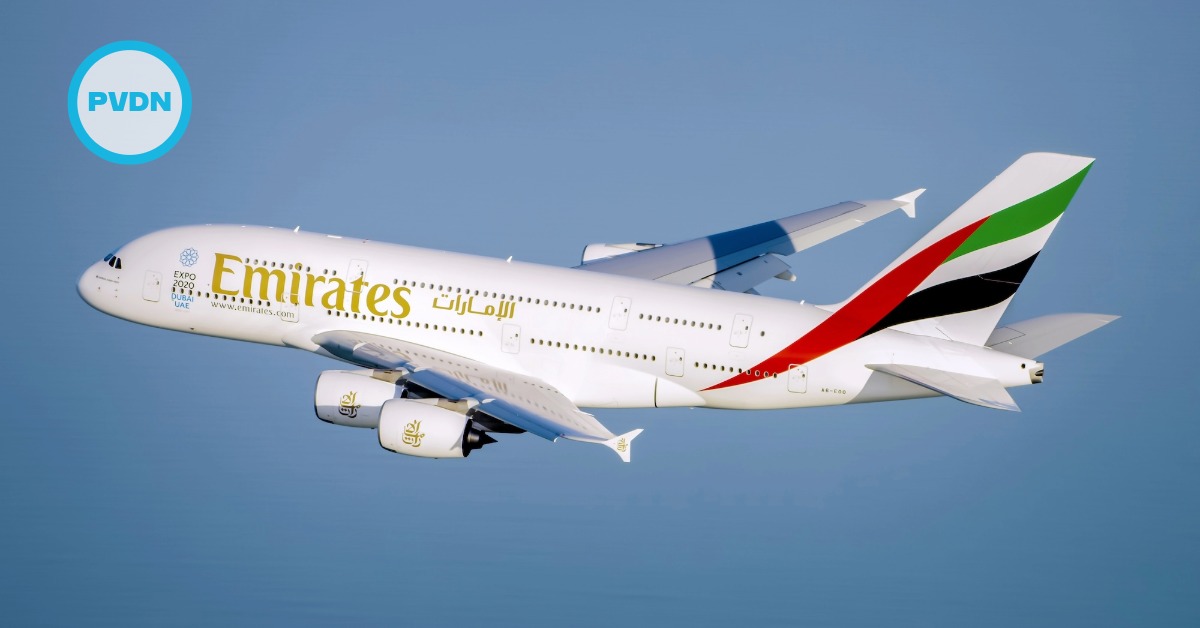
Los Cabos isn’t just chasing more seats on the board—it’s chasing a different kind of passenger. As the destination leans harder into luxury, tourism officials are quietly keeping a long-shot conversation alive: a future air link tied to the United Arab Emirates and Emirates. The idea is less about tomorrow’s nonstop and more about where Los Cabos wants to sit on the global route map by 2030. The next clues are already showing up in the flights being added now.
From volume to value
Los Cabos is trying to grow without getting bigger. The destination closed 2025 with roughly 3.7 million visitors, only a modest increase from the year before, and tourism officials say that’s not a problem to “solve” with more volume. Their stated strategy is to hold the line on headcount and place greater emphasis on higher-spending travelers who generate a larger economic ripple through hotels, restaurants, tours, wellness, and local services.
The premium positioning is already evident in the destination tracks’ numbers. Average daily hotel rates have remained high by Mexican standards, and the marketing message is increasingly about curated experiences rather than discounted getaways. For residents and long-term expats, the promise is a “stable” Los Cabos: fewer boom-and-bust swings, less pressure to chase ever-higher arrivals, and more focus on the kind of tourism that can translate into stronger jobs and more resilient local businesses.
A Gulf corridor on the long-range map
Within that premium strategy, Los Cabos officials say they have kept a long-running conversation alive around the United Arab Emirates, specifically the possibility of an air link tied to Emirates. They describe it as either a direct service or a one-stop connection that would plug the destination into a wider Gulf hub network and, potentially, open the door to ultra-luxury travelers who already treat the UAE as a global reference point for high-end tourism.
It’s an ambitious bet, and not an immediate one. According to the tourism trust’s own account, Los Cabos has not yet seen a large flow of visitors from the UAE. The case they are trying to build is longer-term: Emirates’ expansion planning through 2030 is aimed at strengthening its network across Asia, Europe, and Central and South America, and Los Cabos wants to be positioned as a viable node when those network decisions take shape.
The same logic is showing up in other target markets. Tourism officials say they are also pursuing additional links to Canada and Europe, including talks with Montreal, Toronto, and London, leaning into the view that these visitors tend to align with the destination’s desired, higher-spending profile.
The near-term network Los Cabos is building
While the Gulf remains a horizon project, the near-term flight strategy is moving in smaller, more practical steps. For 2026, the tourism trust has confirmed new routes that deepen reach into both the United States and Mexico, including added Southwest service from Indianapolis and Las Vegas, and a Volaris nonstop from Puebla. Officials have also pointed to newer international connectivity, such as service to Panama City, as part of a broader effort to diversify beyond the destination’s traditional U.S. base.
Air data underscores why that diversification matters. Recent airport arrival figures show that international passengers still account for roughly six in ten arrivals at Los Cabos International Airport, which keeps the destination highly exposed to shifts in foreign demand, exchange rates, and airline schedules.
The timing of the push also lines up with the calendar. With the 2026 FIFA World Cup spread across Mexico, the U.S., and Canada, the tourism trust is forecasting about 2% growth in overall arrivals for 2026 and notes that Los Cabos already offers direct flights to 14 of the 16 host cities. Behind the scenes, the trust says it is continuing to spend heavily on promotion, with last year’s tourism marketing investment running at roughly 499 million pesos.
For expats living in Mexico, the practical takeaway is less about a hypothetical Dubai boarding pass and more about the slow reshaping of choice. More nonstops from secondary U.S. cities and central Mexico can make weekend escapes easier and business travel more efficient. At the same time, a destination that openly prioritizes premium travelers is likely to keep hotel rates firm and concentrate demand into peak weeks, which matters if you’re trying to host visiting family or plan around school holidays.