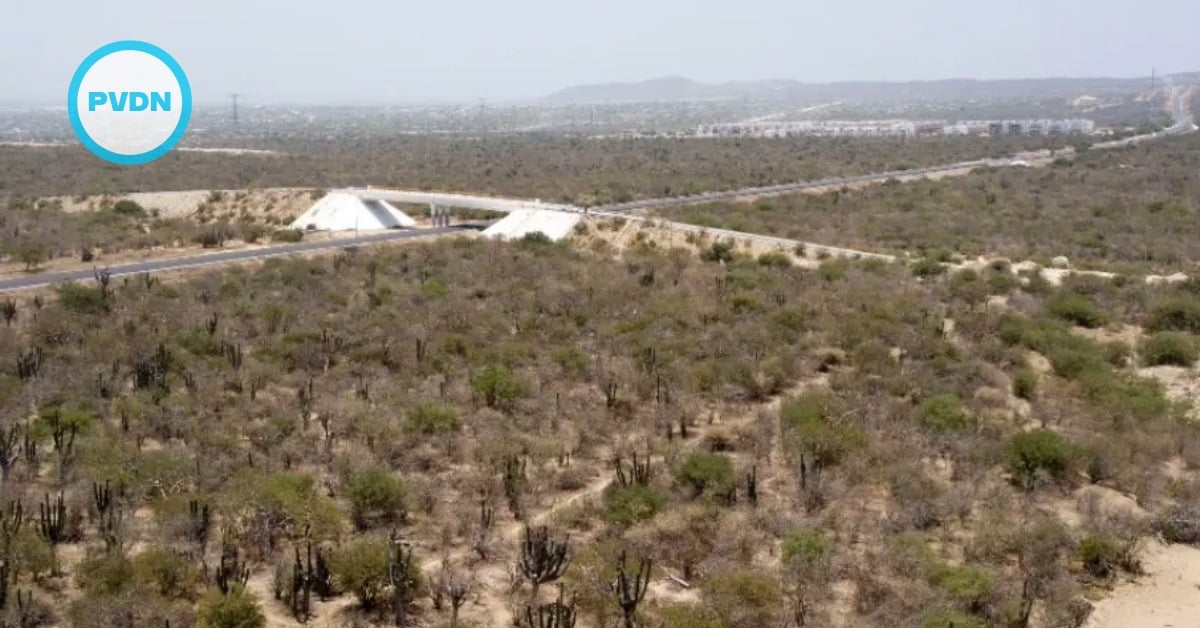
Los Cabos can’t build what it desperately needs because it can’t find where to put it. On Oct. 27, Mayor Christian Agúndez warned that a shortage of public land is slowing federal projects, from housing to a long-promised CFE power plant. The state already faces a double-digit energy deficit, and Los Cabos is growing fast. With prices high and suitable sites limited, the municipality risks losing new generation capacity to other BCS cities. The clock is ticking, and the summer outage season isn’t getting any kinder.
Los Cabos land reserve shortages
Los Cabos knows what it needs: reliable electricity and affordable housing. What it lacks, according to Mayor Christian Agúndez, is enough public land to build them. In remarks reported Oct. 27, he said scarce “reserva territorial” is delaying federal infrastructure, including the Comisión Federal de Electricidad’s planned generation projects.
The squeeze is real. Baja California Sur’s grid runs in isolation and struggles during peak demand. Local outlets have reported a state energy deficit of more than 10%, with Los Cabos faring worse. If the municipality cannot offer viable sites, the new generation could be sited in La Paz or farther north, leaving Cabo’s demand to chase imports across a fragile system.
In February, Los Cabos officials and CFE engineers outlined a 240-megawatt internal-combustion plant to stabilize supply for peak summer loads. City statements hailed it as a fast, practical bridge while cleaner capacity is developed. But by June, officials warned that high land prices and the lack of public reserves were already slowing pre-construction steps.
What’s at stake beyond one plant
The energy plan is broader than a single facility. In August, the federal government announced an $800 million investment for two 50-MW concentrated-solar plants with thermal storage in Baja California Sur. The promise is power after sundown and fewer hours burning diesel. But the sites are still being evaluated, and Los Cabos’ land crunch could push those assets elsewhere. If that happens, Cabo’s growth will still benefit, but the grid relief would come from outside the municipality.
Growth is the backdrop—and the accelerant. Over the last two decades, Los Cabos has grown from a small city into a metro region. Projections now point toward 600,000 residents within a decade if current trends hold. Rapid expansion has already strained water, roads, and power, and without available public parcels, even funded projects hit a wall.
Land scarcity doesn’t only trip energy projects. The mayor tied the same constraint to federal housing and social infrastructure, where agencies often require publicly controlled parcels to move fast and keep costs in check. Without them, timelines stretch, budgets bloat, or the builds migrate to jurisdictions that can assemble land banks quickly.
The near-term choices facing Los Cabos
Officials face two urgent paths: assemble land or lose momentum. That can mean negotiating swaps, purchasing strategic lots, or partnering with state and federal landholders to open suitable tracts. It can also mean clearing right-of-way for grid interconnections so generation sited outside Cabo still reaches the load center with minimal losses. Recent coverage has already flagged the risk that large-ticket energy investments could bypass the municipality if sites aren’t secured soon.
Cabo’s long-running water stress is a cautionary tale. Expensive, late fixes—like desalination—arrived after growth outran infrastructure. Energy is tracking a similar arc, only with higher stakes for public safety during heat waves. Securing land now won’t solve peak demand overnight, but it will keep federally funded housing and power projects from dying on the drawing board.